Types of Elevator: Complete Guide
Elevators are used in homes, apartment buildings, offices, hotels, hospitals, warehouses, factories, and commercial facilities. However, not all elevators are designed for the same purpose. A high-speed elevator serving a skyscraper has very different requirements from a compact home elevator, a freight elevator moving pallets, or a wheelchair platform lift providing access to a raised entrance.
Understanding the different types of elevator systems is essential before selecting equipment for a construction, renovation, or industrial project. The right choice depends on more than building height. Drive technology, rated capacity, travel distance, traffic frequency, available space, installation conditions, safety requirements, and maintenance costs all matter.
One point often overlooked in general elevator guides is that elevator types can be classified in several different ways. Hydraulic and traction describe drive systems, passenger and freight describe applications, while machine-room-less (MRL) describes an equipment configuration. A panoramic glass cabin, meanwhile, is primarily a design feature rather than a separate drive technology.
This guide explains the major types of elevators, how they work, where they are used, and what buyers should evaluate before placing an order.
1. How Are Elevators Classified?
No single universal list of elevator types exists because the industry uses different classification methods.
For practical selection, elevators can be divided into three main groups:
| Classification | What It Describes | Examples |
|---|---|---|
| By drive system | How the elevator moves | Hydraulic, traction, screw-driven, pneumatic |
| By application | What the elevator transports | Passenger, home, freight, service, hospital |
| By design or configuration | How the equipment is arranged or presented | MRL, machine-room type, panoramic, double-deck |
Accessibility and industrial lifting equipment form another related category. Wheelchair platform lifts, scissor lifts, and lift tables also move people or materials vertically, but they are not automatically interchangeable with conventional passenger elevators.
Understanding these distinctions makes it easier to compare equipment accurately.
2. Types of Elevators by Drive System
The drive system is one of the most important technical differences between elevator types. It determines how the cabin moves and influences speed, installation requirements, energy consumption, maintenance, and suitability for different buildings.
2.1 Traction Elevators
A traction elevator uses an electric motor, a traction sheave, and steel ropes or belts to move the elevator car. In most conventional arrangements, a counterweight balances part of the car’s weight, reducing the force the motor must provide.
When the motor rotates the sheave, friction between the sheave and the ropes or belts moves the car up or down along its guide rails.
Traction elevators are widely used in residential towers, commercial buildings, hotels, hospitals, and other facilities where frequent operation and comfortable passenger transportation are important.
Two common traction elevator types are:
Geared traction elevators
A geared traction elevator uses a gearbox between the motor and the traction sheave. The gearbox adjusts the motor’s rotation to provide the required lifting performance.
Typical applications include low- to mid-rise buildings and certain service or freight applications, depending on the equipment design.
Gearless traction elevators
A gearless traction elevator connects the traction sheave directly to the motor shaft. Modern permanent-magnet gearless machines are commonly used in systems requiring efficient operation, smooth travel, and higher speeds.
Typical applications include mid-rise and high-rise residential or commercial buildings.
Advantages of traction elevators:
- Suitable for buildings with relatively high traffic.
- Can provide higher travel speeds than many low-rise hydraulic systems.
- Counterweight design helps improve energy efficiency.
- Smooth acceleration and deceleration are possible with modern drive controls.
- Available in a wide range of cabin sizes and configurations.
Limitations:
- Requires careful planning of the hoistway, overhead space, and equipment layout.
- Initial equipment and installation costs can be higher for some configurations.
- Ropes or belts, brakes, guide systems, and drive components require professional inspection and maintenance.
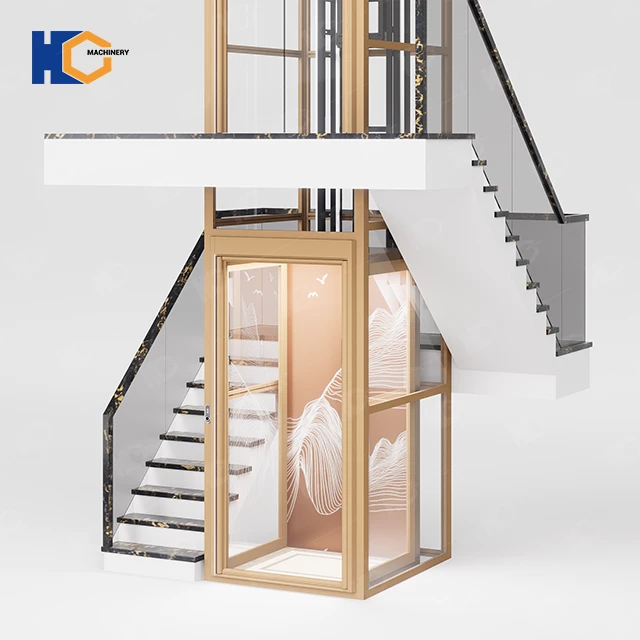
For residential projects, a traction system can also be configured as a compact panoramic elevator. For example, the K900 panoramic glass villa elevator is a traction-based residential model designed for villas and multi-story homes.
2.2 Hydraulic Elevators
A hydraulic elevator uses pressurized fluid to move a piston or cylinder that raises the elevator car. An electric motor drives a pump, which sends hydraulic oil into the cylinder. To lower the car, a controlled valve releases fluid from the cylinder back into the reservoir.
Hydraulic elevators are commonly used in low-rise buildings, private residences, and applications where lifting capacity and installation flexibility matter.
There are several hydraulic configurations:
- Direct-acting hydraulic: The piston acts directly on the elevator car or its supporting structure.
- Holeless hydraulic: Telescopic or other cylinder arrangements reduce or eliminate the need for a deep drilled cylinder hole.
- Roped hydraulic: Hydraulic movement operates through a rope arrangement to move the car.
The appropriate configuration depends on travel height, building structure, available pit and overhead space, and local installation requirements.
Advantages of hydraulic elevators:
- Strong lifting capability for suitable low-rise applications.
- Smooth starting and stopping when properly controlled.
- Several cylinder and installation configurations are available.
- Can be suitable for residential and certain commercial projects.
- Some designs can reduce the need for extensive overhead equipment space.
Limitations:
- Energy consumption and operating costs should be evaluated over the equipment’s service life.
- Hydraulic oil, seals, hoses, and valves require appropriate inspection.
- Fluid containment and leakage prevention must be addressed during design and installation.
- Travel speed and building-height suitability depend on the specific system.
Where are hydraulic elevators commonly used?
Hydraulic elevators are frequently considered for private villas, low-rise residential buildings, small commercial facilities, and selected goods-handling applications.
For example, JNHC’s HC-A300 hydraulic home elevator is listed with a 400 kg rated load, a nominal speed of 0.3 m/s, and a configuration for 2–3 floors. These are model-specific published specifications, not universal values for all hydraulic elevators.

2.3 Screw-Driven Elevators
A screw-driven elevator uses a rotating threaded screw and a corresponding traveling nut or drive assembly to move the car vertically.
Depending on the design, the screw mechanism may be integrated into a compact residential lifting system. This makes screw-driven technology an option worth evaluating for certain low-rise homes and renovation projects.
Advantages:
- Compact mechanical arrangement in suitable models.
- Can reduce the need for some conventional machine-room or pit arrangements.
- Suitable for selected residential applications.
- The drive principle is relatively straightforward.
Limitations:
- Generally intended for lower-speed applications.
- Travel height and rated capacity are model-dependent.
- Screw, nut, and associated drive components require scheduled inspection and maintenance.
- Noise and mechanical wear should be considered when comparing different systems.
Screw-driven elevators are not automatically the best choice for every small home. Buyers should compare the actual rated capacity, travel height, operating noise, maintenance requirements, and safety design of the proposed model.
2.4 Pneumatic or Vacuum Elevators
A pneumatic elevator uses air pressure differences to move a cabin inside a cylindrical or enclosed vertical structure.
During upward travel, a controlled pressure difference moves the cabin. A pressure-regulation system controls the descent.
The transparent tube design is one of the most recognizable features of this type of elevator.
Advantages:
- Distinctive panoramic appearance.
- Compact architectural design in suitable applications.
- May require less conventional shaft construction than some traditional elevators.
- Suitable for selected residential renovation projects.
Limitations:
- Cabin size and rated capacity are often more limited than conventional passenger elevators.
- Travel height and building configuration depend on the manufacturer’s design.
- Equipment costs can be relatively high for the available cabin space.
- Buyers need to understand the evacuation arrangements and applicable local requirements.
Pneumatic elevators are primarily a specialized residential option. They should not be compared directly with high-capacity commercial or industrial elevators.
2.5 Machine-Room-Less (MRL) Elevators
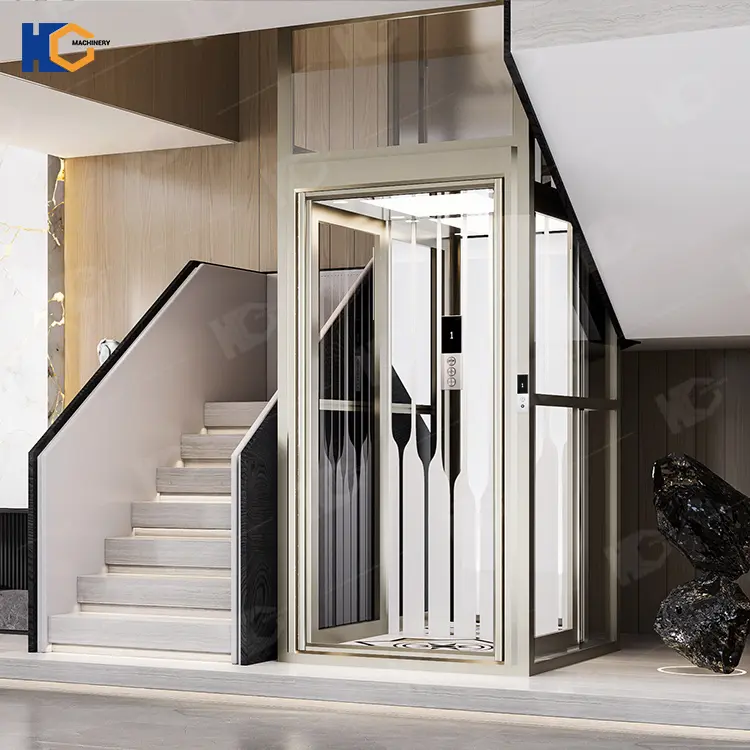
Machine-room-less elevators are designed without a separate conventional machine room for the main hoisting equipment. In many modern installations, the traction machine is located within the hoistway.
This arrangement can free up building space and give architects more flexibility when planning a building.
However, MRL is best understood as an equipment-layout configuration rather than a completely independent lifting principle. Most MRL systems are traction elevators, although machine-room arrangements can vary by manufacturer and system design.
Advantages:
- Saves space otherwise allocated to a separate machine room.
- Offers greater architectural flexibility in some buildings.
- Modern drive systems can provide efficient and comfortable operation.
- Suitable for many mid-rise residential and commercial projects.
Limitations:
- Maintenance access must be planned carefully.
- Equipment replacement and servicing can require specialized procedures.
- Hoistway dimensions and overhead requirements still need to be confirmed.
- Not every MRL model is suitable for every building height or traffic condition.
An MRL elevator should be selected based on its complete technical specification, not simply because it does not require a separate machine room.
3. Comparison of Elevator Types by Drive System
The following table provides a general comparison. Actual performance depends on the manufacturer, rated load, building height, travel distance, and equipment configuration.
| Drive System | Working Principle | Typical Applications | Main Advantages | Main Considerations |
|---|---|---|---|---|
| Traction | Motor, sheave, ropes or belts, and usually a counterweight | Residential towers, offices, hotels | Higher-speed options, efficient operation | Hoistway and maintenance planning |
| Geared Traction | Motor with gearbox drives the sheave | Low- to mid-rise applications, selected freight systems | Established technology, flexible applications | Gearbox maintenance and ride performance |
| Gearless Traction | Motor directly drives the sheave | Mid- and high-rise buildings | Smooth operation, high-speed capability | Higher technical and installation requirements |
| Hydraulic | Pump and hydraulic cylinder or piston | Low-rise buildings and home elevators | Strong lifting capability, flexible configurations | Oil maintenance and energy use |
| Screw-Driven | Rotating screw moves the car | Selected low-rise residential projects | Compact arrangements in suitable models | Speed, travel height, and mechanical wear |
| Pneumatic | Controlled air-pressure difference | Specialized residential applications | Panoramic appearance and compact design | Capacity, travel height, and cost |
| MRL | Main equipment positioned without a separate conventional machine room | Many residential and commercial buildings | Space-saving arrangement | Maintenance access and layout requirements |
Important: MRL should not be treated as a direct alternative to hydraulic or traction in every comparison. It describes how equipment is arranged within a building, while traction and hydraulic describe how the car is driven.
4. Types of Elevators by Application
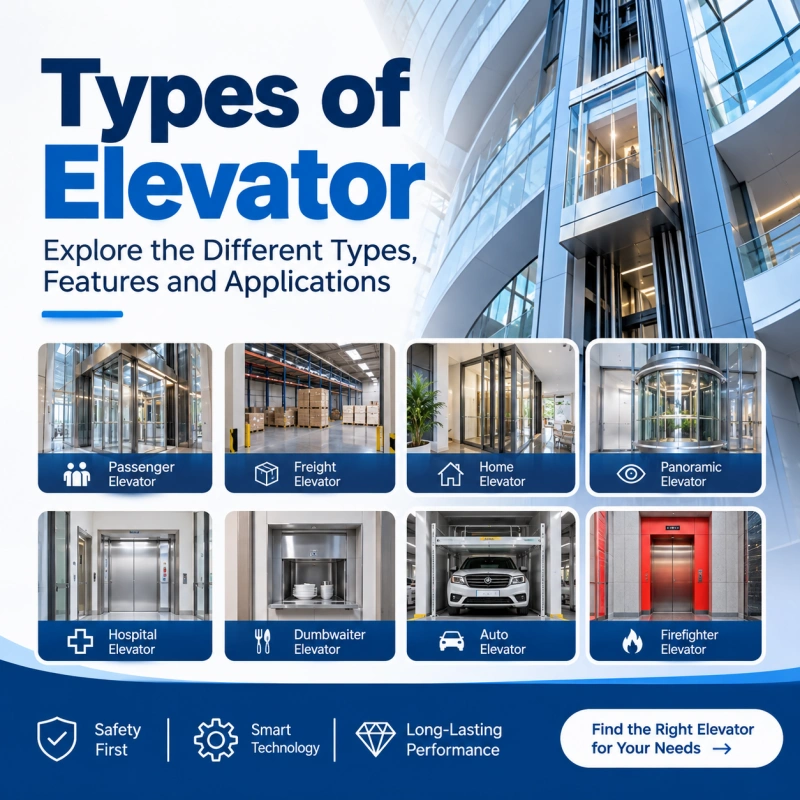
The second way to classify elevators is by what they are designed to transport.
This classification is particularly useful for project developers, contractors, distributors, and facility managers because the intended use determines cabin dimensions, loading requirements, door design, operating duty, and safety provisions.
4.1 Passenger Elevators
Passenger elevators are designed to transport people between floors in buildings.
They are commonly installed in:
- Apartment buildings.
- Office towers.
- Hotels and resorts.
- Shopping centers.
- Educational buildings.
- Public facilities.
The main design considerations include rated passenger capacity, travel speed, waiting time, cabin dimensions, door opening width, ride comfort, and traffic volume.
For example, a small residential building with only a few floors does not necessarily need the same elevator speed or traffic-handling capacity as a busy office tower.
4.2 Home Elevators
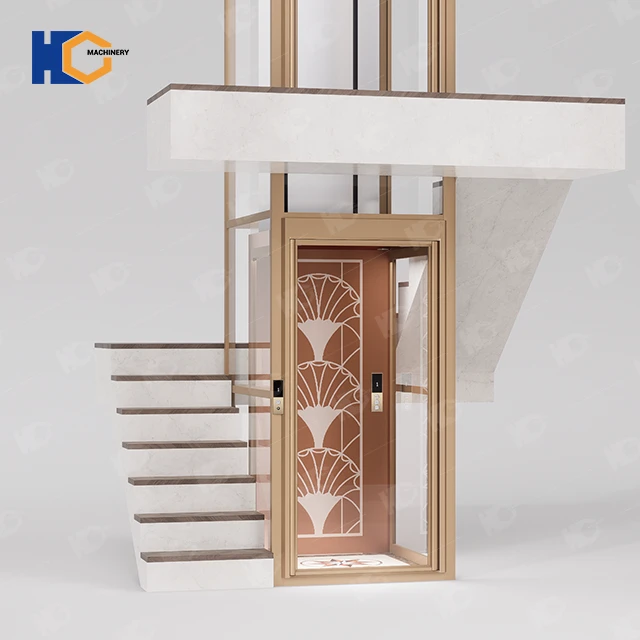
A home elevator is designed for private residential use. It may be installed in a villa, duplex, townhouse, or multi-story private home.
Compared with many commercial passenger elevators, residential elevators often prioritize compact dimensions, quiet operation, architectural integration, convenient access, and lower construction demands.
Common residential elevator configurations include:
- Hydraulic home elevators.
- Traction home elevators.
- Shaftless home elevators.
- Panoramic glass home elevators.
- Other compact residential systems, depending on the market.
What should buyers consider?
The most important factors are the number of floors, total lifting height, available installation space, rated load, door opening, pit depth, overhead clearance, and whether the elevator needs to accommodate a wheelchair.
A custom home elevator can be designed around the building layout rather than forcing the homeowner to make major changes to the original floor plan.
For renovation projects, a shaftless home elevator may be worth considering. JNHC lists one residential model for 2–5 floors with a 400 kg rated capacity. The final feasibility still depends on the building structure and the selected installation configuration.
4.3 Freight Elevators
Freight elevators, also known as goods elevators, are designed to transport materials, equipment, pallets, and other heavy loads between floors.
They are used in:
- Factories.
- Warehouses.
- Distribution centers.
- Shopping centers.
- Industrial buildings.
- Loading and production facilities.
Unlike passenger elevators, freight elevators generally prioritize load handling, structural durability, platform or cabin size, loading access, and operating duty.
Common design considerations include:
- Maximum rated load.
- Platform or cabin dimensions.
- Loading method and door arrangement.
- Travel height and number of stops.
- Pallet, trolley, or forklift access requirements.
- Loading and unloading frequency.
- Required safety gates and interlocks.
A freight elevator must be correctly designed for its intended use. A goods-only lift should not be assumed to be suitable for transporting people unless it has been designed, approved, and equipped for that purpose under the applicable regulations.
For industrial buyers, JNHC provides custom cargo lift systems, including guide-rail cargo lifts, hydraulic freight equipment, and other customized lifting platforms.
4.4 Service Elevators
Service elevators are commonly used by hotel staff, cleaning teams, maintenance personnel, and building operators.
They transport service carts, supplies, equipment, and other operational materials.
In hospitals, some service-oriented elevators are designed to accommodate patient beds and medical equipment. Their cabin depth, door dimensions, and operational requirements may therefore differ significantly from those of standard passenger elevators.
Service elevators are often selected based on the building’s daily operating workflow. For example, a hotel may need separate passenger and service routes to reduce interference between guests and housekeeping operations.
4.5 Hospital and Stretcher Elevators
Hospital elevators are specialized systems designed to transport patients, hospital beds, medical equipment, and staff.
Their design may require:
- Larger cabin dimensions.
- Wider clear door openings.
- Smooth acceleration and leveling.
- Protection for cabin walls and floors.
- Emergency operation and communication systems.
- Compatibility with hospital traffic and emergency procedures.
The exact cabin dimensions must be based on the stretcher or bed size, accompanying staff, turning requirements, and applicable healthcare building standards.
A standard passenger elevator should not be assumed to meet hospital requirements simply because its rated load appears sufficient.
4.6 Car Elevators
Car elevators transport vehicles vertically between different parking levels.
They are often used in:
- Mechanical parking facilities.
- Underground parking garages.
- Car showrooms.
- Private residential garages.
- Commercial buildings with limited parking space.
Selecting a car elevator requires more than checking vehicle weight. Buyers must consider vehicle length, width, height, wheelbase, approach angle, platform dimensions, entrance clearance, loading method, and site traffic management.
Vehicle parking lifts and car elevators may look similar, but their functions and engineering requirements can be different. The project designer should specify whether the system transports vehicles between floors, stores multiple vehicles, or performs both functions.
4.7 Dumbwaiters
A dumbwaiter is a small goods-only elevator used to transport food, documents, laundry, or light materials between floors.
Typical applications include:
- Restaurants.
- Hotels.
- Private kitchens.
- Retail stores.
- Libraries.
- Small commercial facilities.
Dumbwaiters improve internal material movement without requiring staff to carry goods on staircases. They are not designed as passenger elevators, and their rated load, cabin dimensions, landing doors, and operating controls must match the intended goods-handling application.
5. Special Accessibility and Industrial Lifting Equipment
Some lifting products are often included in broad elevator guides because they also move vertically. However, they have different purposes and should be evaluated according to their own design and safety requirements.
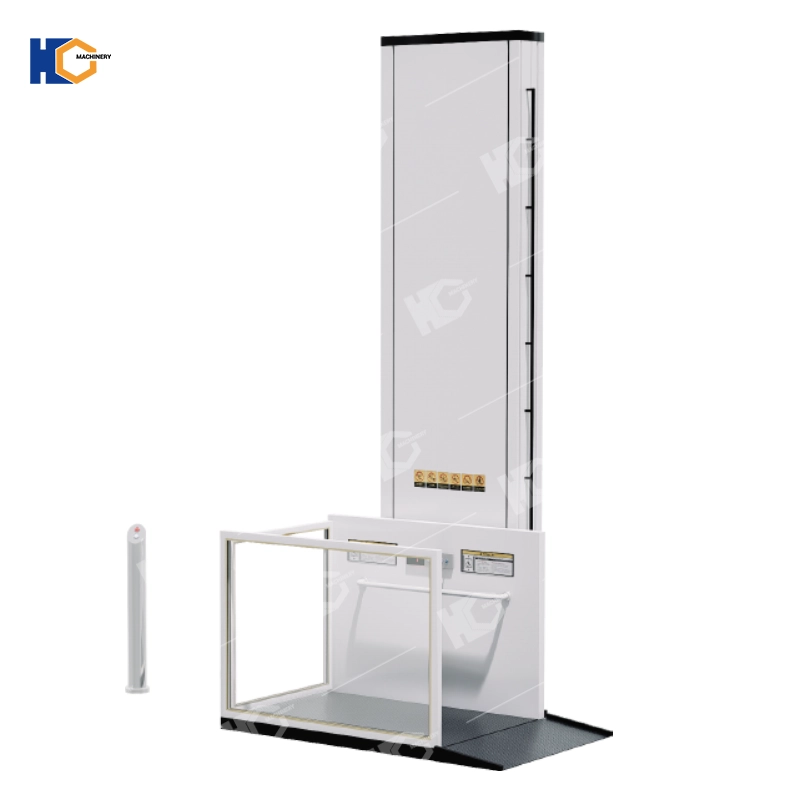
5.1 Wheelchair Lifts and Vertical Platform Lifts
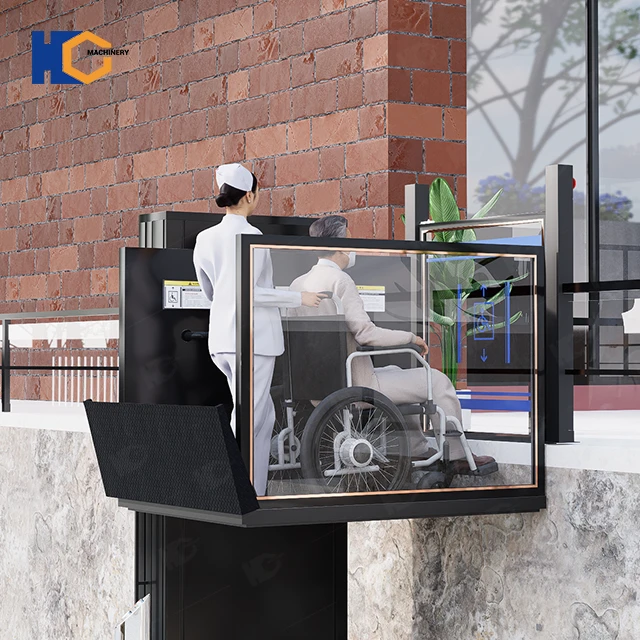
A wheelchair lift, often called a vertical platform lift (VPL), transports a wheelchair user and mobility device between different levels.
It is commonly used where a conventional passenger elevator or a long access ramp is impractical.
Typical locations include:
- Residential porches and entrances.
- Duplex homes.
- Small public buildings.
- Schools and community facilities.
- Accessible platforms and raised landings.
Compared with a conventional enclosed passenger elevator, many VPL designs use an open or semi-enclosed platform and are intended for shorter travel distances.
Important purchasing considerations include platform dimensions, rated load, travel height, entry and exit direction, safety gates, obstruction sensors, emergency lowering, and indoor or outdoor protection.
JNHC manufactures wheelchair lifts for residential and commercial accessibility projects. One listed vertical platform wheelchair lift model has a platform size of 1,430 × 1,000 mm and published load options of 250 kg or 350 kg. These figures apply to that product configuration and should not be used as general VPL specifications.
5.2 Inclined Platform Lifts and Stair Lifts
These devices provide access along an existing staircase rather than traveling vertically through a conventional elevator shaft.
An inclined platform lift carries a wheelchair platform along a rail installed beside or on the staircase. A stair lift generally carries one seated user on a rail-mounted chair.
They can be useful for existing buildings where structural changes are difficult.
However, they have different space, accessibility, loading, evacuation, and safety requirements from vertical platform lifts. The staircase width, landing space, turning arrangements, and local regulations must be checked before installation.
5.3 Scissor Lifts
A scissor lift uses interconnected folding supports to raise and lower a platform vertically.
It is mainly used for industrial material handling, construction, installation, and elevated maintenance work.
Common applications include:
- Warehouse maintenance.
- Factory production lines.
- Equipment installation.
- Building maintenance.
- Construction projects.
- Loading and positioning operations.
Scissor lifts can be mobile or fixed, depending on the application. Some are designed to raise workers, while others are intended primarily for materials.
A scissor lift is not a direct replacement for a passenger elevator. Its working platform, travel range, operating environment, guarding, and safety system must be assessed for the specific task.
See JNHC’s scissor lift product range for mobile, fixed, and other customized platform lifting solutions.
5.4 Lift Tables
A lift table is designed to raise and lower goods to a convenient working height. Many models use a hydraulic scissor mechanism.
Typical applications include:
- Factory assembly lines.
- Warehouse loading areas.
- Packaging stations.
- Automotive workshops.
- Production and material handling.
The main purpose is usually vertical positioning at a workstation or loading point, rather than transporting passengers between building floors.
For example, a hydraulic lift table can help workers position heavy materials more efficiently and reduce repetitive manual lifting.
6. Other Elevator Designs and Special Configurations
Some commonly searched elevator names describe appearance, building function, or operating arrangements rather than a separate drive system.
| Type or Configuration | Main Characteristic | Typical Application |
|---|---|---|
| Panoramic elevator | Glass walls or transparent cabin sections | Hotels, malls, villas, tourist facilities |
| Observation elevator | Designed to provide views during travel | Scenic buildings and public attractions |
| Double-deck elevator | Two elevator cabins arranged vertically | Selected high-rise buildings |
| Fire service elevator | Specially designed for firefighter operations under applicable codes | Buildings where fire-service elevator provisions are required |
| Machine-room elevator | Main machinery located in a separate machine room | Buildings with suitable dedicated equipment space |
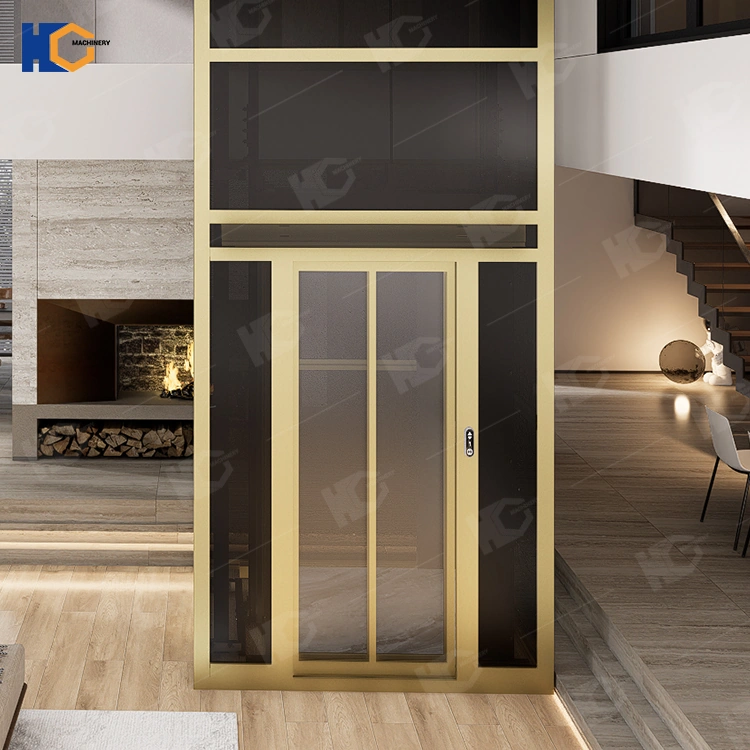
A panoramic elevator, for example, may use traction or another suitable drive system. Its glass cabin does not determine how it moves.
Similarly, a fire service elevator is a specialized safety and building-function configuration. It must be designed according to the applicable fire and elevator codes rather than treated as a regular passenger elevator with a different name.
7. Which Type of Elevator Is Best for Different Buildings?
No single elevator is best for every project. The correct solution depends on how the building will be used, how much weight it needs to carry, and what installation conditions are available.
| Project Type | Elevator or Lift Type to Evaluate | Main Selection Priorities |
|---|---|---|
| 2–3-story private villa | Hydraulic or compact traction home elevator | Space, comfort, rated load, installation work |
| Existing multi-story home | Shaftless or compact residential elevator | Building modification, available footprint |
| Mid-rise residential building | Passenger traction or suitable hydraulic system | Traffic demand, speed, capacity, local code |
| High-rise office building | Gearless traction system | Traffic handling, speed, energy performance |
| Factory or warehouse | Freight elevator or cargo lift | Heavy load, platform size, loading access |
| Hotel or commercial facility | Passenger and service elevators | Separate traffic flows, operating frequency |
| Hospital | Stretcher-capable passenger or hospital elevator | Cabin dimensions, door clearance, emergency operation |
| Raised home entrance | Vertical platform wheelchair lift | Platform dimensions, travel height, accessibility |
| Warehouse loading station | Fixed scissor lift or lift table | Platform size, lifting capacity, working height |
This is a preliminary selection guide, not a final engineering specification. A project assessment should confirm the actual equipment type and configuration.
8. Seven Factors to Consider Before Choosing an Elevator
Selecting an elevator based only on its advertised price can create problems during installation and daily operation. Buyers should evaluate the following factors before requesting a quotation.
8.1 Building Height and Travel Distance
The number of floors and the actual distance between the lowest and highest landings influence the drive system, guide rails, structural arrangement, and safety requirements.
Do not provide only the number of floors when requesting a quotation. Include the total travel height in millimeters or meters and the floor-to-floor dimensions.
8.2 Rated Load and Cabin or Platform Size
The rated load must match the equipment’s actual purpose.
For passenger elevators, consider the number of passengers, wheelchair access, luggage, and cabin dimensions.
For freight elevators, consider the heaviest individual item, total load, pallet or trolley dimensions, and loading equipment.
A higher rated capacity does not automatically mean the equipment will accommodate a larger pallet or vehicle. Physical dimensions matter just as much.
8.3 Available Installation Space
Before selecting an elevator, measure:
- Available shaft or installation footprint.
- Pit depth.
- Overhead clearance.
- Machine-room availability.
- Door opening width and height.
- Structural support and floor loading.
- Access for transporting and installing equipment.
For existing buildings, the installation environment can determine whether a conventional shaft elevator, a shaftless home elevator, or a vertical platform lift is more practical.
8.4 Traffic Frequency and Operating Duty
A system designed for occasional use in a private home has different operating requirements from an elevator in a busy commercial building.
Estimate the expected number of trips per hour, daily operating hours, peak traffic periods, and load distribution.
These details help determine the suitable drive, motor, controls, and operating-duty specification.
8.5 Energy Consumption and Maintenance
The initial equipment price is only one part of the ownership cost.
Buyers should also evaluate:
- Electricity consumption.
- Hydraulic oil and component maintenance, where applicable.
- Rope or belt inspection requirements.
- Door system maintenance.
- Spare-parts availability.
- Local service capability.
- Inspection and testing requirements.
A slightly higher initial investment may be worthwhile when the system provides better long-term operating efficiency or easier maintenance for the intended application.
8.6 Safety and Local Compliance
Elevators are safety-critical equipment. The applicable requirements depend on the elevator type, building use, installation country, and local authority.
Before ordering, confirm:
- Applicable elevator or lifting-equipment safety codes.
- Required certificates and technical documentation.
- Rated-load testing arrangements.
- Door interlocks and safety protection.
- Emergency operation and communication.
- Inspection and approval procedures.
- Maintenance responsibilities after installation.
Do not assume that one certificate automatically proves compliance in every market. Ask the manufacturer to identify the standards applicable to the exact model and intended installation.
8.7 Supplier Experience and After-Sales Support
For overseas projects, the manufacturer’s technical support can be just as important as the equipment itself.
Evaluate whether the supplier can provide:
- Technical drawings and installation dimensions.
- Detailed product specifications.
- Electrical diagrams and operating manuals.
- Factory testing records.
- Spare-parts supply.
- Remote technical assistance.
- Warranty terms and maintenance guidance.
- Customization for local voltage and project requirements.
A supplier who can support the project from design confirmation through installation and maintenance can help reduce procurement and commissioning risks.
9. How Much Does an Elevator Cost?
Elevator prices vary substantially according to drive system, rated capacity, cabin dimensions, travel height, number of stops, configuration, country, and installation conditions.
A useful quotation should clearly separate equipment price from the total installed project cost.
| Cost Component | What It May Include |
|---|---|
| Elevator equipment | Drive system, cabin or platform, doors, controls, guide rails |
| Customization | Cabin finish, dimensions, capacity, door arrangement, special controls |
| Civil construction | Shaft, pit, structural reinforcement, machine-room preparation |
| Electrical work | Power supply, wiring, grounding, protection devices |
| Transportation | Export packaging, freight, insurance, customs-related charges |
| Installation | Equipment assembly, alignment, wiring, commissioning |
| Testing and approval | Required inspections, load tests, local approvals |
| Maintenance | Periodic inspection, servicing, replacement parts |
For residential buyers, the difference between equipment price and installed cost is especially important. A factory quotation may not include building modifications, local labor, freight, permits, or commissioning.
For a more detailed residential cost breakdown, see our guide to how much a small home elevator costs.
When comparing manufacturers, request quotations based on the same specifications. Comparing a basic equipment-only quotation with a fully installed solution will not provide a reliable price comparison.
10. Elevator Solutions from Huichuang Lift (JNHC)
Jinan Huichuang Machinery Manufacturing Co., Ltd. (Huichuang Lift / JNHC Lift) is a lifting-equipment manufacturer based in Jinan, Shandong, China.
The company focuses on residential elevators, hydraulic lifting equipment, and platform lifting solutions for different applications.
Its product range includes:
- Hydraulic home elevators.
- Traction home elevators.
- Shaftless residential elevators.
- Wheelchair and vertical platform lifts.
- Guide-rail cargo lifts.
- Mobile and fixed scissor lifts.
- Customized lifting platforms and related equipment.
For residential projects, Huichuang offers hydraulic and traction elevator options as well as compact and panoramic designs. Buyers can compare the HC-A300 hydraulic home elevator with the K900 panoramic traction elevator according to building conditions and project priorities.
For industrial applications, the company provides cargo lift solutions and other platform lifting equipment.
Customization for Different Projects
The required configuration varies from project to project. Depending on the product category and engineering feasibility, customization may involve:
- Rated load capacity.
- Lifting height and number of stops.
- Cabin or platform dimensions.
- Drive system and hydraulic configuration.
- Door type and opening direction.
- Indoor or outdoor installation.
- Power supply and electrical controls.
- Cabin finish and structural materials.
- Safety devices and control options.
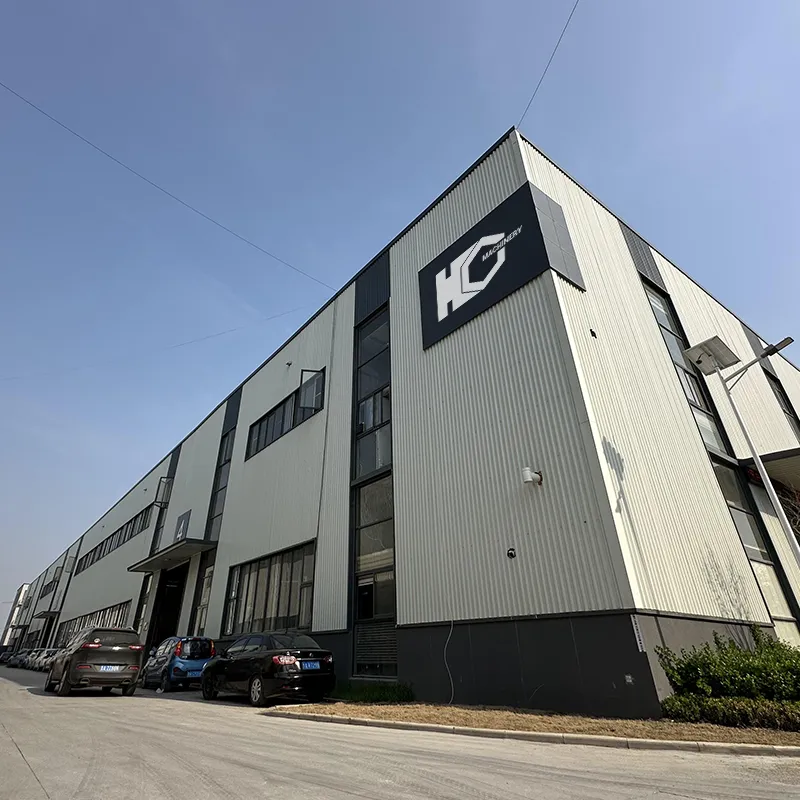
Huichuang’s manufacturing facility supports product manufacturing and customized lifting-equipment projects. You can also learn more about the company through its About Us page.
For an accurate recommendation, provide the project location, building drawings, floor count, total travel height, load requirements, and installation dimensions. The engineering team can then evaluate a suitable equipment configuration.
11. Frequently Asked Questions About Types of Elevators
Q1. What are the main types of elevators?
The main elevator drive systems include traction and hydraulic elevators. Geared and gearless traction are two traction configurations. Screw-driven and pneumatic elevators are additional options for selected applications. MRL describes a machine-room arrangement rather than a separate drive principle.
By application, common types include passenger elevators, home elevators, freight elevators, service elevators, hospital elevators, car elevators, and dumbwaiters.
Q2. What is the difference between hydraulic and traction elevators?
A hydraulic elevator uses pressurized fluid and a cylinder or piston to raise the car. A traction elevator uses a motor-driven sheave and ropes or belts, usually with a counterweight.
Hydraulic systems are often considered for low-rise applications, while traction systems are widely used in mid-rise and high-rise buildings. The best choice depends on building height, usage frequency, rated load, installation conditions, and lifecycle costs.
Q3. What does MRL mean in elevators?
MRL stands for machine-room-less. It describes an elevator configuration that does not require a separate conventional machine room for its main equipment. Many modern MRL elevators use traction technology, with the machinery installed within the hoistway.
MRL can save building space, but maintenance access and equipment dimensions must still be planned carefully.
Q4. Which elevator is best for a two- or three-story house?
A compact hydraulic or traction home elevator may be suitable for a two- or three-story home. A shaftless design may also be considered when conventional shaft construction is difficult.
The decision should be based on available space, lifting height, rated load, pit and overhead requirements, usage frequency, budget, and local regulations.
Q5. Are wheelchair lifts and passenger elevators the same?
No. A wheelchair lift, often called a vertical platform lift, is designed to transport a wheelchair user and mobility device between levels. Many models are intended for shorter travel distances and use an open or semi-enclosed platform.
A passenger elevator generally has a different cabin, drive, enclosure, and application design. The appropriate solution depends on the building, travel distance, accessibility requirements, and local regulations.
Q6. Can a freight elevator carry passengers?
A freight elevator designed and approved only for goods transportation should not be used to carry passengers. Some service or goods elevators are designed for both goods and authorized personnel, but this depends on the equipment classification, safety provisions, and applicable regulations.
Always confirm the manufacturer’s intended-use documentation and local approval before operation.
Q7. Is a scissor lift considered an elevator?
A scissor lift is a lifting platform that uses interconnected folding supports to move vertically. It is commonly used for industrial material handling, construction, and maintenance.
Although it raises a platform, it is not normally a conventional passenger elevator for moving people between building floors. Its intended application and safety requirements are different.
Q8. What information is needed to get an elevator quotation?
A supplier will typically need the following information:
- Project location and building type.
- Number of floors and total lifting height.
- Required rated load.
- Cabin or platform dimensions.
- Available shaft or installation space.
- Pit depth and overhead clearance.
- Machine-room availability.
- Door type and opening direction.
- Power supply and local electrical requirements.
- Expected usage frequency and special safety requirements.
Providing accurate dimensions and project drawings helps the manufacturer recommend a more suitable solution and prepare a reliable quotation.
Conclusion
Understanding the different types of elevator systems is the first step toward selecting the right vertical transportation solution.
Traction elevators are widely used in buildings that require efficient passenger transportation, while hydraulic elevators are frequently considered for low-rise applications and residential projects. Screw-driven and pneumatic systems provide additional options for certain homes. Passenger, freight, service, hospital, and residential elevators are classified by their intended applications, while MRL and panoramic designs describe different equipment arrangements or visual features.
Wheelchair platform lifts, scissor lifts, and lift tables also provide important vertical lifting functions, but they should be selected according to their specific operating purposes rather than treated as interchangeable passenger elevators.
For buyers, contractors, and project developers, the best elevator is not necessarily the fastest or the cheapest. It is the system that matches the building structure, operating requirements, safety regulations, budget, and long-term maintenance plan.
Planning an elevator or lifting-equipment project? Contact Huichuang Lift with your project dimensions and technical requirements to discuss a suitable customized solution.

Jnhclift (Huichuang Lift), based in Jinan, China, is a professional manufacturer of scissor lifts, home elevators, and lift platforms. With our own dedicated factory, we deliver high-quality, reliable lifting solutions tailored to meet diverse industrial and residential needs.
 Room 203, Second Floor, Building 8, Phase Ⅱ, Zhizao Town, Jibei Street, Jiyang District, Jinan City, Shandong Province
 +86 152 5319 3706
 admin@jnhclift.com