Wheelchair Lifts for Homes Canada
Model: wheelchair lift
Load capacity: 250kg/350 kg
Brand: HUICHUANG(JNHC lift)
Customization: YES
Manual: YES
Price: C$3,350 – C$9,065
 +8615628811021
 admin@jnhclift.com
As Canada’s population ages and accessibility awareness continues growing, wheelchair lifts for homes are becoming one of the fastest-growing residential mobility solutions across the country. From Toronto and Vancouver to Calgary, Montreal, and smaller rural communities, more homeowners are investing in home wheelchair lifts to improve accessibility, independence, safety, and long-term property usability.
For seniors, wheelchair users, individuals recovering from injuries, and families planning for aging in place, wheelchair lifts solve one of the biggest challenges inside a home: safely moving between different floor levels. Stairs can become dangerous, exhausting, or completely inaccessible. Wheelchair lifts provide a practical and cost-effective solution without requiring homeowners to relocate or completely rebuild their property.
This guide explains in detail what wheelchair lifts for homes in Canada are, how they work, their main functions, applications, market prices, market potential, advantages, disadvantages, and competitor comparisons. Whether you are a homeowner, contractor, distributor, or accessibility business, this article provides a comprehensive overview of the Canadian residential wheelchair lift market.
What Are Wheelchair Lifts for Homes?
A home wheelchair lift is a vertical or inclined lifting device specifically designed to transport wheelchair users safely between different elevations inside or outside a residential property.
Unlike commercial elevators, wheelchair lifts are generally:
- Smaller
- More affordable
- Easier to install
- Designed for low-rise travel
These lifts allow users to maintain mobility and independence while reducing physical strain on caregivers and family members.
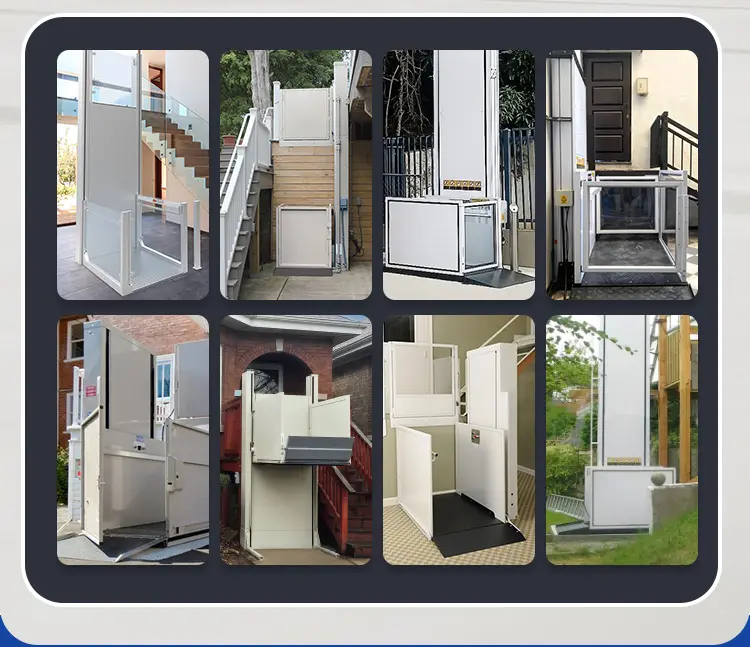
Home wheelchair lifts are commonly installed in:
- Private houses
- Villas
- Duplex homes
- Townhouses
- Residential apartments
- Split-level homes
- Outdoor entrances
They are especially important in Canada because many homes have:
- Front entrance stairs
- Raised basements
- Multi-floor layouts
- Snow-prone outdoor access points
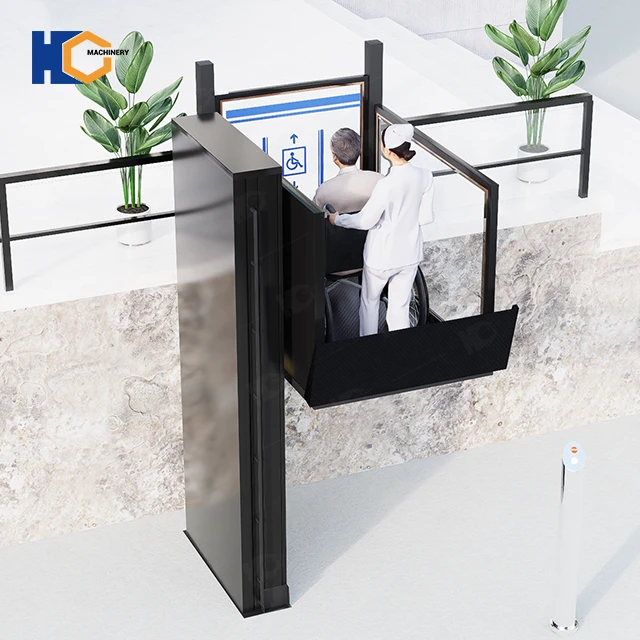
Main Types of Wheelchair Lifts for Homes in Canada
There are several major categories of wheelchair lifts available on the Canadian market.
Vertical Platform Lifts (VPL)
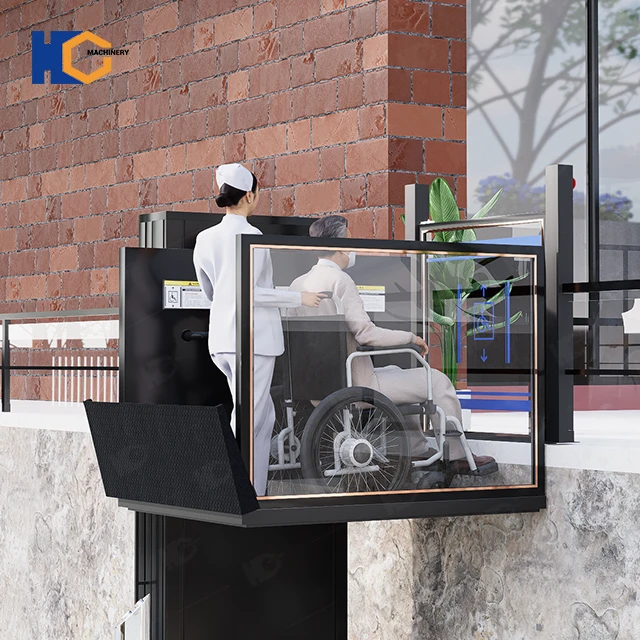
Vertical platform lifts move straight up and down, similar to a small elevator.
Typical Lifting Height
- 1–14 feet
- Some custom models exceed 14 feet
Common Applications
- Porch access
- Garage entry
- Deck access
- Indoor floor transitions
Advantages
- Wheelchair-friendly platform
- Compact footprint
- Strong lifting capacity
- Easy operation
Disadvantages
- Slower than elevators
- Limited travel height
Vertical platform lifts are one of the most popular home accessibility solutions in Canada.
Inclined Platform Lifts
Inclined platform lifts travel along staircases using rail systems.
Applications
- Indoor stairs
- Curved staircases
- Limited-space homes
Advantages
- No major structural modification
- Preserves existing staircase
- Good for narrow spaces
Disadvantages
- More expensive on curved stairs
- Slower travel speed
- Requires clear stairway space
These systems are ideal for homes where installing a vertical lift is difficult.
Wheelchair Stair Lifts
Wheelchair stair lifts differ from traditional chair stair lifts because they carry the wheelchair itself.
Applications
- Multi-story homes
- Accessibility retrofits
Benefits
- Lower cost than elevators
- Easier installation
- Minimal home renovation
Residential Elevators vs Wheelchair Lifts
Many homeowners compare wheelchair lifts with home elevators.
Residential Elevators
Advantages:
- Luxury appearance
- Faster speed
- Higher travel height
- Better property value impact
Disadvantages:
- Higher installation cost
- Larger construction requirements
Wheelchair Lifts
Advantages:
- Lower cost
- Faster installation
- Simpler operation
- Accessibility-focused design
Disadvantages:
- Lower lifting height
- More industrial appearance
For many Canadian homeowners, wheelchair lifts offer the best balance between affordability and accessibility.
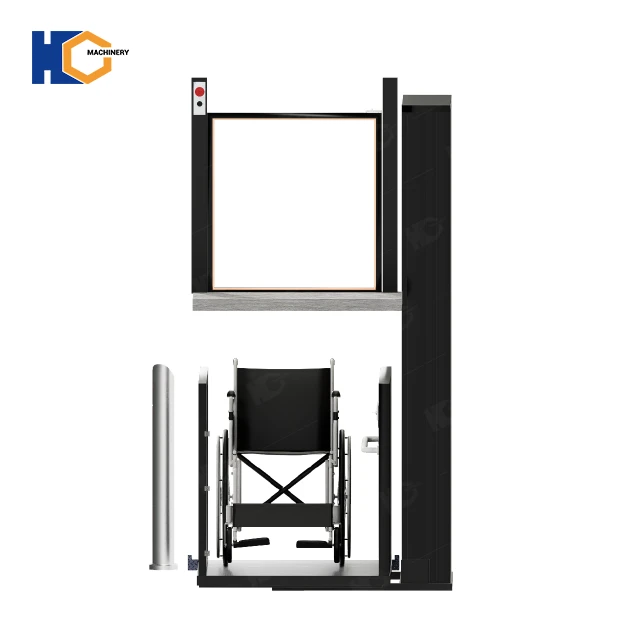
How Wheelchair Lifts Work
Most residential wheelchair lifts use one of the following drive systems:
Hydraulic System
Uses hydraulic cylinders for lifting.
Advantages:
- Smooth movement
- Strong lifting force
- Quiet operation
Screw Drive System
Uses threaded screw mechanisms.
Advantages:
- Low maintenance
- Reliable operation
Electric Drive System
Uses electric motors and guide rails.
Advantages:
- Energy efficient
- Compact design
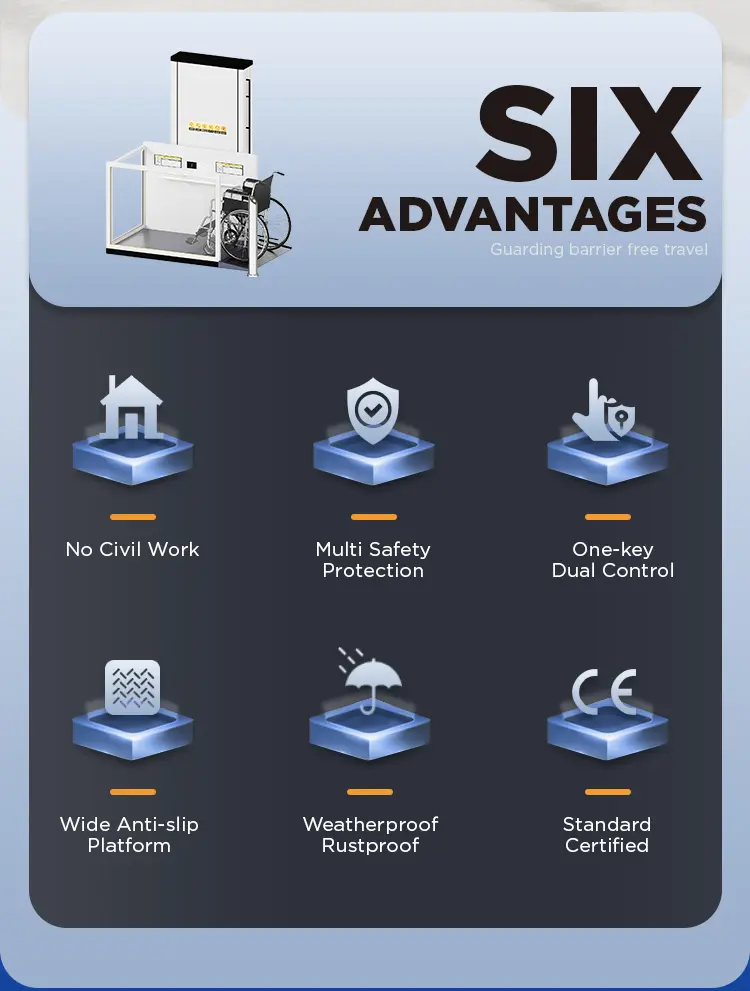
Modern wheelchair lifts include:
- Safety sensors
- Emergency stop buttons
- Battery backup
- Automatic brakes
- Non-slip platforms
- Foldable ramps
These features improve user safety and accessibility.
Main Functions of Wheelchair Lifts
Wheelchair lifts do much more than simply move users vertically.
Improve Accessibility
The primary purpose is eliminating mobility barriers inside and outside homes.
Users can independently access:
- Entrances
- Basements
- Upper floors
- Garages
- Outdoor decks
Enhance Safety
Falls on stairs are one of the leading causes of injuries among seniors in Canada.
Wheelchair lifts reduce risks associated with:
- Slipping
- Fatigue
- Balance loss
Support Aging in Place
Many Canadians prefer remaining in their homes as they age instead of relocating to assisted living facilities.
Wheelchair lifts make this possible.
Reduce Caregiver Burden
Caregivers no longer need to physically assist wheelchair users on stairs.
This improves:
- Safety
- Convenience
- Physical health
Increase Property Accessibility
Accessible homes attract:
- Seniors
- Disabled buyers
- Long-term investors
In some cases, accessibility upgrades can improve resale value.
Applications of Wheelchair Lifts in Canadian Homes
Senior Living
Canada’s aging population is one of the main drivers of wheelchair lift demand.
As mobility declines, homeowners seek safer solutions.
Disability Accessibility
Wheelchair lifts are essential for individuals with:
- Paralysis
- Neuromuscular disorders
- Spinal injuries
- Multiple sclerosis
- Arthritis
Rehabilitation Recovery
Temporary injuries also create demand.
Users recovering from:
- Surgery
- Hip replacement
- Accidents
may require short-term accessibility assistance.
Outdoor Winter Accessibility
Canadian winters create additional mobility challenges.
Snow and ice make stairs dangerous, especially for seniors and wheelchair users.
Outdoor wheelchair lifts with weatherproof systems are increasingly popular in Canada.
Multi-Generation Homes
More Canadian families now live in multi-generational households.
Accessibility equipment helps older family members remain comfortable and independent.
Problems Wheelchair Lifts Solve
Stair Accessibility Issues
Traditional homes were rarely designed for wheelchair access.
Wheelchair lifts solve:
- Entrance barriers
- Split-level transitions
- Basement access problems
Expensive Home Renovations
Without lifts, homeowners may need:
- Major remodeling
- First-floor bedroom conversion
- Relocation
Wheelchair lifts are often far cheaper than rebuilding a home.
Emotional Stress
Mobility limitations affect confidence and independence.
Wheelchair lifts restore freedom and dignity for many users.
Institutional Relocation
Many seniors fear moving into nursing facilities.
Home accessibility solutions help delay or prevent relocation.
Canadian Market Potential for Wheelchair Lifts
Canada’s wheelchair lift market has strong long-term growth potential.
Several factors are driving demand.
Aging Population
Canada’s senior population is expanding rapidly.
Millions of Canadians are now:
- Retiring
- Aging in place
- Seeking accessibility upgrades
This creates sustained market demand.
Government Accessibility Policies
Federal and provincial governments increasingly support:
- Accessibility grants
- Home modification programs
- Inclusive housing initiatives
These programs encourage adoption of mobility solutions.
Rising Home Renovation Market
Canadian homeowners are investing heavily in:
- Home improvements
- Accessibility retrofits
- Smart home technologies
Wheelchair lifts fit directly into this trend.
Real Estate Accessibility Awareness
Accessible homes are becoming more desirable in Canada’s housing market.
Future-proofing homes improves long-term usability.
Growth of Smart Accessibility Technology
Modern lifts now integrate:
- Remote controls
- Smart diagnostics
- Battery backup
- App monitoring
Technology upgrades increase consumer interest.
Wheelchair Lift Prices in Canada
Prices vary depending on:
- Lift type
- Lifting height
- Indoor or outdoor use
- Weight capacity
- Installation complexity
- Customization
Vertical Platform Lift Prices
| Lift Height | Price (CAD) | Price (USD Approx.) |
|---|---|---|
| 4–6 ft | CAD 8,000–15,000 | USD 5,800–10,900 |
| 6–10 ft | CAD 15,000–25,000 | USD 10,900–18,200 |
| 10–14 ft | CAD 25,000–40,000 | USD 18,200–29,100 |
Inclined Platform Lift Prices
| Stair Type | Price (CAD) | Price (USD Approx.) |
| Straight staircase | CAD 12,000–20,000 | USD 8,700–14,500 |
| Curved staircase | CAD 20,000–45,000 | USD 14,500–32,700 |
Curved staircases are significantly more expensive due to custom rail manufacturing.
Residential Elevator Prices
| Elevator Type | Price (CAD) | Price (USD Approx.) |
| Basic home elevator | CAD 35,000–60,000 | USD 25,400–43,600 |
| Luxury custom elevator | CAD 60,000–120,000+ | USD 43,600–87,200+ |
Outdoor Wheelchair Lift Prices
Outdoor lifts require:
- Weatherproof materials
- Anti-rust coatings
- Cold-resistant systems
Average Price
CAD 10,000–30,000
(USD 7,300–21,800)
Canadian winters are not gentle on equipment. If a lift survives February in Winnipeg, it has basically earned honorary citizenship.
Installation Costs in Canada
Installation pricing depends on:
- Construction requirements
- Electrical work
- Concrete preparation
- Structural reinforcement
| Installation Item | Average Cost (CAD) |
| Basic installation | CAD 2,000–5,000 |
| Concrete pad | CAD 1,500–4,000 |
| Electrical work | CAD 1,000–3,000 |
| Structural modifications | CAD 2,000–10,000 |
Maintenance Costs
Routine maintenance is important for safety and reliability.
Annual Maintenance Cost
CAD 500–2,500
Typical maintenance includes:
- Lubrication
- Electrical inspection
- Safety testing
- Battery checks
- Hydraulic servicing
High-Quality vs Low-Quality Wheelchair Lifts
Low-Quality Lifts
Characteristics
- Thin steel construction
- Limited weather protection
- Lower-quality motors
- Weak safety systems
Risks
- Frequent breakdowns
- Noise
- Poor cold-weather performance
- Higher repair costs
Cheap lifts may initially save money but often create long-term frustration.
High-Quality Lifts
Features
- Heavy-duty steel or aluminum
- Advanced safety controls
- Cold-weather engineering
- Smooth operation
- Long lifespan
Advantages
- Better reliability
- Lower downtime
- Improved user comfort
- Stronger warranty support
Premium lifts are especially valuable in harsh Canadian climates.
Competitor Analysis
Wheelchair Lifts vs Stair Lifts
Stair Lifts
Advantages:
- Lower cost
- Fast installation
Disadvantages:
- User must transfer from wheelchair
- Less independence
Wheelchair Lifts
Advantages:
- Full wheelchair transport
- Greater accessibility
Disadvantages:
- Higher cost
Wheelchair Lifts vs Ramps
Ramps
Advantages:
- No electricity
- Simple design
Disadvantages:
- Require large space
- Difficult during snow and ice
- Steep slopes may be unsafe
Wheelchair lifts are often better for compact Canadian homes.
Wheelchair Lifts vs Residential Elevators
Elevators
Advantages:
- Luxury design
- Higher speed
- Greater property value impact
Disadvantages:
- Much higher cost
- Longer installation
Wheelchair lifts remain the more practical solution for many homeowners.
How to Choose the Right Wheelchair Lift
Evaluate User Needs
Consider:
- Wheelchair size
- Weight capacity
- Independence level
Measure Available Space
Space limitations influence lift selection.
Consider Canadian Climate
Outdoor lifts should include:
- Weatherproof components
- Corrosion resistance
- Winter operation systems
Verify Safety Certifications
Choose products meeting:
- Canadian accessibility standards
- Electrical safety regulations
Compare Warranty and Service
Reliable local support is critical for long-term operation.
Future Trends in Canada’s Wheelchair Lift Market
Several trends are shaping the future.
Smart Accessibility Systems
Future lifts may include:
- AI diagnostics
- Smartphone integration
- Voice control
Eco-Friendly Technology
Energy-efficient motors and recyclable materials are becoming more important.
Aging-in-Place Construction
More new homes now include accessibility planning from the design stage.
Increased Government Support
Accessibility grants may continue expanding across Canada.
Final Thoughts
Wheelchair lifts for homes in Canada are becoming essential accessibility solutions for seniors, wheelchair users, injured individuals, and families planning for long-term independent living. These lifts improve safety, mobility, convenience, and quality of life while reducing the need for expensive home renovations or relocation.
The Canadian market offers a wide range of options including vertical platform lifts, inclined platform lifts, outdoor wheelchair lifts, and residential elevators. Prices generally range from CAD 8,000 to over CAD 100,000 depending on lift type, travel height, customization, and installation requirements.
As Canada’s population continues aging and accessibility awareness grows, the demand for residential wheelchair lifts is expected to rise significantly in the coming years. For homeowners, investing in a high-quality wheelchair lift is not only about mobility — it is about independence, dignity, safety, and long-term home usability.
Choosing the right lift requires careful evaluation of space, budget, climate conditions, safety features, and future accessibility needs. A well-designed wheelchair lift can provide reliable service for many years while helping Canadians remain comfortable and independent in the homes they love.
 Room 203, Second Floor, Building 8, Phase Ⅱ, Zhizao Town, Jibei Street, Jiyang District, Jinan City, Shandong Province