3-Floor Indoor Small Hydraulic Lift for Home
- Designed for indoor installation
- Serves up to 3 floors efficiently
- Uses hydraulic cylinder and pump system
- Operates at low speed for safety and comfort
- Requires minimal headroom compared to traction systems
- Price: $3,700–$5,500
 +8615628811021
 admin@jnhclift.com
As modern homes evolve toward multi-level living, the demand for compact, reliable, and cost-effective vertical transportation is growing rapidly. A 3-floor indoor small hydraulic lift for home is one of the most practical solutions for homeowners who want improved accessibility, comfort, and long-term property value.
Unlike large commercial elevators, these systems are specifically engineered for residential environments, offering smooth operation, space efficiency, and relatively simple installation. This guide provides a detailed, practical, and technical overview—from how hydraulic home lifts work to specifications, installation requirements, costs, and buying strategies.
What Is a 3-Floor Indoor Small Hydraulic Lift?
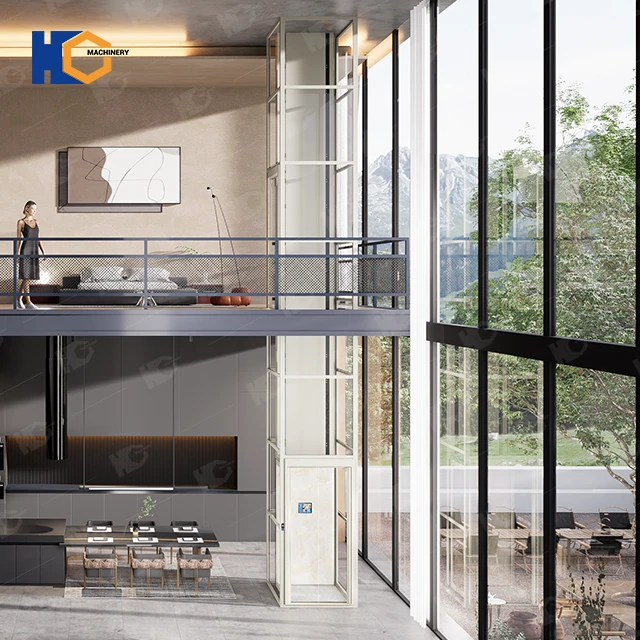
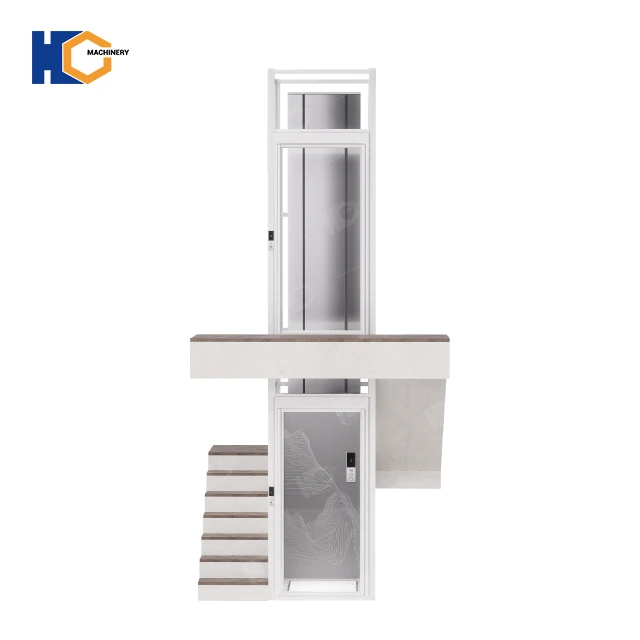 A small hydraulic home lift is a residential elevator that uses hydraulic pressure to move the cabin vertically between floors. It is particularly suitable for homes with 2–3 floors, making it ideal for villas, townhouses, and duplex residences.
Key Characteristics
- Designed for indoor installation
- Serves up to 3 floors efficiently
- Uses hydraulic cylinder and pump system
- Operates at low speed for safety and comfort
- Requires minimal headroom compared to traction systems
Optimized for low-rise residential use cases, this lift streamlines non-essential industrial-grade configurations and prioritizes family-focused safety, quiet operation and space-efficient installation. It aligns well with the height range of 3-story homes, and avoids the redundant performance and high construction costs that come with oversized commercial elevator systems.This type of lift prioritizes simplicity, safety, and affordability.
How a Hydraulic Home Lift Works
Understanding the working principle helps you evaluate performance and maintenance needs.
Core Components
- Hydraulic Pump Unit
Generates pressure using hydraulic oil - Hydraulic Cylinder
Pushes the piston to lift the cabin - Lift Cabin (Car)
Passenger compartment - Control System
Manages movement, stops, and safety - Guide Rails
Ensure stable vertical motion
Working Principle
- When going up, the pump pushes oil into the cylinder, raising the piston and cabin
- When going down, oil is released slowly, allowing gravity to lower the cabin
This results in smooth, stable, and low-noise operation, perfect for residential use.
Different from traction elevators that rely on ropes and counterweights, hydraulic lifting adopts gravity-assisted descending and pressure-controlled ascending. This purely hydraulic mechanical structure avoids sudden jitters, rope wear risks and slipping hazards, delivering ultra-stable travel experience suitable for children, the elderly and pregnant family members.
Why Choose a Hydraulic Lift for a 3-Floor Home?
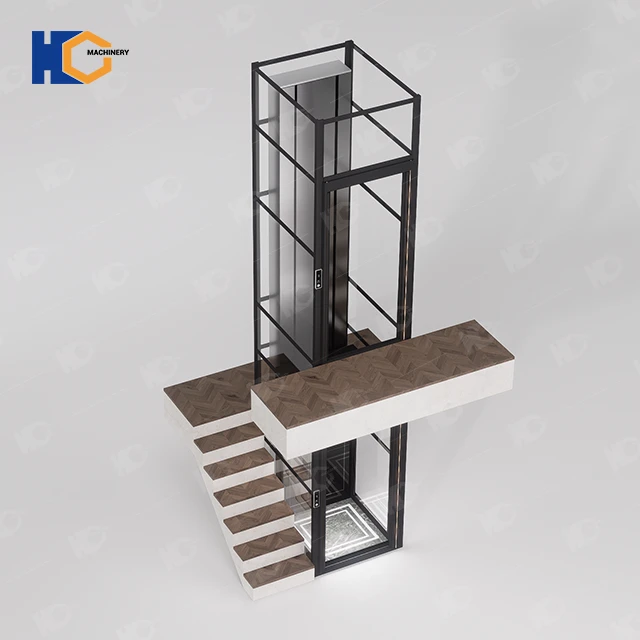
1. Cost-Effective Solution
Hydraulic lifts are generally more affordable than traction elevators due to:
- Simpler structure
- Lower installation complexity
2. Space Efficiency
- No need for a machine room (in compact designs)
- Smaller shaft requirements
3. Smooth and Quiet Operation
- Minimal vibration
- Ideal for indoor residential environments
4. High Safety Level
- Equipped with multiple safety systems
- Stable even during power fluctuations
The hydraulic self-weight pressure relief structure realizes slow descent without free falling risk. Matched with overload protection, limit stop and emergency rescue functions, it forms multiple safety guarantees, fully meeting family daily safe use standards.
5. Easy Installation
- Faster installation compared to traction systems
- Suitable for both new buildings and retrofits、
Technical Specifications (Typical Configuration)
All specifications are fully customizable to accommodate specific site dimensions, passenger capacity requirements and interior design preferences.
| Parameter | Specification |
|---|---|
| Floors | 2–3 floors |
| Load Capacity | 250–400 kg |
| Speed | 0.3 m/s |
| Cabin Size | Customized (approx. 800×1000 mm) |
| Drive System | Hydraulic |
| Power Supply | Single-phase or three-phase |
| Pit Depth | 150–300 mm |
| Overhead | 2600–3000 mm |
| Noise Level | Low |
These specs can be customized based on project requirements.
Space Requirements and Installation Conditions
1. Shaft Space
- Minimum shaft size: ~1200 × 1200 mm
- Can be installed in:
- Stairwell
- Corner of room
- Dedicated shaft
It makes full use of idle corner space inside the house without destroying the original house layout and decoration style.
2. Pit Requirement
- Shallow pit (150–300 mm)
- Easier construction compared to commercial elevators
3. Headroom
- Lower than traction lifts
- Suitable for residential ceilings
4. Power Requirements
- Standard household electricity (depending on model)
Design Options for Home Hydraulic Lifts
1. Cabin Design
- Stainless steel
- Glass panoramic cabin
- Wooden decorative panels
Diverse cabin styles match modern, light luxury, minimalist and traditional home decoration styles, integrating perfectly with indoor space.
2. Door Types
- Automatic sliding doors
- Manual swing doors
3. Control Panel
- Touchscreen or button panel
- Smart home integration
4. Lighting and Interior
- LED lighting
- Custom finishes
Safety Features
Safety is the most important factor in residential lifts. All safety configurations are designed for family scenarios, focusing on anti-pinch, anti-fall and emergency rescue functions to ensure zero risk in daily use.
Standard Safety Systems
- Emergency stop button
- Overload protection
- Emergency lowering system
- Door interlock system
- Power failure backup
Advanced Safety Options
- Automatic rescue device (ARD)
- Alarm system
- Child safety lock
Installation Process (Step-by-Step)
Step 1: Site Evaluation
- Measure available space
- Determine shaft location
Step 2: Design and Customization
- Choose cabin size and style
- Confirm specifications
Step 3: Civil Preparation
- Build shaft
- Prepare pit and power supply
Step 4: Equipment Installation
- Install rails, cylinder, and cabin
- Connect hydraulic system
Step 5: Testing and Commissioning
- Safety checks
- Load testing
Step 6: Final Delivery
- User training
- Maintenance instructions
Cost of a 3-Floor Hydraulic Home Lift
Prices vary based on cabin interior finishes and customization specifications, with transparent configuration pricing and no hidden fees.
Typical Price Range
| Type | Price (USD) |
|---|---|
| Basic model | $6,000 – $10,000 |
| Mid-range | $10,000 – $18,000 |
| High-end custom | $18,000 – $30,000 |
Additional Costs
- Installation: $3,000 – $8,000
- Civil work: varies by project
- Shipping and import
Hydraulic lifts offer excellent value for money compared to traction systems.
Hydraulic Lift vs Traction Lift (Quick Comparison)
| Feature | Hydraulic Lift | Traction Lift |
|---|---|---|
| Cost | Lower | Higher |
| Speed | Lower | Higher |
| Space Requirement | Less | More |
| Maintenance | Moderate | Higher |
| Best Use | Low-rise homes | High-rise buildings |
For 3-floor homes, hydraulic lifts are usually the better choice. For 2-3 story private residences, the low-speed stable advantage of hydraulic lifts completely meets daily household needs, while avoiding redundant high-speed performance and high construction costs of traction elevators.
Maintenance and Lifespan
Maintenance Requirements
- Regular oil checks
- System inspection every 6–12 months
Maintenance is simple and convenient, no complex professional operation is required, greatly reducing daily maintenance pressure for household users.
Lifespan
- Typically 15–25 years with proper maintenance
Advantages in Maintenance
- Simple mechanical structure
- Lower repair cost
Ideal Applications
A 3-floor hydraulic lift is perfect for:
- Villas
- Duplex houses
- Townhouses
- Elderly-friendly homes
- Luxury residential properties
It effectively improves the living quality of multi-storey houses and is a practical hard decoration upgrade for modern high-quality residences.
Common Buyer Mistakes
- Choosing oversized capacity
- Ignoring installation space
- Focusing only on price
- Skipping after-sales support
How to Choose the Right Hydraulic Lift
Key Factors
- Number of users
- Space availability
- Budget
- Design preference
Supplier Checklist
- Experience in home lifts
- Customization capability
- Certification (CE, ISO)
- After-sales service
Future Trends in Home Elevators
- Smart home integration
- Energy-efficient systems
- Compact modular designs
- Eco-friendly hydraulic fluids
Home lifts are gradually developing toward intelligence, environmental protection and high integration, more suitable for modern smart home living scenarios.
Final Verdict
A 3-floor indoor small hydraulic lift for home is one of the most practical and cost-effective solutions for modern residential buildings.
Key Advantages
- Affordable
- Easy to install
- Safe and reliable
- Space-efficient
- Comfortable operation
It is the ideal choice for homeowners who want convenience, accessibility, and long-term value without the complexity of commercial elevator systems.
Conclusion
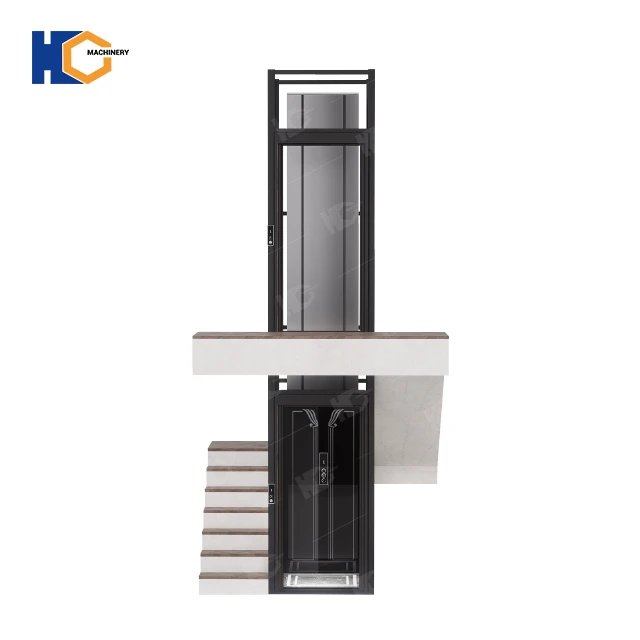 Investing in a hydraulic home lift is not just about convenience—it’s about improving quality of life, enhancing property value, and future-proofing your home. As a low-investment, high-return residential supporting facility, it solves the vertical traffic pain point of multi-storey homes, brings convenient and safe travel for the whole family, and effectively improves the overall grade and resale value of the house.
By understanding how these systems work, evaluating specifications, and choosing the right supplier, you can ensure a smooth and successful installation.
If you are planning a 3-floor home project, a small hydraulic lift is one of the smartest upgrades you can make—combining practicality, comfort, and modern living in one efficient solution.
 Room 203, Second Floor, Building 8, Phase Ⅱ, Zhizao Town, Jibei Street, Jiyang District, Jinan City, Shandong Province