
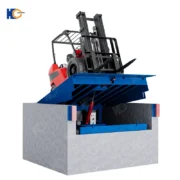
What Is a Dock Leveler and How Does It Work?
A dock leveler is an important piece of loading dock equipment that creates a safe and efficient bridge between a warehouse loading dock and a truck or trailer. By compensating for differences in height between the dock floor and the vehicle bed, a dock leveler allows forklifts, pallet jacks, and other material handling equipment to move smoothly during loading and unloading.
But what exactly is a dock leveler, how does it work, and which type is right for your facility?
In this guide, we explain the working principle, main components, types, benefits, safety considerations, and selection factors you should understand before choosing a dock leveler.
What Is a Dock Leveler?
A dock leveler is a mechanical or hydraulic platform installed at a loading dock. Its primary purpose is to compensate for the height difference between the warehouse floor and the bed of a truck or trailer.
Truck bed heights can vary depending on the type of vehicle, suspension, cargo load, and loading conditions. Without a dock leveler, this difference in elevation can create a gap or steep transition that makes it difficult and potentially unsafe for forklifts and other equipment to move between the dock and the vehicle.
A dock leveler solves this problem by adjusting its deck and lip to form a continuous loading surface.
In simple terms:
A dock leveler acts as a bridge between the loading dock and the truck.
It helps make loading and unloading faster, smoother, and safer.
What Does a Dock Leveler Do?
A dock leveler typically performs several important functions:
- Bridges the gap between the dock and trailer
- Compensates for differences in vehicle bed height
- Provides a smooth transition for forklifts and pallet jacks
- Supports the movement of goods during loading and unloading
- Improves loading dock efficiency
- Helps reduce risks associated with uneven dock-to-trailer transitions
Dock levelers are commonly used in warehouses, factories, distribution centers, logistics facilities, manufacturing plants, and other commercial or industrial loading areas.
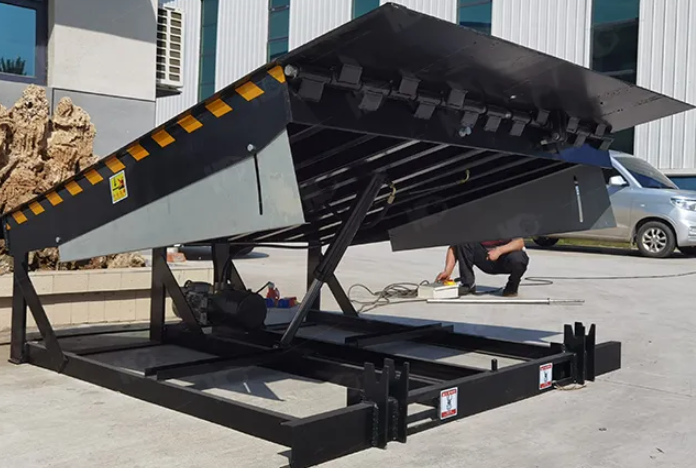
Fixed Dock Leveler
How Does a Dock Leveler Work?
The basic working principle of a dock leveler is relatively simple: the platform adjusts its position to match the height of the vehicle, while the lip extends onto the truck bed to create a bridge.
The exact operating method depends on the type of dock leveler. Hydraulic models use hydraulic cylinders and controls, while mechanical models use mechanical springs and related components.
A typical hydraulic dock leveler works through the following steps.
Step 1: The Dock Leveler Is Raised
When the operator activates the control system, the hydraulic mechanism raises the dock leveler’s deck from its stored position.
The hydraulic cylinder provides the force needed to move the platform.
Step 2: The Lip Extends
As the deck reaches the appropriate position, the lip extends toward the truck or trailer.
The lip is the front section of the dock leveler designed to rest on the vehicle bed.
Step 3: The Deck Adjusts to the Vehicle Height
The deck moves upward or downward as necessary to compensate for the difference between the loading dock height and the trailer bed.
This adjustment is important because different trucks may have different bed heights.
Step 4: The Lip Rests on the Trailer Bed
Once the dock leveler is correctly positioned, the lip rests on the truck or trailer bed.
The deck and lip then form a continuous transition between the warehouse and the vehicle.
Step 5: Loading and Unloading Begins
A forklift, pallet jack, or other suitable material handling equipment can travel across the dock leveler.
Workers can move pallets, boxes, machinery, and other goods between the warehouse and vehicle more efficiently.
Step 6: The Dock Leveler Returns to Its Stored Position
After loading or unloading is complete and the vehicle is ready to leave, the dock leveler is returned to its stored position.
The exact return sequence depends on the design and operating system of the equipment.
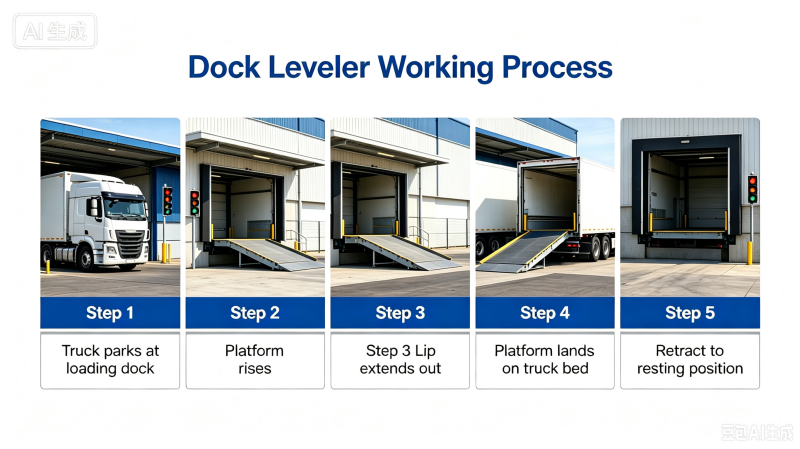
Dock Leveler Working Process
Main Components of a Dock Leveler
Although dock levelers can differ in design, most systems contain several key components.
1. Deck
The deck is the main platform of the dock leveler.
It carries the loads passing between the warehouse and truck and must be designed to withstand the expected traffic and dynamic loading conditions.
The required deck dimensions and load capacity depend on the application, forklift specifications, pallet sizes, and expected traffic.
2. Lip
The lip is the hinged section at the front of the dock leveler.
It extends toward the trailer and provides the connection between the dock leveler and the vehicle bed.
Proper lip positioning is essential for safe loading and unloading.
3. Hinges
Hinges connect moving sections of the dock leveler and allow the deck and lip to move as designed.
Because these components experience repeated movement, regular inspection and maintenance are important.
4. Hydraulic System
Hydraulic dock levelers use hydraulic components to raise and position the deck and operate the lip.
Depending on the design, the system may include hydraulic cylinders, hoses, valves, a hydraulic power unit, and other components.
5. Control System
The control system allows the operator to raise, position, and return the dock leveler.
Modern systems can be designed to make operation simple and controlled.
6. Safety Components
Depending on the design, dock levelers may incorporate different safety features to help prevent uncontrolled movement and protect operators and equipment.
Safety components should always be designed and used according to the manufacturer’s specifications and the requirements of the application.
Types of Dock Levelers
Dock levelers are available in several configurations. The most appropriate type depends on the loading environment, operating frequency, available installation space, vehicle types, and performance requirements.
Hydraulic Dock Levelers
Hydraulic dock levelers use hydraulic power to raise the deck and operate the lip.
They are often selected for applications where smooth operation, convenient control, and frequent loading and unloading are important.
Potential advantages include:
- Smooth operation
- Easy push-button control
- Consistent positioning
- Suitable for frequent dock operations
- Can be customized for different applications
For busy warehouses and distribution facilities, hydraulic operation can provide a convenient solution for repeated loading dock activities.
Mechanical Dock Levelers
Mechanical dock levelers use mechanical components rather than a powered hydraulic system to position the platform.
They can offer a relatively simple solution for loading docks and may be suitable where loading requirements and operating conditions do not require powered operation.
The appropriate choice depends on the facility’s usage frequency, maintenance preferences, and budget.
Air-Powered Dock Levelers
Air-powered dock levelers use an air system to raise and lower the deck.
They are another option for facilities looking for powered dock-leveling equipment.
The suitability of an air-powered system depends on the facility’s available infrastructure and operating requirements.
Edge-of-Dock Levelers
An edge-of-dock leveler is installed at the edge of a loading dock rather than occupying a full recessed pit.
This configuration can be useful when a conventional recessed dock leveler is not practical or when a more compact loading dock solution is required.
The appropriate design depends on the dock structure, trailer configuration, required capacity, and available operating range.
What Are the Benefits of Using a Dock Leveler?
A properly selected dock leveler can provide several operational benefits.
Improved Loading Dock Safety
A dock leveler helps create a controlled transition between the warehouse dock and the vehicle.
This can reduce problems caused by large height differences and gaps between the dock and trailer.
However, a dock leveler is only one part of a safe loading dock system. Proper vehicle positioning, wheel restraints where required, operator training, equipment inspection, and safe operating procedures are also essential.
Faster Loading and Unloading
Forklifts and pallet jacks can move goods across a suitable dock leveler without workers having to manually bridge the gap between the dock and trailer.
This can help improve loading and unloading efficiency.
Better Forklift Access
A properly designed dock leveler provides a more practical transition for forklifts carrying pallets and other loads.
The design should account for forklift dimensions, wheel configuration, load characteristics, and the expected traffic pattern.
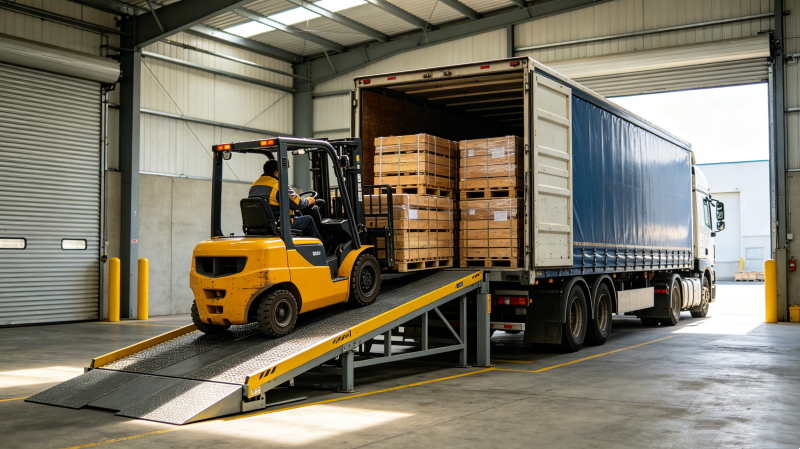
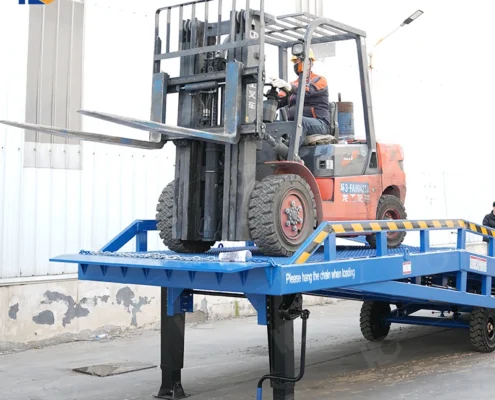
On-site operation scene of dock leveler, forklift drives into truck bed
Accommodates Different Trailer Heights
One of the main purposes of a dock leveler is to compensate for variations in trailer bed height.
This makes it easier for a loading dock to serve different types of vehicles.
Improved Warehouse Productivity
By making the connection between the warehouse and vehicle more efficient, a dock leveler can contribute to smoother material flow and reduced loading dock delays.
For high-volume distribution centers, even small improvements in loading dock efficiency can have a significant operational impact.
Dock Leveler vs. Loading Ramp: What’s the Difference?
Dock levelers and loading ramps both help move goods between different elevations, but they are designed for different applications.
| Feature | Dock Leveler | Loading Ramp |
|---|---|---|
| Primary purpose | Bridge a loading dock and truck/trailer | Provide access between different elevations |
| Typical application | Permanent loading dock | Fixed, mobile, or flexible loading applications |
| Installation | Often integrated into a loading dock | Can be fixed or portable |
| Height adjustment | Designed to compensate for dock-to-trailer height differences | Depends on ramp design |
| Forklift use | Common | Possible depending on ramp capacity and design |
| Flexibility | Primarily designed for loading docks | Can be more flexible depending on configuration |
A dock leveler is generally the better choice when a facility has a dedicated loading dock and regularly handles trucks or trailers.
A loading ramp may be more appropriate when flexibility, portability, container access, or different loading locations are important.
In some facilities, both types of equipment may be useful.
How to Choose the Right Dock Leveler
Choosing a dock leveler should be based on the actual operating conditions rather than simply selecting a standard model.
Consider the following factors before making a decision.
1. Load Capacity
Load capacity is one of the most important specifications.
You should consider the combined weight and dynamic forces generated by:
- Forklift
- Operator
- Pallet
- Cargo
- Other equipment
Do not select a dock leveler based only on the weight of the goods.
The rated capacity should be appropriate for the actual loading conditions and should never be exceeded.
2. Dock Height and Trailer Height
Measure the height of your loading dock and determine the typical and minimum/maximum trailer bed heights you need to accommodate.
The operating range of the dock leveler must be suitable for these conditions.
3. Platform Dimensions
The deck width and length should provide adequate clearance for the equipment moving across it.
Consider:
- Forklift width
- Pallet dimensions
- Turning requirements
- Traffic frequency
- Available dock space
4. Lip Length
The lip must provide an appropriate connection to the trailer bed.
The required lip configuration depends on the vehicle types and loading dock design.
5. Loading Frequency
How often will the dock leveler be used?
A small warehouse with occasional truck loading may have different requirements from a distribution center operating continuously throughout the day.
High-frequency applications generally place greater demands on durability, operating reliability, and maintenance.
6. Operating Environment
Consider where the dock leveler will be installed.
Important environmental factors may include:
- Indoor or outdoor use
- Temperature
- Humidity
- Dust
- Corrosive conditions
- Cold-storage environments
- Frequency of cleaning
These conditions can affect material selection, surface treatment, hydraulic components, and overall equipment design.
7. Vehicle Types
Identify the vehicles that will regularly use the loading dock.
Different truck and trailer configurations can have different bed heights and loading requirements.
A manufacturer should be able to evaluate your vehicle and dock specifications when recommending an appropriate configuration.
Dock Leveler Installation
The installation method depends on the type and design of the dock leveler.
A conventional recessed dock leveler is generally integrated into a prepared loading dock pit. Proper dimensions and structural conditions are important for successful installation.
Before installation, verify:
- Pit dimensions
- Dock height
- Required leveler dimensions
- Structural support
- Electrical or hydraulic requirements
- Vehicle operating range
- Load capacity
- Safety requirements
Because installation conditions vary between facilities, it is important to follow the manufacturer’s installation instructions.
For customized projects, providing the manufacturer with accurate site dimensions and operating requirements can help reduce installation problems.
Dock Leveler Maintenance and Safety
Regular maintenance is essential for maintaining reliable dock leveler performance.
A maintenance program should follow the manufacturer’s recommendations and applicable local requirements.
Routine Inspection
Inspect the equipment regularly for:
- Structural damage
- Unusual wear
- Loose components
- Damaged hinges
- Abnormal movement
- Surface damage
Hydraulic System Inspection
For hydraulic dock levelers, inspect hydraulic components for signs of leakage, damage, or abnormal operation.
Hydraulic hoses, cylinders, valves, and connections should be maintained according to the manufacturer’s instructions.
Lip and Hinge Inspection
Because the lip and hinges move repeatedly during normal operation, they should be checked for wear, damage, or abnormal movement.
Safety Checks
Before operation, make sure:
- The loading area is clear
- The vehicle is correctly positioned
- The dock leveler is operating normally
- The rated capacity will not be exceeded
- Required vehicle restraint procedures are followed
- Workers understand the correct operating procedure
Never use damaged equipment until it has been inspected and repaired by qualified personnel.
Common Dock Leveler Problems
Like other mechanical equipment, dock levelers can experience problems after extended use or improper maintenance.
The Dock Leveler Will Not Raise
Possible causes may include a hydraulic system problem, control issue, power supply problem, or mechanical obstruction.
The Lip Will Not Extend
A damaged hinge, hydraulic component, mechanical component, or control issue may affect lip operation.
Hydraulic Leakage
Hydraulic leakage may indicate a damaged hose, fitting, seal, cylinder, or other component.
Uneven Movement
Uneven or jerky movement may indicate a mechanical, hydraulic, or structural problem that requires inspection.
Excessive Noise
Unusual noise can be a sign of worn components, insufficient lubrication, loose parts, or another mechanical problem.
For safety-critical equipment, troubleshooting should follow the manufacturer’s instructions. Do not bypass safety devices or attempt repairs beyond the operator’s qualifications.
How Much Does a Dock Leveler Cost?
The cost of a dock leveler varies significantly depending on its design and application.
Factors that can affect the final price include:
- Type of dock leveler
- Load capacity
- Platform dimensions
- Lip configuration
- Hydraulic system
- Materials and surface treatment
- Installation requirements
- Customization
- Quantity ordered
- Shipping destination
For this reason, there is no single price that applies to every loading dock.
If you are comparing suppliers, it is useful to provide your required capacity, dock height, platform dimensions, vehicle types, operating frequency, and installation conditions so manufacturers can provide a more accurate quotation.
What Should You Ask a Dock Leveler Manufacturer?
Before purchasing a dock leveler, asking the manufacturer the right questions can help you avoid selecting equipment that does not match your application.
Consider asking:
- What is the rated load capacity?
- What dock and trailer height range can the leveler accommodate?
- What platform dimensions are available?
- What is the lip length and configuration?
- Which operating system is used?
- What safety features are included?
- Can the dock leveler be customized?
- What installation conditions are required?
- What maintenance is recommended?
- What spare parts and after-sales support are available?
A reliable manufacturer should be able to discuss these technical requirements rather than simply provide a product price.
Why Choose Huichuang lift for Dock Leveler Solutions?
Jinan Huichuang Machinery Manufacturing Co., Ltd., also known as Huichuang lift, provides lifting and loading solutions for industrial and commercial applications.
Based in Jinan, Shandong, a region known for its hydraulic lifting equipment industry, Huichuang lift combines product development, manufacturing, customization, and after-sales support.
Our product portfolio includes:
- Dock levelers
- Loading ramps
- Lift tables
- Cargo lifts
- Scissor lifts
- Wheelchair lifts
- Articulating boom lifts
- Telescopic boom lifts
- Home elevators
- Other hydraulic lifting equipment
With more than 200 employees, multiple production workshops, product showrooms, and independent R&D capabilities, Huichuang lift focuses on developing practical lifting and material-handling solutions for different application requirements.
Customized Dock Leveler Solutions
Every loading dock has different requirements.
Factors such as dock dimensions, trailer height, load capacity, operating frequency, and installation environment can affect the appropriate equipment configuration.
Huichuang lift provides customized solutions and OEM services to help customers develop equipment according to their specific project requirements.
Our team can discuss factors such as:
- Required load capacity
- Platform dimensions
- Dock height
- Trailer height
- Operating conditions
- Hydraulic configuration
- Quantity requirements
- Customization requirements
Huichuang lift serves customers in domestic and international markets, including North America, South America, Europe, and Southeast Asia.
For customers looking for a manufacturer rather than a standard off-the-shelf product, working directly with an experienced lifting equipment manufacturer can provide greater flexibility in product configuration and project support.
Frequently Asked Questions About Dock Levelers
What is the purpose of a dock leveler?
The primary purpose of a dock leveler is to bridge the height difference between a warehouse loading dock and a truck or trailer. It provides a transition surface for forklifts, pallet jacks, and other suitable equipment during loading and unloading.
How does a hydraulic dock leveler work?
A hydraulic dock leveler uses a hydraulic system to raise and position the deck. Its lip extends toward the trailer and rests on the vehicle bed, creating a bridge between the dock and trailer.
What is the difference between a dock leveler and a loading ramp?
A dock leveler is primarily designed to connect a permanent loading dock with a truck or trailer. A loading ramp can provide a more flexible solution for moving equipment and goods between different elevations and may be fixed or portable.
How much weight can a dock leveler support?
The capacity depends on the specific model and design. The required capacity should account for the forklift, operator, cargo, and dynamic loading forces. Always follow the manufacturer’s rated capacity.
What are the main types of dock levelers?
Common types include hydraulic dock levelers, mechanical dock levelers, air-powered dock levelers, and edge-of-dock levelers. Each type has different operating characteristics and application requirements.
How do I choose the right dock leveler?
Start by evaluating load capacity, dock height, trailer height, platform dimensions, lip requirements, vehicle types, loading frequency, and operating environment. A manufacturer can then help determine an appropriate configuration.
How often should a dock leveler be maintained?
Maintenance frequency depends on the equipment design and usage conditions. High-frequency loading operations may require more frequent inspections. Always follow the manufacturer’s maintenance recommendations.
Can dock levelers be customized?
Yes. Depending on the manufacturer and application, dock levelers can be customized in areas such as platform dimensions, capacity, hydraulic configuration, lip configuration, and other project-specific requirements.
Are dock levelers safe for forklifts?
A properly selected, installed, maintained, and operated dock leveler can provide a suitable transition for forklift loading operations. However, operators must follow the manufacturer’s instructions, rated capacity, vehicle restraint procedures, and applicable safety requirements.
Conclusion
A dock leveler is a key component of an efficient loading dock. By bridging the gap and height difference between a warehouse dock and a truck or trailer, it allows forklifts and other material handling equipment to move goods more efficiently.
Understanding what a dock leveler is, how it works, the different types available, and how to select the right model is essential when planning or upgrading a loading dock.
For facilities with frequent loading and unloading operations, the right dock leveler can improve material flow, operational efficiency, and loading dock safety.
If you are planning a new loading dock or replacing existing equipment, consider your actual load capacity, dock and trailer dimensions, operating frequency, vehicle types, and environmental conditions before choosing a model.
Looking for a customized dock leveler or loading solution?
Huichuang lift can provide customized dock leveler and loading equipment solutions based on your project requirements. Contact our team to discuss your application, technical specifications, and OEM requirements.

Huichuang Lift, based in Jinan, China, is a professional manufacturer of scissor lifts, home elevators, and lift platforms. With our own dedicated factory, we deliver high-quality, reliable lifting solutions tailored to meet diverse industrial and residential needs.
 Room 203, Second Floor, Building 8, Phase Ⅱ, Zhizao Town, Jibei Street, Jiyang District, Jinan City, Shandong Province
 +86 152 5319 3706
 admin@jnhclift.com