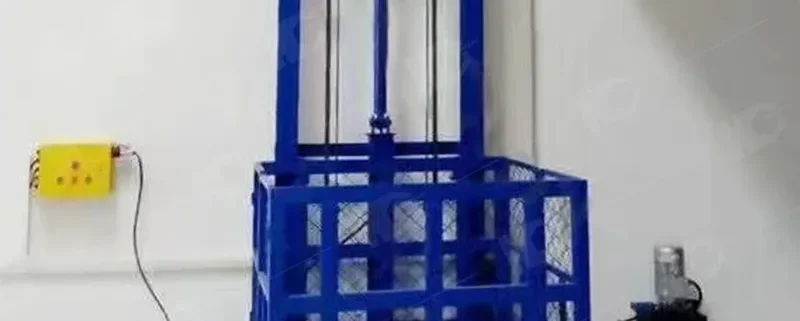
The Cabin of a Small Freight Elevator Is Secured to a Motor by a Cable
Small freight elevators play an essential role in warehouses, restaurants, retail stores, factories, hotels, and residential buildings. They provide a safe and efficient way to move goods between floors while reducing manual labor and improving productivity.
One of the most common designs used in modern freight elevators is the cable-driven traction system. In this system, the cabin of a small freight elevator is secured to a motor by a steel cable, allowing the elevator to travel smoothly and safely between different levels.
Although the concept may appear simple, a cable-driven freight elevator comprises multiple components that work together to ensure reliable lifting performance, safety, and long-term durability.
This article explains how cable-operated freight elevators work, their major components, installation process, advantages, disadvantages, and how they compare with hydraulic cargo lifts.
What Is a Cable-Driven Freight Elevator?
A cable-driven freight elevator is a lifting system in which the elevator cabin is connected to an electric motor through steel wire ropes or cables.
When the motor rotates the traction sheave, the steel cables move, causing the elevator car to travel upward or downward inside the guide rails.
This design is commonly known as a traction freight elevator.
The system is widely used because it provides:
- Smooth operation
- High lifting efficiency
- Energy savings
- Long service life
- Lower maintenance requirements
Compared with traditional hydraulic cargo lifts, cable-driven elevators often offer faster travel speeds and greater lifting heights.
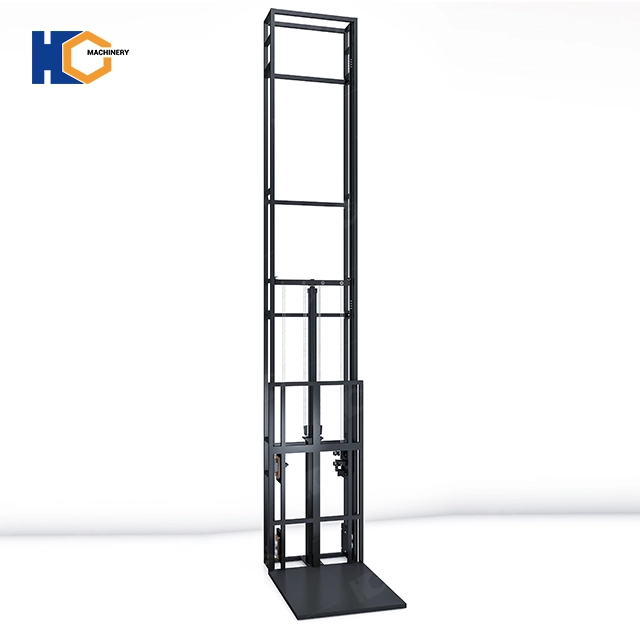
Main Components of a Small Freight Elevator
To understand how the elevator cabin is secured to a motor by a cable, it is important to understand the major system components.
Elevator Cabin
The cabin is the platform or enclosed car used to transport goods.
Common cabin materials include:
- Powder-coated steel
- Stainless steel
- Galvanized steel
- Aluminum panels
Typical load capacities include:
- 100 kg
- 200 kg
- 300 kg
- 500 kg
- 1000 kg
The cabin is specifically designed to handle freight rather than passengers.
Electric Motor
The motor is the power source that drives the elevator.
Common motor types include:
- AC induction motors
- Gear motors
- Gearless traction motors
The motor generates rotational force that moves the traction sheave.
Steel Wire Rope
The steel wire rope is the critical connection between the elevator cabin and the motor system.
High-quality elevator cables are manufactured using:
- High-tensile steel wires
- Corrosion-resistant coatings
- Multi-strand construction
The cables support the cabin load while ensuring smooth movement.
Traction Sheave
The traction sheave is a grooved pulley attached to the motor shaft.
As the motor rotates:
- The sheave turns
- Friction grips the cable
- The elevator moves up or down
The traction sheave is one of the most important components in the entire lifting system.
Counterweight
Many cable-driven freight elevators use a counterweight.
The counterweight balances the cabin weight and reduces motor workload.
Benefits include:
- Lower energy consumption
- Reduced motor wear
- Improved efficiency
- Smoother operation
Guide Rails
Guide rails ensure the cabin travels vertically without swinging.
Common materials include:
- T-shaped steel rails
- Cold-drawn guide rails
- Heavy-duty structural rails
These rails maintain alignment and stability.
Safety Brake System
Modern freight elevators include multiple safety devices such as:
- Overspeed governors
- Emergency brakes
- Limit switches
- Safety interlocks
These systems help prevent accidents and ensure compliance with safety standards.
How Does a Cable-Driven Freight Elevator Work?
The operating principle is based on traction and counterbalance.
When the user presses a floor selection button:
Step 1: Control System Receives the Command
The controller receives a signal from the elevator panel.
The system determines:
- Destination floor
- Travel direction
- Motor operation sequence
Step 2: Motor Starts Rotating
The electric motor activates and begins rotating the traction sheave.
Depending on the requested direction:
- Clockwise rotation raises the cabin
- Counterclockwise rotation lowers the cabin
Step 3: Steel Cable Transfers Motion
The steel wire rope moves with the traction sheave.
Since the cabin is secured to the cable, it follows the cable movement.
This converts rotational motor motion into vertical movement.
Step 4: Counterweight Balances the Load
As the cabin rises:
- Counterweight descends
As the cabin descends:
- Counterweight rises
This balancing effect dramatically reduces power consumption.
Step 5: Guide Rails Maintain Alignment
Guide rails keep the cabin moving smoothly inside the shaft.
They prevent:
- Side-to-side movement
- Tilting
- Vibration
Step 6: Cabin Reaches Destination Floor
Once the cabin reaches the selected floor:
- Motor slows down
- Position sensors activate
- Braking system engages
The elevator stops precisely at floor level.

Step-by-Step Installation Process
Installing a cable-driven freight elevator requires careful planning and professional engineering.
Step 1: Site Inspection
Engineers evaluate:
- Building structure
- Available shaft space
- Floor load capacity
- Power supply requirements
This determines the most suitable elevator configuration.
Step 2: Shaft Preparation
The elevator shaft is constructed or prepared.
Requirements typically include:
- Vertical alignment
- Sufficient headroom
- Pit depth
- Structural support points
Step 3: Guide Rail Installation
Guide rails are mounted inside the shaft.
Precise alignment is critical because even small deviations can affect ride quality.
Step 4: Motor and Machine Installation
The traction machine is installed.
Depending on design, it may be located:
- Above the shaft
- In a machine room
- Inside the shaft (MRL design)
Step 5: Traction Sheave Assembly
The traction sheave is mounted on the motor system.
Technicians verify:
- Alignment
- Groove condition
- Rotation direction
Step 6: Steel Cable Installation
Steel wire ropes are routed through the sheave.
The cables are securely attached to:
- Elevator cabin
- Counterweight frame
Proper tensioning is essential for smooth operation.
Step 7: Cabin Installation
The freight cabin is assembled and connected to the suspension system.
Technicians verify:
- Structural integrity
- Load distribution
- Rail alignment
Step 8: Electrical System Installation
Control panels are installed.
Components include:
- PLC controllers
- Floor sensors
- Call buttons
- Safety circuits
Step 9: Safety Device Installation
Safety systems are installed and tested.
These include:
- Emergency brakes
- Door interlocks
- Overspeed governors
- Limit switches
Step 10: Testing and Commissioning
Engineers perform comprehensive testing.
Tests include:
- Empty-load operation
- Full-load operation
- Emergency stop testing
- Speed verification
- Safety inspections
Only after passing all tests is the elevator placed into service.
Advantages of Cable-Driven Freight Elevators
Energy Efficiency
Counterweight systems significantly reduce power consumption.
This makes traction elevators more efficient than many hydraulic systems.
Higher Travel Heights
Cable elevators can travel much higher than hydraulic lifts.
Typical travel heights include:
- 3 meters
- 6 meters
- 12 meters
- 20 meters
- 50 meters or more
Faster Operating Speeds
Typical freight elevator speeds range from:
- 0.3 m/s
- 0.5 m/s
- 1.0 m/s
Hydraulic systems are generally slower.
Smooth Operation
Modern traction systems provide:
- Reduced vibration
- Accurate leveling
- Quiet performance
Lower Long-Term Maintenance
Properly maintained cables and motors often require less servicing than hydraulic oil systems.
Common Applications
Warehouses
Transporting:
- Cartons
- Inventory
- Equipment
Restaurants
Moving:
- Food supplies
- Ingredients
- Kitchen equipment
Retail Stores
Handling:
- Merchandise
- Inventory replenishment
- Stockroom transfers
Factories
Transporting:
- Components
- Raw materials
- Finished products
Residential Buildings
Moving:
- Groceries
- Furniture
- Household goods
Cable-Driven Freight Elevator vs Hydraulic Freight Elevator
| Feature | Cable-Driven Elevator | Hydraulic Freight Elevator |
|---|---|---|
| Energy Efficiency | Higher | Lower |
| Travel Height | Excellent | Limited |
| Speed | Faster | Slower |
| Machine Room | Optional | Often Required |
| Installation Cost | Moderate | Lower |
| Maintenance | Lower Long-Term | Hydraulic Oil Maintenance |
| Ride Comfort | Excellent | Good |
For multi-story buildings, traction elevators are often the preferred solution.
How Long Do Elevator Cables Last?
Modern elevator ropes typically last:
- 5 to 15 years
Factors affecting lifespan include:
- Usage frequency
- Load weight
- Environmental conditions
- Maintenance quality
Regular inspections help maximize cable life.
Maintenance Requirements
Routine maintenance should include:
Monthly Inspection
Check:
- Cable wear
- Sheave condition
- Safety switches
Quarterly Inspection
Inspect:
- Motor performance
- Brake operation
- Guide rails
Annual Inspection
Perform:
- Load testing
- Safety certification
- Full system diagnostics
Preventive maintenance significantly reduces downtime.
Future Trends in Small Freight Elevators
Modern freight elevators are evolving rapidly.
New technologies include:
- Gearless traction motors
- Machine-room-less designs
- Smart monitoring systems
- IoT diagnostics
- Regenerative drives
These innovations improve efficiency while reducing operating costs.
Many manufacturers are also introducing compact freight elevators specifically designed for residential and commercial applications with limited space.

Conclusion
When the cabin of a small freight elevator is secured to a motor by a cable, the result is a highly efficient traction-driven lifting system capable of transporting goods safely between floors. By combining electric motors, steel wire ropes, traction sheaves, guide rails, and advanced safety devices, cable-driven freight elevators provide reliable performance across a wide range of commercial and industrial applications.
Compared with hydraulic alternatives, traction freight elevators offer greater travel heights, faster speeds, improved energy efficiency, and lower long-term operating costs. Understanding how the system works—from motor rotation and cable movement to counterweight balancing and safety braking—helps building owners, facility managers, and equipment buyers select the most suitable freight elevator for their operational needs.

Jnhclift (Huichuang Lift), based in Jinan, China, is a professional manufacturer of scissor lifts, home elevators, and lift platforms. With our own dedicated factory, we deliver high-quality, reliable lifting solutions tailored to meet diverse industrial and residential needs.
 Room 203, Second Floor, Building 8, Phase Ⅱ, Zhizao Town, Jibei Street, Jiyang District, Jinan City, Shandong Province
 +8615628811021
 admin@jnhclift.com