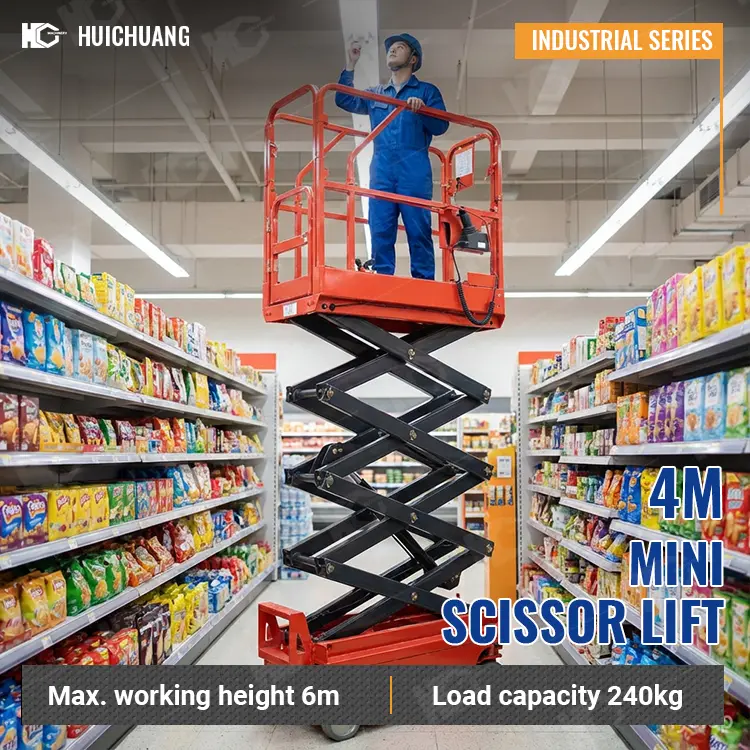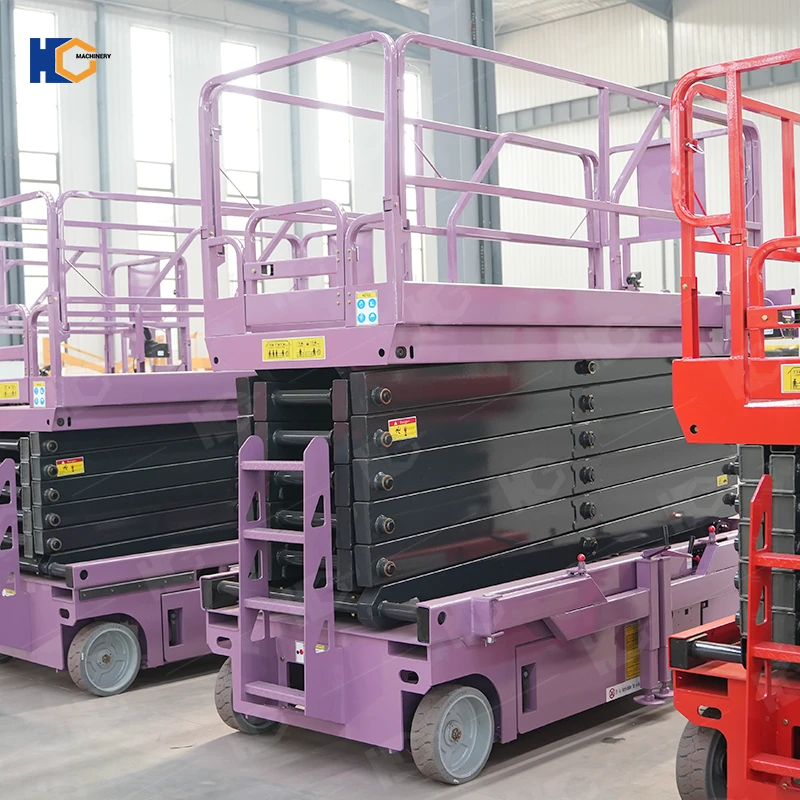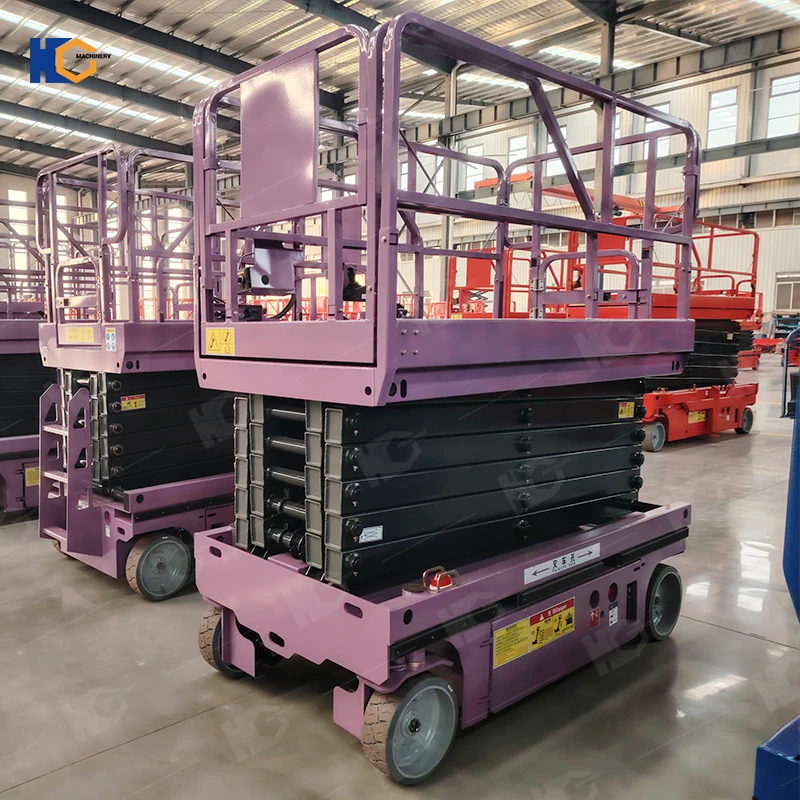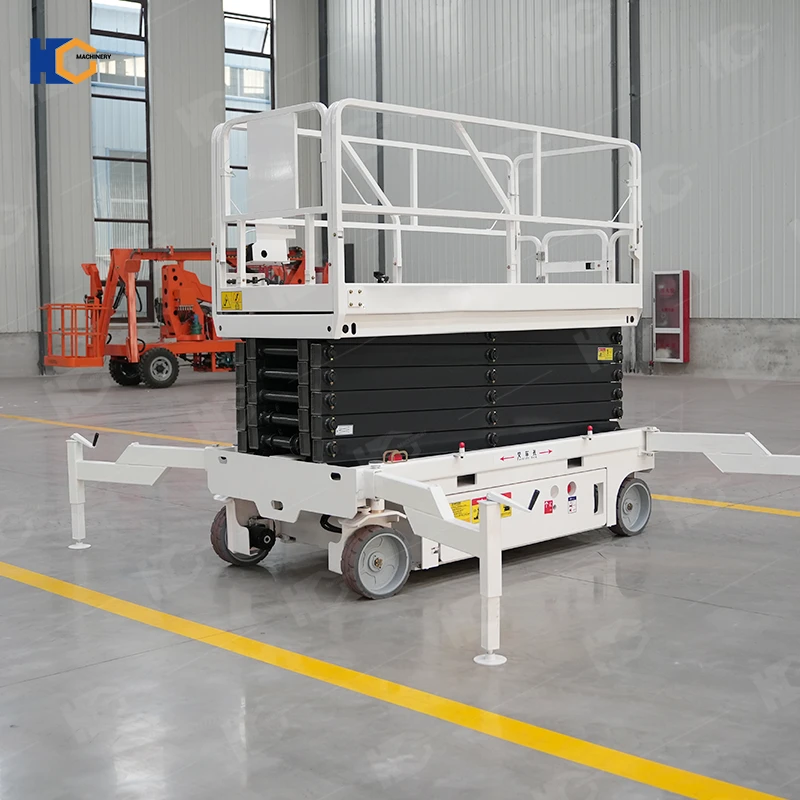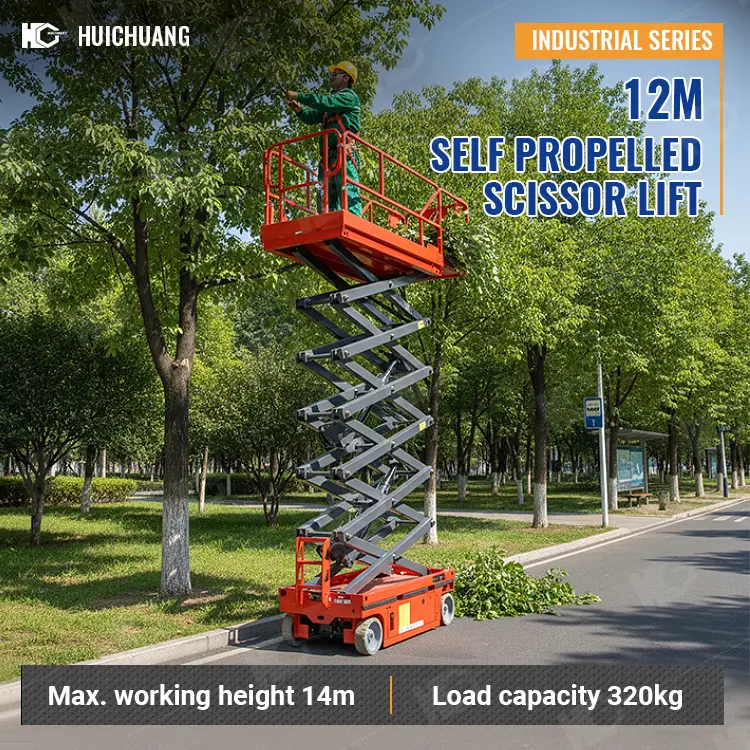
A self propelled mobile scissor lift table is one of the most efficient and widely used aerial work platforms for indoor and outdoor operations that require stable vertical lifting. Designed for safety, productivity, and ease of use, this type of scissor lift has become standard equipment in construction, warehousing, manufacturing, facility maintenance, and rental fleets worldwide.
This article provides a clear, practical introduction to the self-propelled scissor lift table—what it is, how it performs, how to use it correctly, where it works best, and how to source it in bulk from China factory with confidence.
No exaggerated claims, no unnecessary jargon—just usable information.
What Is a Self Propelled Mobile Scissor Lift Table ?
A self propelled mobile scissor lift table is a motorized lifting platform that can drive, steer, and elevate without external towing. The “12m” refers to its maximum working height, which usually corresponds to a platform height of around 12 meters, allowing operators to safely reach up to 14 meters.
Unlike manual or semi-electric lifts, a self-propelled model:
Moves under its own power
Can be driven at full height (low speed)
Requires only one operator
Eliminates repositioning downtime
In short, it lifts people and productivity at the same time.
Core Performance Specifications (Typical)
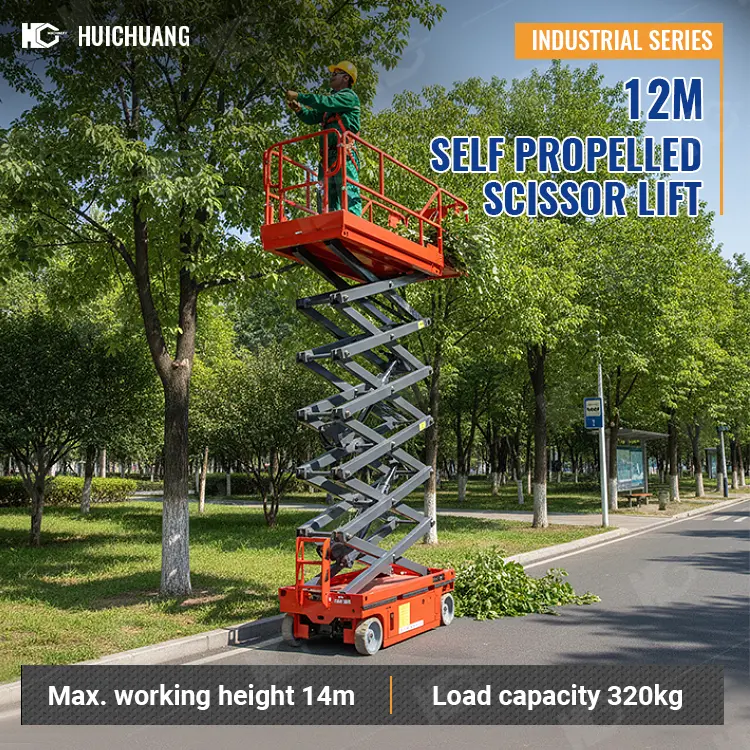
While specifications vary slightly by Huichuang lift manufacturer, a standard 12m self propelled mobile scissor lift table typically offers the following:
| Item | Typical Specification |
|---|---|
| Platform Height | ~12 m |
| Working Height | ~14 m |
| Load Capacity | 230–320 kg |
| Platform Size | Approx. 2.3 × 1.1 m |
| Extension Deck | 0.9–1.0 m |
| Drive System | Electric motor |
| Power Source | Battery (24V / 48V) |
| Gradeability | 20–25% |
| Turning Radius | Zero or small |
| Machine Weight | 2,800–3,200 kg |
| Controls | Platform + ground |
These parameters make the 12m model suitable for two workers plus tools, while maintaining stability and maneuverability.
Why Choose a Self Propelled Scissor Lift?
The 12m height range is considered a sweet spot in the scissor lift market.
Balanced Height and Cost
High enough for most industrial and commercial tasks
More affordable than 14m–16m models
Lower operating and transport costs
Strong Load Capacity
Easily supports personnel and materials
Stable platform with extension deck
Versatile for Indoor and Outdoor Use
Electric drive for indoor environments
Solid tires and safety systems for outdoor sites
Most buyers choose 12m because it covers 80% of real-world applications without unnecessary cost.
Key Features That Matter in Real Use
1. Self Propelled Drive System
The defining feature of this machine is self-propelled movement. Operators can:
Drive the lift directly to the work area
Adjust position without lowering the platform
Save time and labor
This is especially valuable in large warehouses or construction sites where repositioning happens frequently.
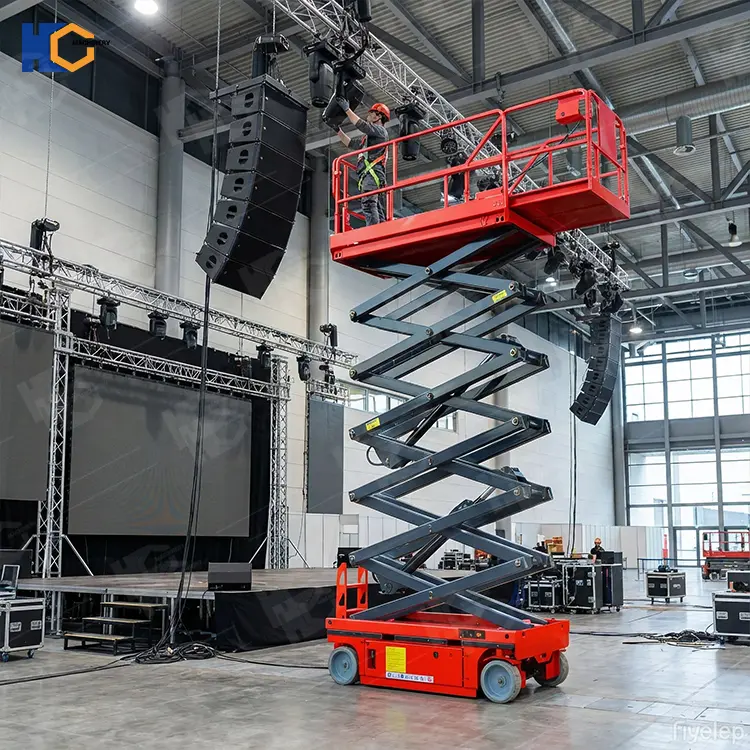
2. Stable Scissor Structure
The scissor mechanism:
Uses high-strength steel
Maintains vertical alignment
Reduces sway at height
Stability is not optional at 12 meters—it’s essential.
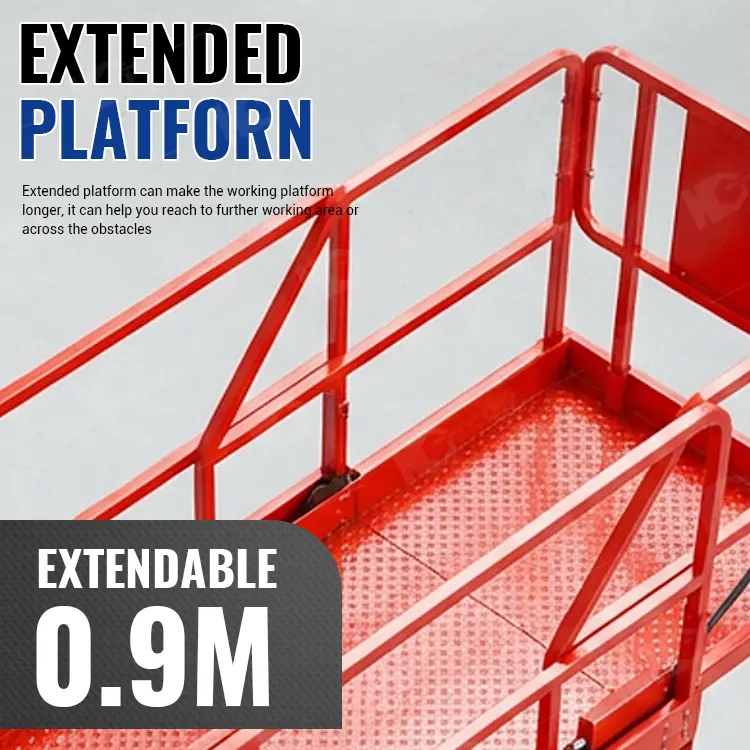
3. Extension Platform
Most 12m scissor lifts include a sliding extension deck, allowing operators to:
Reach over obstacles
Work along walls or structures
Reduce repositioning
This small feature has a big impact on productivity.
4. Electric Power System
Electric self propelled scissor lifts offer:
Zero emissions
Low noise
Lower maintenance costs
This makes them ideal for:
Factories
Warehouses
Shopping malls
Airports
Indoor construction
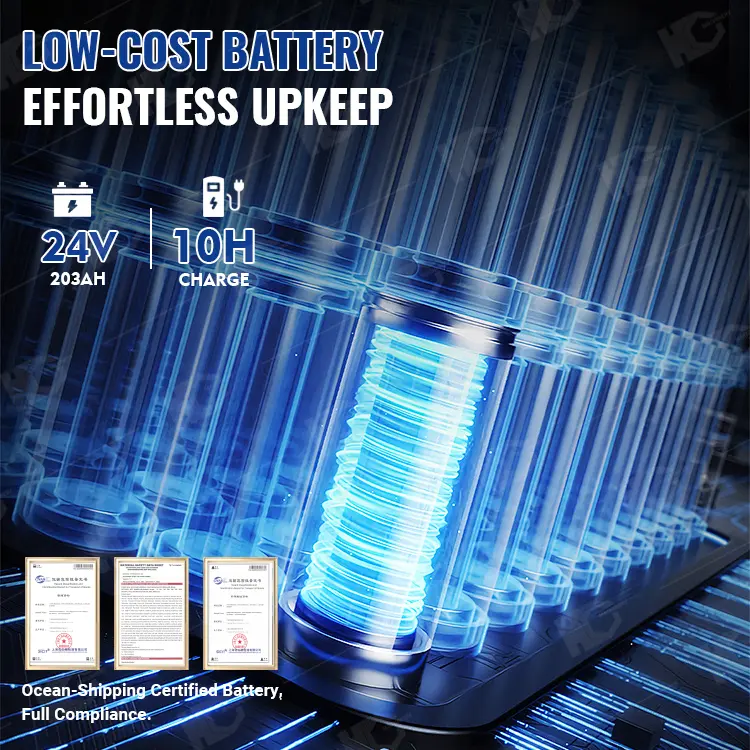
Low-cost battery maintenance, resulting in lower operating costs.
5. Integrated Safety Systems
A reliable 12m scissor lift table includes:
Emergency stop buttons
Tilt protection
Overload sensors
Pothole protection
Automatic braking
These systems protect both operators and equipment.
How to Use a Self Propelled Scissor Lift (Practical Steps)
Proper operation improves safety and machine lifespan.
Step 1: Pre-Operation Inspection
Check:
Battery level
Hydraulic oil
Tires and wheels
Guardrails and controls
Five minutes of inspection prevents hours of downtime.
Step 2: Enter the Platform Safely
Close and secure the safety gate
Wear required PPE
Confirm load does not exceed capacity
Step 3: Position the Lift
Drive the lift to the work area
Ensure ground is level and firm
Avoid slopes beyond rated gradeability
Step 4: Elevate the Platform
Raise the platform smoothly
Monitor stability and alarms
Use extension deck if needed
Step 5: Perform Work at Height
Keep tools organized
Avoid leaning over guardrails
Move lift slowly if repositioning at height
Step 6: Lower and Power Off
Lower platform fully
Drive to storage or charging area
Turn off power and charge batteries
Correct usage is simple, but discipline makes it safe.
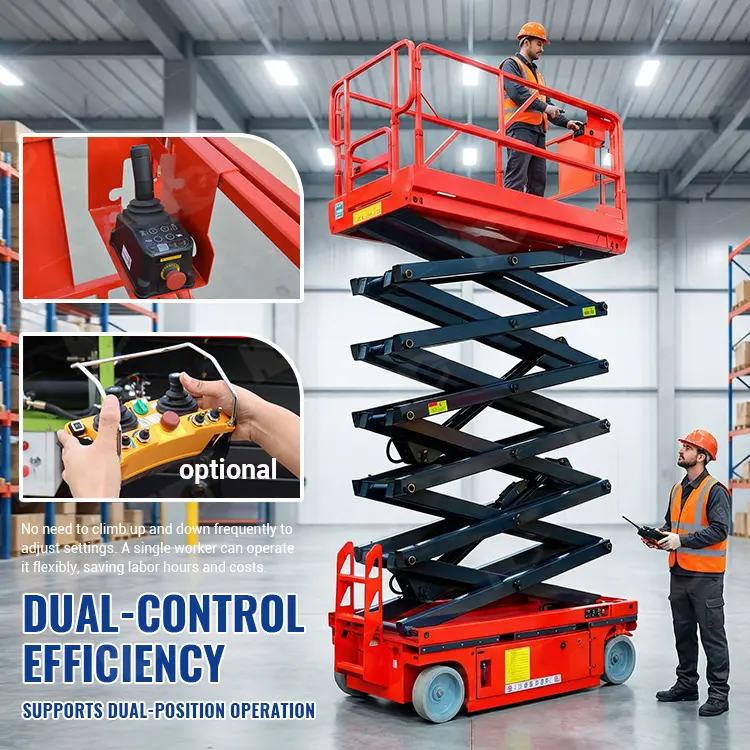
No need for frequent climbing up and down to adjust settings on this scissor lift. It can be easily operated by a single person, saving time and costs.
Dual-control efficiency supports dual-position operation.
Main Application Scenarios
Construction and Installation
Ceiling and wall installation
Electrical and mechanical work
Fire protection systems
Warehousing and Logistics
High-rack maintenance
Lighting replacement
Inventory system installation
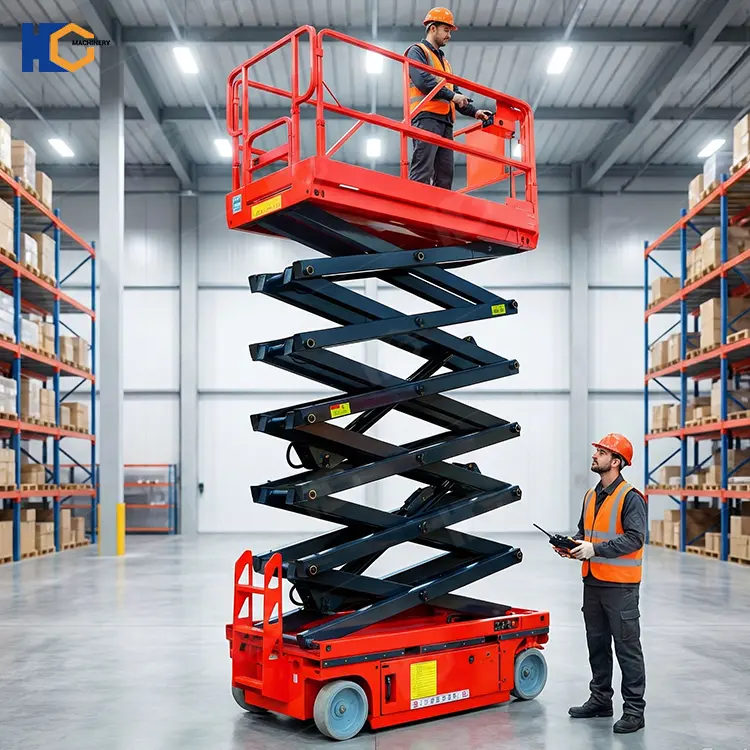
Its application in warehouses makes logistics more efficient.
Manufacturing Plants
Equipment maintenance
Pipeline installation
Overhead system servicing
Facility Management
Shopping malls
Airports
Exhibition centers
Stadiums
Rental Companies
High demand model
Easy training
Low maintenance
The 12m self propelled scissor lift is a core asset, not a niche tool.
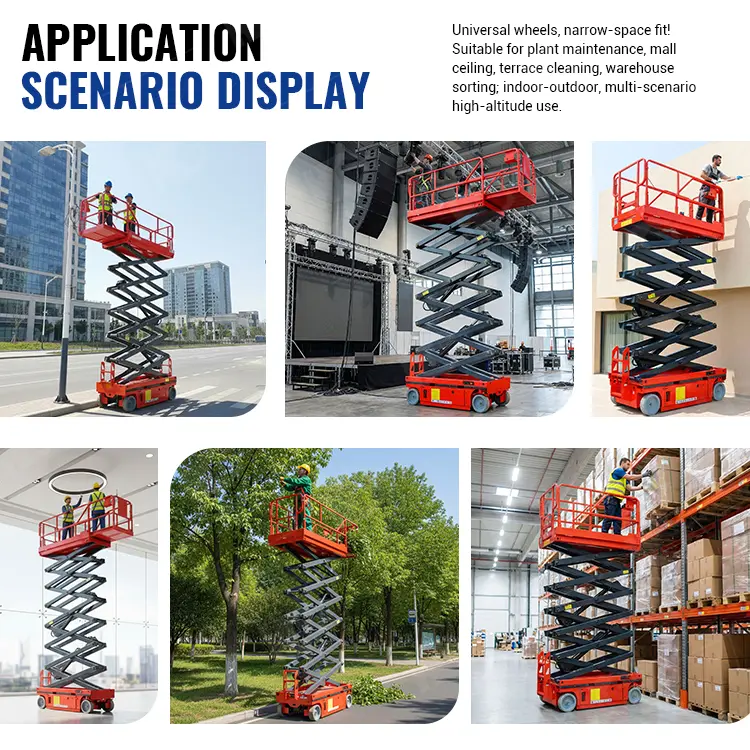
Indoor vs Outdoor Use Considerations
While electric scissor lifts work both indoors and outdoors, keep in mind:
Indoor use: ideal conditions
Outdoor use: ensure firm ground and minimal wind
Avoid uneven terrain unless designed for it
For rough terrain, diesel scissor lifts may be more suitable, but for most applications, electric 12m models perform well.
Maintenance and Operating Costs
One reason buyers prefer self propelled scissor lifts is predictable maintenance.
Routine Maintenance Includes:
Battery charging and replacement
Hydraulic system inspection
Lubrication
Safety system checks
There is:
No engine oil
No fuel system
Fewer moving parts
This keeps lifetime cost low and uptime high.
How Long Does a Scissor Lift Last?
With proper maintenance:
Service life: 8–10 years
Batteries: 3–5 years
Hydraulic components: long-term serviceable
Quality manufacturing matters more than brand labels.
How to Choose the Right 12m Model
Before buying, confirm:
Required load capacity
Platform size and extension length
Indoor or outdoor use ratio
Spare parts availability
Avoid overspecification—it increases cost without adding value.
How to Buy Self Propelled Scissor Lift Tables in Bulk from China
China is one of the world’s largest manufacturers of scissor lifts, offering strong cost advantages and scalable production.
Why Source from China?
Competitive factory pricing
Mature manufacturing supply chains
Customization options
Bulk order discounts
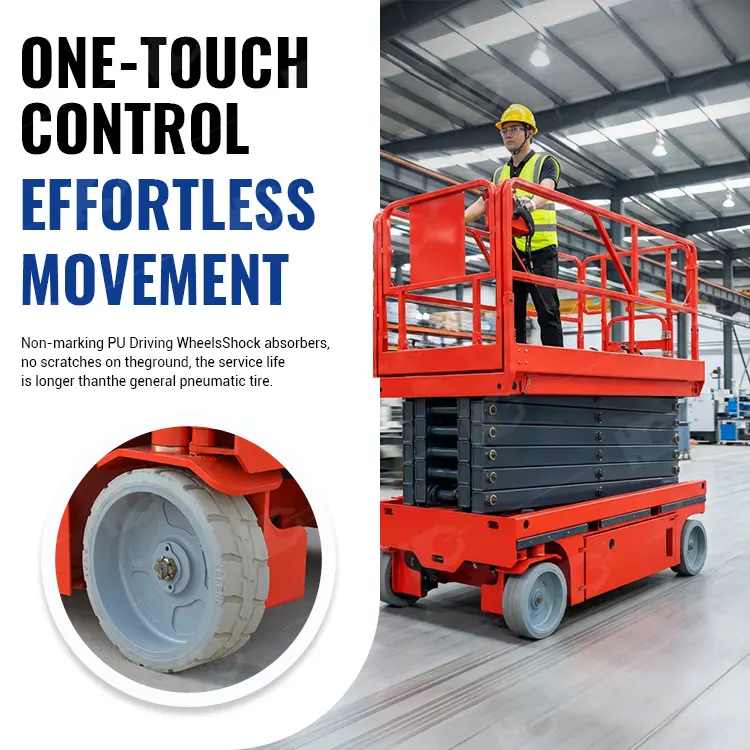
Huichuang Lift is a self-propelled scissor lift table manufacturer from China. With over 13 years of industry experience, we provide customized and feasible scissor lift table solutions. As a professional factory, we have a complete supply chain and after-sales service system, ensuring you have no worries about equipment maintenance.Bulk purchases will get you a better price.
Typical Factory Direct Pricing (Reference Only)
Prices vary by configuration, but typical EXW or FOB China prices for a 12m self propelled scissor lift table often fall within:
USD 6,800 – 10,800 per unit (bulk orders)
Final pricing depends on:
Quantity
Certification
Battery type
Shipping method
If you'd like to learn more about Scissor Lift pricing, you can read our article: How Much Does a Scissor Lift Cost? A Complete Price Breakdown for Buyers and Renters. The prices listed here are for reference only, as prices fluctuate due to market influences. If you are currently planning to purchase a lift, you can contact us directly to get the latest prices.
MOQ and Lead Time
MOQ: 1–3 units (often negotiable)
Production time: 20–35 days
Bulk orders: faster scheduling
Certifications to Request
CE (Europe)
ISO 9001
ANSI (if required)
Test and inspection reports
Never skip certification verification.
Shipping and Logistics
Common shipping: 40HQ containers
Units per container: typically 2–4
Choose experienced freight forwarders
Plan logistics early to avoid delays.
Tips for Importers and Distributors
Request real factory videos
Ask for load and safety test data
Confirm spare parts supply
Clarify warranty terms
Avoid unrealistically low quotes
A reliable supplier answers clearly. A risky one avoids details.
Choose scissor lift vs boom lift
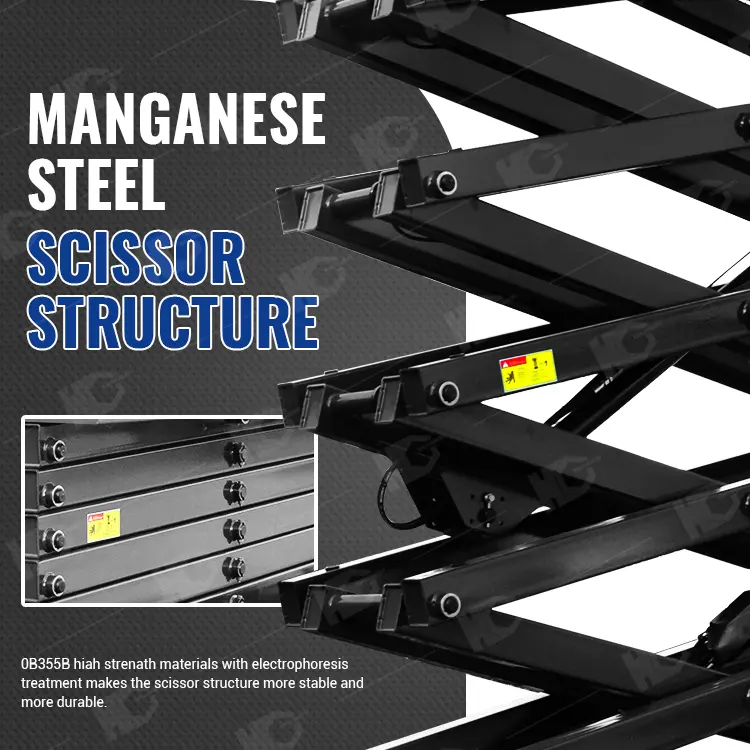
Choosing between a scissor lift and a boom lift depends on how and where you work. A scissor lift moves straight up and down, offering a large, stable platform and higher load capacity. It’s ideal for indoor maintenance, warehousing, and tasks that require lifting people and tools vertically. A boom lift, on the other hand, provides horizontal and articulated reach, allowing access over obstacles and into hard-to-reach areas. Boom lifts suit outdoor construction, facade work, and uneven terrain. In short, choose scissor lifts for vertical efficiency and boom lifts for flexible reach.
Final Thoughts
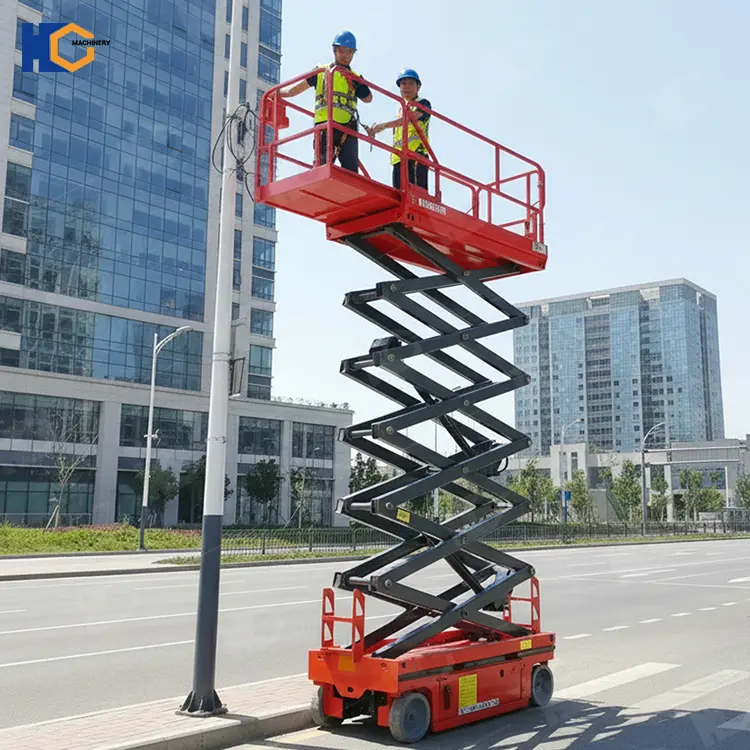
A self propelled mobile scissor lift table is one of the most practical investments in modern access equipment. It offers a balance of height, safety, efficiency, and cost that suits a wide range of industries.
When chosen correctly and sourced responsibly—especially through bulk procurement from reliable Chinese factories—this equipment delivers strong long-term value, low operating cost, and dependable performance.
In the world of working at height, reliability is not a feature.
It’s the baseline.
And a well-built 12m self propelled scissor lift table meets that baseline every single day.