How Much Does an Elevator Cost for a 2, 3, 4, 5, and 6-Story Building

Installing an elevator in a residential or commercial building is no longer considered a luxury reserved for skyscrapers or five-star hotels. Today, elevators are becoming increasingly common in villas, duplex homes, apartment buildings, office spaces, and even private residences. As modern homeowners prioritize accessibility, convenience, aging-in-place living, and property value, one question appears repeatedly:

How much does an elevator cost for a 2, 3, 4, 5, or 6-story building?

The answer depends on several factors, including elevator type, building height, load capacity, customization level, installation conditions, and country of manufacture. In general, home elevator prices can range from USD 3,800 to more than USD 50,000 depending on specifications.

This guide provides a detailed breakdown of elevator costs by building height and home elevator type, helping buyers clearly understand pricing trends, installation costs, operating expenses, and which system offers the best long-term value.

Why Building Height Strongly Affects Elevator Cost

The number of floors directly impacts elevator pricing because taller buildings require:

  • Longer guide rails
  • Stronger motors
  • More advanced safety systems
  • Higher control precision
  • Additional structural support
  • Longer installation time

The cost increase is usually gradual rather than dramatic. Every additional floor adds materials, engineering complexity, and safety requirements.

Think of elevator pricing like building a bridge: the farther it goes, the more engineering is needed to keep everything smooth, stable, and safe.

Main Types of Elevators for 2–6 Story Buildings

Before comparing prices, it is important to understand the main elevator types used in low-rise residential and commercial buildings.

The most common options include:

  • Traction elevators
  • Hydraulic elevators
  • Vacuum elevators
  • Screw-driven elevators
  • Platform lifts

Among these, traction and hydraulic elevators dominate the market for 2–6 story buildings.

How Much Does a Traction Elevator Cost?

Traction elevators use a motor, steel ropes, and a counterweight system to move the cabin. They are widely considered the most efficient and modern solution for multi-story buildings.

Traction elevators are especially popular for:

  • Luxury villas
  • Duplex homes
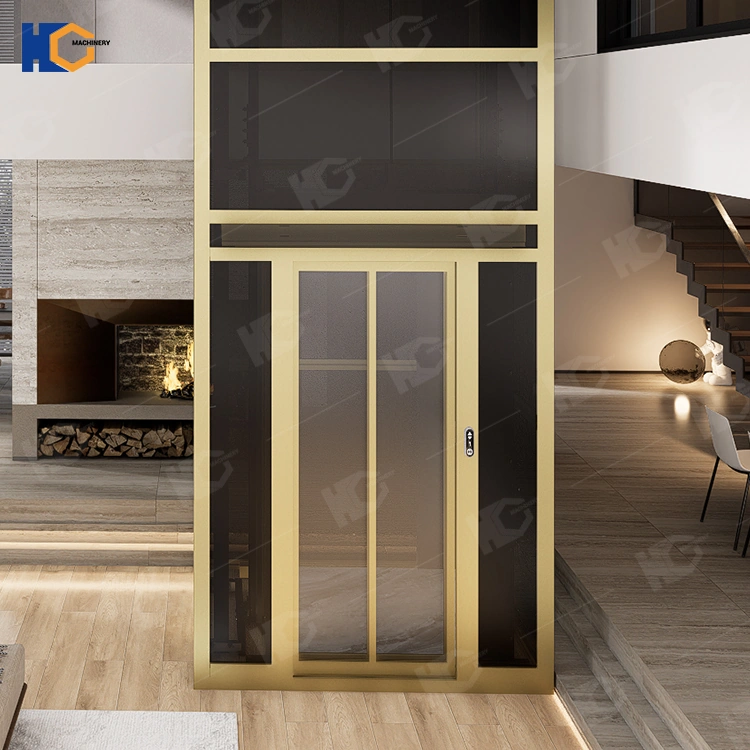
  • Glass sightseeing elevators
  • Mid-rise residential buildings
  • Commercial properties

Advantages of Traction Elevators

Traction elevators are known for:

  • Energy efficiency
  • Smooth operation
  • Quiet performance
  • Fast travel speed
  • Long lifespan
  • Lower operating costs
  • Better performance for taller buildings

Most modern machine-room-less elevators use traction technology.

Traction Home Elevator Cost by Building Height

2-Story Building Elevator Cost

For a 2-story building, a traction home elevator usually costs:

USD 7,500 – USD 14,000

This is considered the entry level for traction systems. Compact machine-room-less models are extremely popular in modern homes because they save space while maintaining premium performance.

Typical applications include:

  • Duplex houses
  • Villas
  • Elderly accessibility
  • Luxury home upgrades

3-Story Building Elevator Cost

For a 3-story building, the average traction elevator price is:

USD 8,000 – USD 15,500

The increase is relatively moderate because the additional travel height only slightly increases rail length and motor requirements.

At three floors, traction elevators begin to show clear advantages in ride comfort and long-term energy savings.

4-Story Building Elevator Cost

For a 4-story building, traction elevator prices typically range from:

USD 8,600 – USD 16,800

Four floors represent an important transition point where traction elevators become increasingly cost-effective compared to hydraulic systems.

Benefits at this height include:

  • Smoother travel
  • Better efficiency
  • Reduced energy consumption
  • Lower maintenance frequency

This is also where panoramic glass elevators become particularly popular in luxury homes.

5-Story Building Elevator Cost

For a 5-story building, traction elevator costs are usually:

USD 9,500 – USD 17,900

At five floors, traction elevators clearly outperform hydraulic elevators in:

  • Speed
  • Energy efficiency
  • Ride smoothness
  • Operating costs

This height often requires more advanced safety controls and precision engineering.

6-Story Building Elevator Cost

For a 6-story building, traction elevator pricing typically ranges from:

USD 10,900 – USD 18,600

For six-story residential buildings, traction elevators are generally considered the best overall solution.

At this level, buyers benefit from:

  • Stable performance
  • Better travel efficiency
  • Improved passenger comfort
  • Lower long-term operating costs

Traction systems are especially recommended for buildings with frequent daily usage.

Why Traction Elevator Costs Increase with Floors

Traction elevator prices increase steadily rather than sharply because of several technical factors.

These include:

  • Longer steel structures
  • Extended guide rail systems
  • More precise control programming
  • Enhanced braking systems
  • Larger counterweight systems
  • Stronger motors

Safety requirements also become stricter as travel height increases.

In simple terms, you are not just paying for extra height — you are paying for additional engineering accuracy and operational stability.


How Much Does a Hydraulic Home Elevator Cost?

Hydraulic elevators use an oil-powered cylinder and piston system to lift the cabin.

They are widely used in low-rise buildings because they offer:

  • Strong lifting power
  • Simpler mechanical structure
  • Lower initial cost
  • Reliable low-height performance

However, hydraulic systems also have some disadvantages:

  • Higher energy consumption
  • Slower travel speed
  • Larger equipment space requirements
  • More maintenance needs

Hydraulic elevators are often chosen for 2–4 story buildings where budget is a primary concern.

Hydraulic Home Elevator Cost by Building Height

2-Story Hydraulic Elevator Cost

For a 2-story building, hydraulic elevator prices typically range from:

USD 3,800 – USD 9,700

This is where hydraulic elevators provide their greatest cost advantage.

They are ideal for:

  • Small homes
  • Elderly accessibility
  • Budget-conscious projects
  • Low-rise villas

At this height, hydraulic systems are often significantly cheaper than traction elevators.

3-Story Hydraulic Elevator Cost

For a 3-story building, hydraulic elevator costs usually range from:

USD 4,600 – USD 11,300

Hydraulic systems remain competitive at three floors, especially when installation space is sufficient.

Many buyers still prefer hydraulic systems because:

  • Installation is simpler
  • Initial cost remains low
  • Heavy lifting capacity is strong

4-Story Hydraulic Elevator Cost

For a 4-story building, hydraulic elevator pricing typically ranges from:

USD 5,500 – USD 12,400

At four floors, hydraulic elevator costs begin increasing more rapidly.

This happens because taller travel distances require:

  • Larger hydraulic cylinders
  • Stronger pumps
  • More hydraulic oil
  • Increased structural support

At this point, many buyers start comparing traction systems more seriously.

5-Story Hydraulic Elevator Cost

For a 5-story building, hydraulic elevator costs generally range from:

USD 7,500 – USD 14,500

This is often considered the upper practical limit where hydraulic elevators remain economically competitive.

Compared to traction systems, hydraulic elevators at this height may:

  • Consume more electricity
  • Operate slower
  • Require more maintenance

Many buyers choose traction elevators instead for better long-term efficiency.

6-Story Hydraulic Elevator Cost

For a 6-story building, hydraulic elevator prices typically range from:

USD 8,500 – USD 16,500

Hydraulic elevators can technically operate at six floors, but they are often no longer the most efficient solution.

At this height, traction elevators usually provide:

  • Better speed
  • Lower operating costs
  • Improved ride quality
  • Greater energy efficiency

Hydraulic systems may still be selected for heavy-duty lifting applications, but residential buyers often favor traction technology.


Traction vs Hydraulic: Cost Comparison Made Simple

Here’s the easy way to think about it:

  • 2–3 floors
    Hydraulic elevators are cheaper upfront.
  • 4 floors
    Costs start to overlap. Decision depends on space and usage.
  • 5–6 floors
    Traction elevators usually offer better value long-term.

Hydraulic systems are like pickup trucks: powerful, simple, but thirsty.
Traction systems are like electric cars: efficient, smooth, and smarter over time.


Vacuum Elevator Cost for 2–6 Story Buildings

Vacuum elevators use air pressure technology to move the cabin vertically.

These elevators are popular because they offer:

  • Futuristic appearance
  • Minimal structural modifications
  • Compact design
  • Fast installation

Typical vacuum elevator pricing:

FloorsPrice Range
2-storyUSD 18,000–USD 28,000
3-storyUSD 22,000–USD 35,000
4-storyUSD 28,000–USD 45,000
5–6 storyUSD 40,000–USD 60,000+

Vacuum elevators are usually more expensive than traction or hydraulic systems but offer strong visual appeal.

Screw-Driven Elevator Cost

Screw-driven elevators use a threaded steel rod and motor system.

Advantages include:

  • Compact structure
  • Quiet operation
  • Low maintenance
  • No pit required

Average pricing:

FloorsPrice Range
2-storyUSD 10,000–USD 18,000
3-storyUSD 12,000–USD 22,000
4-storyUSD 15,000–USD 26,000
5–6 storyUSD 18,000–USD 32,000

These elevators are increasingly popular in modern homes with limited installation space.

Elevator Installation Costs

Installation is a major part of total elevator expenses.

Typical installation costs include:

Installation TypeAverage Cost
Residential installationUSD 3,000–USD 10,000
Commercial installationUSD 8,000–USD 25,000
Custom glass elevator installationUSD 15,000–USD 40,000

Installation costs depend on:

  • Shaft construction
  • Electrical work
  • Structural modifications
  • Permit requirements
  • Crane access
  • Travel height

A luxury elevator installed inside a glass villa usually costs more than the elevator itself. Architecture has a talent for turning simple ideas into expensive masterpieces.

Additional Costs Buyers Should Consider

Many buyers focus only on the elevator equipment price while ignoring hidden expenses.

Additional costs may include:

  • Shipping fees
  • Import taxes
  • Building permits
  • Maintenance contracts
  • Annual inspections
  • Interior decoration upgrades
  • Backup power systems
  • Smart control systems

These costs can increase the total project budget by 20%–50%.

Elevator Maintenance Costs

Annual maintenance is necessary for safety and long-term reliability.

Typical yearly maintenance costs:

Elevator TypeAnnual Maintenance
Hydraulic elevatorUSD 500–USD 2,000
Traction elevatorUSD 800–USD 2,500
Vacuum elevatorUSD 300–USD 1,000

Maintenance usually includes:

  • Safety inspections
  • Lubrication
  • Control testing
  • Brake inspection
  • Oil replacement
  • Emergency system checks

Higher-quality elevators generally reduce long-term repair expenses.

Which Elevator Type Is Best for 2–6 Story Buildings?

The best elevator depends on project goals, budget, and building structure.

Best for Budget Projects

Hydraulic elevators are often the most affordable for 2–3 story buildings.

Best for Energy Efficiency

Traction elevators provide the best balance of efficiency and performance for 3–6 story buildings.

Best for Luxury Homes

Glass traction elevators and vacuum elevators are popular for luxury villas and panoramic designs.

Best for Limited Space

Screw-driven elevators and vacuum elevators work well in compact homes.

China vs European vs USA Elevator Costs

Manufacturing location strongly affects pricing.

Chinese Elevator Manufacturers

Advantages:

  • Competitive pricing
  • OEM customization
  • Large production capacity

Typical price range:
USD 4,000–USD 18,000

European Elevator Brands

Advantages:

  • Premium engineering
  • Advanced safety systems
  • Luxury design

Typical price range:
USD 20,000–USD 60,000+

USA Elevator Companies

Advantages:

  • Local support
  • Faster installation
  • Easier compliance

Typical price range:
USD 12,000–USD 40,000

Many global buyers choose Chinese home lift manufacturers because they offer lower costs while still providing CE-certified systems.

Final Thoughts

So, how much does an elevator cost for a 2, 3, 4, 5, or 6-story building?

The answer depends mainly on elevator type, building height, installation complexity, and customization requirements.

In general:

  • Hydraulic elevators are more affordable for low-rise buildings
  • Traction elevators offer better long-term efficiency for taller structures
  • Vacuum and screw-driven elevators provide premium modern alternatives

Typical home elevator prices range from:

USD 3,800 to USD 18,600 for standard residential systems

Luxury custom elevators can exceed USD 50,000 depending on design and features.

Before purchasing, buyers should carefully evaluate not only initial pricing but also installation costs, energy efficiency, maintenance requirements, and long-term operational value. A well-designed elevator can improve accessibility, convenience, property value, and daily living comfort for many years.

Boom Lift vs Cherry Picker: Specifications, Differences, and How to Choose

For beginners, Boom Lift and Cherry Picker are both machines that can do the job of picking cherries. But there are some differences between them. Let’s take a closer look.


When it comes to elevated work platforms, boom lifts and cherry pickers are among the most commonly used machines in industries such as construction, maintenance, and landscaping. Both machines provide access to high areas, but they are not identical. Understanding the differences between a boom lift and a cherry picker is crucial for making an informed decision, whether you are a professional or a beginner. This article will cover their specifications, advantages and disadvantages, a price comparison, and tips for beginners to help choose the right equipment.

What is a Boom Lift?

A boom lift is a type of aerial work platform (AWP) that consists of a platform or bucket attached to a long arm or boom, which can extend to significant heights. Boom lifts are typically used for tasks requiring both vertical and horizontal reach, making them versatile for a wide range of jobs.

Specifications of a Boom Lift

SpecificationDetails
Maximum Height30 – 210 feet (varies by model)
Horizontal Reach20 – 80 feet
Platform Capacity500 – 1,000 lbs
Power SourceElectric, Diesel, or Hybrid
TypesArticulating Boom Lift, Telescopic Boom Lift
MobilitySelf-propelled or towable
Rotation360-degree rotation for articulating models

Advantages of Boom Lifts

  1. Extended Reach: Boom lifts can reach significant heights and extend horizontally, which makes them ideal for jobs that require both vertical and outreach capabilities.
  2. Versatility: Available in different models such as articulating and telescopic boom lifts, allowing use in a variety of applications such as building maintenance, window cleaning, and construction.
  3. Rotation: Articulating boom lifts offer 360-degree rotation, providing excellent maneuverability in tight or complex areas.
  4. Indoor/Outdoor Use: Electric models are suitable for indoor jobs, while diesel or hybrid models are better suited for outdoor use.

Disadvantages of Boom Lifts

  1. Cost: Boom lifts are generally more expensive than other types of elevated work platforms, including cherry pickers.
  2. Size and Weight: Due to their large size and weight, they require ample space for transport and operation.
  3. Complexity: Operating a boom lift can require more training compared to simpler machines like scissor lifts or cherry pickers.

What is a Cherry Picker?

A cherry picker, originally used for fruit picking, is another type of aerial work platform designed for elevating workers. While it is often used interchangeably with “boom lift,” a cherry picker typically refers to smaller and simpler machines that focus more on vertical lifting rather than extended outreach.

Specifications of a Cherry Picker

SpecificationDetails
Maximum Height30 – 60 feet (varies by model)
Horizontal ReachLimited to minimal horizontal movement
Platform Capacity250 – 500 lbs
Power SourceElectric or Diesel
MobilityTowable or self-propelled
UsageOften used for maintenance tasks like tree trimming, electrical work, and signage

Advantages of Cherry Pickers

  1. Cost-Effective: Cherry pickers are generally more affordable than boom lifts, making them ideal for small businesses or short-term projects.
  2. Compact Size: Their smaller size makes them easier to transport and maneuver in confined spaces.
  3. Simplicity: They are easier to operate and often require less training compared to boom lifts.
  4. Ideal for Lower Heights: For tasks that don’t require extensive reach or high vertical lifts, cherry pickers are efficient and sufficient.

Disadvantages of Cherry Pickers

  1. Limited Height and Reach: Cherry pickers usually have a lower maximum height and limited horizontal reach, making them less versatile for complex tasks.
  2. Lower Capacity: The platform typically supports fewer people or lighter weights compared to boom lifts, limiting their use in heavy-duty applications.
  3. Less Versatility: Cherry pickers are not as versatile as boom lifts in terms of articulation and rotation.

Boom Lift vs Cherry Picker: A Comparison

Here’s a comparison table that outlines the key differences between a boom lift and a cherry picker:

FeatureBoom LiftCherry Picker
Maximum HeightUp to 210 feetUp to 60 feet
Horizontal ReachExtensive horizontal outreach (up to 80 feet)Limited horizontal reach
Platform Capacity500 – 1,000 lbs250 – 500 lbs
MobilitySelf-propelled or towableTowable or self-propelled
Rotation360-degree rotation (articulating models)Limited or no rotation
CostHigherLower
Training RequiredMore complex, requires detailed trainingEasier to operate, requires minimal training
VersatilitySuitable for a wide range of tasksBest for smaller or simpler jobs

Price Comparison: Boom Lift vs Cherry Picker

Below is an estimated price range for both boom lifts and cherry pickers based on their features and models:

Machine TypePrice Range (USD)
Boom Lift$35,000 – $150,000
Cherry Picker$15,000 – $45,000

Prices vary depending on the size, power source, and features such as articulation, height, and reach.

How to operate Boom Lift and Cherry Picker

Operating a Boom Lift and Cherry Picker involves safety checks, starting the equipment, moving the lift, and elevating the platform. Although both operate on similar principles, Boom Lifts are more complex and require proper training and certification before use. Below is an overview of how to operate these machines:

How to Operate a Boom Lift

  1. Inspect the Equipment
    • Daily Inspection: Check hydraulic oil, fuel (for diesel or hybrid models), battery charge, tires, brake system, and emergency descent function.
    • Safety Check: Ensure that the working area is free of obstacles and the ground is stable; check that safety equipment like harnesses and guardrails are functioning properly.
  2. Start the Equipment
    • Access the Platform: Use the safety handles to enter the operator platform and fasten the safety harness.
    • Power the System: Depending on the model, the lift can be powered on using a key or start button. Some electric models require holding down an activation button to start.
    • Check the Control Panel: Verify that the lift, rotate, and movement controls are operating correctly.
  3. Operate the Boom Lift
    • Elevate and Move: Use the control panel or joystick to adjust the platform’s height and angle. A Boom Lift offers both vertical and horizontal movement, so adjust accordingly to ensure smooth and safe operation.
    • Safety Precautions: Ensure the platform is stable when operating and avoid sudden movements. Raise and lower the platform slowly to prevent instability.
  4. Emergency Stop and Descent
    • Every Boom Lift is equipped with an emergency stop and descent feature. In case of an emergency, immediately press the stop button and use the emergency descent function to lower the platform to the ground safely.
  5. Shut Down and Maintenance
    • Lower the Platform: Use the control panel to bring the platform down to its lowest position.
    • Shut Off the Equipment: Turn off the power and remove the key.
    • Clean and Maintain: After use, check the machine for any necessary refueling, charging, or maintenance.

How to Operate a Cherry Picker

  1. Inspect the Equipment
    • Daily Safety Check: Like a Boom Lift, inspect the fluids, battery, tires, and stability of the platform and guardrails.
    • Area Check: Ensure the working area is free from obstacles and that the ground is stable enough to support the equipment.
  2. Start the Equipment
    • Access the Platform: Use the side ladder or handles to access the platform.
    • Power On: Power up the cherry picker using a key or start button, similar to a Boom Lift.
    • Test Functions: Test the elevation, rotation, and movement controls to ensure everything is working correctly.
  3. Operate the Cherry Picker
    • Elevate the Platform: Depending on the task, use the joystick or control panel to raise the platform vertically. Cherry Pickers mainly offer vertical lifting with limited horizontal movement.
    • Rotate and Adjust: Some models offer rotational control, allowing you to change the direction of the platform.
    • Monitor Surroundings: Be cautious of obstacles and people around the machine while operating it to ensure safety.
  4. Emergency Operations
    • Emergency Stop and Descent: Like a Boom Lift, a Cherry Picker is equipped with emergency stop and descent functions to lower the platform safely in an emergency.
  5. Shut Down and Maintenance
    • Once the work is done, lower the platform and turn off the equipment. After the operation, check if the machine needs any maintenance, refueling, or charging.

Both Boom Lifts and Cherry Pickers follow a general procedure of equipment inspection, start-up, platform elevation, movement, and shut down. Boom Lifts are more complex and require advanced training, while Cherry Pickers are simpler to operate. However, both must adhere to strict safety protocols during operation.

How to Choose: Boom Lift vs Cherry Picker

Choosing between a boom lift and a cherry picker depends on several factors:

1. Height and Reach

  • If your project requires extensive height (over 60 feet) and significant horizontal reach, a boom lift is the better option.
  • For tasks that are primarily vertical and involve heights under 60 feet, a cherry picker will suffice.

2. Budget

  • Cherry Pickers are generally more affordable and may be ideal for smaller businesses or short-term projects with limited budgets.
  • If budget isn’t a constraint and the job requires versatility and extended reach, a Boom Lift will offer more flexibility.

3. Complexity of Tasks

  • A Boom Lift is better for tasks that require maneuverability, such as construction, building maintenance, or any job that requires both height and outreach.
  • A Cherry Picker is ideal for simpler jobs like tree trimming, electrical maintenance, or signage installation.

4. Mobility

  • For projects that require moving around a large worksite, self-propelled boom lifts are a good option.
  • Cherry Pickers, especially towable models, are easier to transport and may be ideal for smaller worksites or jobs that don’t require much relocation.

Advice for Beginners

  1. Assess Your Project Needs: Before investing or renting, determine the height and reach requirements of your tasks. For high-reaching, complex tasks, go for a boom lift. For straightforward tasks at lower heights, a cherry picker will suffice.
  2. Consider Long-term Use: If you’ll need the equipment frequently and for various applications, a boom lift provides more versatility and may be a better long-term investment.
  3. Training: Ensure that operators are properly trained, especially for boom lifts, as they require more skills due to their height, outreach, and articulation features.
  4. Budget Wisely: If your projects are infrequent or short-term, renting either machine might be a more cost-effective solution than purchasing.

Conclusion

Both boom lifts and cherry pickers offer unique advantages for elevated work, but their differences in height, reach, and versatility make them suited to different types of tasks. While boom lifts provide greater flexibility and extended reach for more complex jobs, cherry pickers are a cost-effective and simpler solution for jobs requiring less height and outreach. By evaluating the specific needs of your project, considering budget constraints, and assessing mobility requirements, you can choose the right machine for your job.

If you are looking for high quality boom lifts and cherry pickers, please contact us! As one of the most professional boom lift manufacturers and exporters in China, we are committed to providing high-quality products and exceptional service. Our wide range of boom lifts is designed to meet various needs, offering reliable performance for both indoor and outdoor applications. We will provide you with the most suitable purchasing plan based on your specific requirements, ensuring efficiency and cost-effectiveness. Partner with us for top-notch products and competitive pricing—your satisfaction is our priority! Feel free to reach out for more details.

How Does a Hydraulic Elevator Work?

Hydraulic elevators are one of the most popular choices for home lifts and low-rise buildings. They’re known for smooth rides, strong lifting power, and relatively simple mechanics. But how do they actually work—and are they right for your home?

This guide explains the working principle, components, system design, pros and cons, and real-world applications of hydraulic home elevators in an easy-to-understand, decision-useful way.


What Is a Hydraulic Elevator?

hydraulic elevator is a type of lift that uses fluid pressure to raise and lower the elevator car. Instead of cables and counterweights (like traction elevators), it relies on a hydraulic cylinder and pump system.

In simple terms:
It pushes the elevator up using liquid pressure and lets it come down in a controlled way.


Where Hydraulic Elevators Are Used

Hydraulic elevators are commonly found in:

  • Private homes (2–5 floors)
  • Villas and townhouses
  • Small apartment buildings
  • Commercial low-rise buildings
  • Hospitals and accessibility upgrades

They are especially popular in residential settings because of their reliability and lower installation complexity.


Core Working Principle (Easy Explanation)

The system is based on a simple physical idea:

Liquids don’t compress easily—so when pressure is applied, they transmit force efficiently.

This is known as hydraulic pressure.


How a Hydraulic Elevator Works (Step-by-Step)


Step 1: Call the Elevator

You press a button, and the system sends a signal to the control unit.


Step 2: Pump Activates (Going Up)

An electric motor starts a pump that pushes hydraulic oil into a cylinder.


Step 3: Piston Moves Up

The oil pressure pushes a piston upward inside the cylinder.


Step 4: Elevator Car Rises

The piston lifts the elevator car smoothly to the desired floor.


Step 5: Stop at Floor

The system stops pumping when the correct level is reached.


Step 6: Going Down

To descend:

  • A valve opens
  • Oil flows back into the reservoir
  • Gravity lowers the elevator

Key Insight:

  • Upward movement = powered by pump
  • Downward movement = controlled by gravity


Main Components of a Hydraulic Elevator

Understanding the parts helps you understand the system.


1. Hydraulic Cylinder

  • The core lifting component
  • Contains the piston
  • Installed underground or alongside the shaft

2. Piston (Plunger)

  • Moves up and down inside the cylinder
  • Directly lifts the elevator car

3. Hydraulic Pump

  • Pushes oil into the cylinder
  • Powered by an electric motor

4. Oil Reservoir (Tank)

  • Stores hydraulic fluid
  • Supplies oil to the system

5. Control Valve

  • Regulates oil flow
  • Controls speed and stopping

6. Elevator Car (Cab)

  • The compartment that carries passengers

7. Guide Rails

  • Keep the elevator moving straight and stable

8. Controller System

  • Acts as the “brain”
  • Manages movement, safety, and floor selection

Types of Hydraulic Elevators

Not all hydraulic elevators are built the same.


1. Direct-Acting Hydraulic Elevator

  • Piston directly pushes the car
  • Cylinder located below or beside the lift

Best for:
Low-rise residential use


2. Roped Hydraulic Elevator

  • Uses ropes and pulleys
  • Cylinder movement is amplified

Best for:
Slightly taller buildings


3. Hole-Less Hydraulic Elevator

  • No deep pit required
  • Uses side-mounted cylinders

Best for:
Homes with limited space


Advantages of Hydraulic Home Elevators


1. Smooth and Quiet Operation

Hydraulic systems provide:

  • Soft starts and stops
  • Minimal vibration

2. Strong Lifting Power

Can handle:

  • Heavier loads
  • Wheelchairs and equipment

3. Lower Installation Complexity

Compared to traction elevators:

  • No overhead machine room required (in some designs)
  • Easier to install in existing homes

4. Cost-Effective for Low-Rise Buildings

More affordable than traction systems for:

  • 2–5 floors

5. Safety and Reliability

  • Fewer moving parts
  • Stable lifting mechanism

Disadvantages to Consider


1. Slower Speed

Hydraulic elevators are slower than traction elevators.


2. Limited Height

Best for:

  • Low-rise buildings only

3. Energy Efficiency

  • Uses more energy when going up
  • Less efficient than traction systems

4. Maintenance Requirements

  • Hydraulic oil needs monitoring
  • Potential for leaks over time

5. Space Requirements

  • Requires space for:
    • Pump unit
    • Oil tank


Hydraulic Elevator vs Traction Elevator

FeatureHydraulicTraction
SpeedSlowerFaster
Height LimitLow-riseHigh-rise
CostLowerHigher
InstallationSimplerMore complex
Energy EfficiencyLowerHigher

Bottom line:

  • Hydraulic = better for homes
  • Traction = better for tall buildings

Safety Features in Hydraulic Elevators

Modern systems include:

  • Emergency stop buttons
  • Door interlocks
  • Overload protection
  • Backup lowering system
  • Pressure relief valves

Important:

Even during power failure, many systems allow safe descent.


Applications in Home Use


1. Accessibility

  • Wheelchair users
  • Elderly residents

2. Convenience

  • Moving groceries
  • Transporting luggage

3. Property Value

Adds:

  • Luxury
  • Functionality

Common Problems (and Solutions)


Problem 1: Oil Leakage

Solution:

  • Regular maintenance
  • Quality seals

Problem 2: Slow Operation

Reality:

  • Normal for hydraulic systems

Problem 3: Noise from Pump

Solution:

  • Install in separate room
  • Use sound insulation

Installation Considerations


1. Space Planning

  • Shaft size
  • Machine room (or compact unit)

2. Pit Depth

  • Usually shallow compared to traction systems

3. Power Supply

  • Standard residential electricity

4. Local Regulations

  • Safety codes
  • Certification requirements

Cost of Hydraulic Home Elevators

Typical price ranges:

  • Basic models: $10,000 – $25,000
  • Mid-range: $25,000 – $50,000
  • Custom luxury: $50,000+

Factors affecting cost:

  • Number of floors
  • Size and capacity
  • Custom design
  • Installation complexity

Maintenance Tips

  • Check hydraulic fluid levels
  • Inspect seals and hoses
  • Schedule annual servicing
  • Monitor system performance

Future Trends


1. Eco-Friendly Hydraulic Fluids

Reducing environmental impact.


2. Compact Designs

Better for smaller homes.


3. Smart Controls

  • Remote monitoring
  • App-based operation

4. Energy Improvements

More efficient pump systems.


Final Thoughts

Hydraulic elevators are a practical, reliable, and cost-effective solution for home vertical transportation.

Best suited for:

  • Low-rise homes
  • Accessibility needs
  • Budget-conscious installations

Key strengths:

  • Simplicity
  • Strength
  • Smooth operation

Limitations:

  • Speed
  • height range

Bottom Line

If you need a home elevator that is:

  • Reliable
  • Easy to install
  • Cost-effective

A hydraulic system is one of the smartest choices available.

It may not be the fastest option—but for most homes, it delivers exactly what matters:

Safe, smooth, and dependable vertical movement—every single day.

How Does a Traction Elevator Work? (Full Guide Explained Simply)

Traction elevators are among the most widely used elevator systems in modern buildings. From residential apartments and office towers to hotels and shopping centers, traction elevators provide smooth, efficient, and reliable vertical transportation for millions of people every day.

As buildings continue to grow taller and smarter, traction elevator technology has become increasingly advanced, offering higher speeds, improved energy efficiency, enhanced safety systems, and quieter operation compared to traditional hydraulic elevators.

But how does a traction elevator actually work?

In this comprehensive guide, we will explain what a traction elevator is, its working principle, key components, advantages, disadvantages, applications, and how it compares with other elevator systems.


What Is a Traction Elevator?

A traction elevator is an elevator system that uses steel ropes or belts, a motor-driven pulley, and a counterweight to move the elevator car up and down inside a building shaft.

Unlike hydraulic elevators that rely on hydraulic fluid pressure, traction elevators operate through friction, also known as “traction,” between the drive sheave and the hoisting ropes.

The system is designed to balance the weight of the elevator car using a counterweight, which significantly reduces the energy required for operation.

Traction elevators are commonly used in:

  • Residential buildings
  • Commercial offices
  • Hotels
  • Hospitals
  • Shopping malls
  • High-rise buildings
  • Industrial facilities

They are especially suitable for medium-rise and high-rise structures because of their speed and efficiency.


Basic Working Principle of a Traction Elevator

The working principle of a traction elevator is relatively straightforward but highly engineered.

At its core, the system uses:

  • An electric motor
  • A drive sheave (pulley)
  • Steel ropes or belts
  • A counterweight
  • An elevator car

The motor rotates the drive sheave, which grips the ropes through friction. As the sheave turns, the ropes move, causing the elevator car to travel upward or downward while the counterweight moves in the opposite direction.

The counterweight balances the system, reducing the amount of force required from the motor.

This creates:

  • Lower energy consumption
  • Smoother operation
  • Reduced mechanical wear
  • Higher operating efficiency

Main Components of a Traction Elevator

Understanding the major components helps explain how traction elevators function efficiently.


Elevator Car

The elevator car is the cabin that carries passengers or goods.

It is mounted on guide rails inside the elevator shaft to ensure smooth vertical movement.

Modern elevator cars may include:

  • Automatic doors
  • LED lighting
  • Ventilation systems
  • Smart control panels
  • Emergency communication systems

The car is connected to the hoisting ropes.


Hoisting Ropes or Belts

Traction elevators use steel wire ropes or advanced coated belts.

These ropes:

  • Support the elevator car
  • Transfer lifting force
  • Maintain stability

The ropes loop around the drive sheave and connect the car to the counterweight.

Modern elevators may use:

  • High-tensile steel ropes
  • Polyurethane-coated steel belts
  • Lightweight synthetic materials

These improve durability and reduce noise.


Drive Sheave

The drive sheave is a grooved pulley connected to the motor.

When the motor rotates the sheave, friction between the sheave grooves and ropes causes the ropes to move.

This friction-based movement is why the system is called a “traction” elevator.

The drive sheave determines:

  • Elevator speed
  • Lifting efficiency
  • Rope grip performance

Counterweight

The counterweight is one of the most important parts of a traction elevator.

Its purpose is to balance the elevator car and reduce the workload on the motor.

Typically, the counterweight equals:

  • The weight of the empty elevator car
  • Plus approximately 40%–50% of the maximum passenger load

This balanced design:

  • Reduces energy usage
  • Minimizes motor strain
  • Improves system longevity

Without a counterweight, the motor would require significantly more power.


Electric Motor

The motor powers the entire traction system.

Most modern traction elevators use:

  • AC motors
  • Gearless permanent magnet motors
  • Variable frequency drive (VFD) systems

The motor controls:

  • Elevator speed
  • Acceleration
  • Deceleration
  • Direction

Advanced motors provide:

  • Quiet operation
  • Smooth starts and stops
  • High energy efficiency

Controller System

The elevator controller acts as the system’s “brain.”

It manages:

  • Floor selection
  • Motor operation
  • Speed control
  • Door timing
  • Safety systems

Modern traction elevators use intelligent microprocessor-based controllers that optimize elevator traffic and reduce waiting times.

Some advanced systems even use AI-based dispatching technology.


Guide Rails

Guide rails keep both the elevator car and counterweight aligned during movement.

These rails:

  • Prevent swaying
  • Ensure stability
  • Improve ride comfort

Guide rails are mounted vertically inside the elevator shaft.


Brake System

Traction elevators include electromagnetic braking systems that stop the elevator safely when the motor is not running.

The brake system activates:

  • During power failure
  • During emergencies
  • When the elevator stops at a floor

Safety brakes are designed to prevent uncontrolled movement.


Step-by-Step: How a Traction Elevator Works

To fully understand the system, let’s walk through the operating process step by step.


Step 1: Passenger Selects a Floor

A passenger presses a floor button inside or outside the elevator.

The controller receives the request and determines the most efficient response.


Step 2: Controller Activates the Motor

The controller sends signals to the motor.

The motor begins rotating the drive sheave.


Step 3: Drive Sheave Moves the Ropes

As the sheave rotates, friction between the sheave grooves and ropes causes the ropes to move.

The movement direction determines whether the elevator travels:

  • Upward
  • Downward

Step 4: Elevator Car and Counterweight Move Oppositely

When the elevator car rises:

  • The counterweight descends

When the car descends:

  • The counterweight rises

This balanced movement minimizes motor effort.


Step 5: Speed Is Controlled Smoothly

Modern VFD systems regulate:

  • Acceleration
  • Travel speed
  • Deceleration

This prevents sudden jerks and improves passenger comfort.


Step 6: Elevator Stops at the Desired Floor

The controller slows the elevator precisely as it approaches the selected floor.

The brake system activates to hold the elevator in place.

Doors then open automatically.

This is a diagram of how a traction elevator works.


Why Is the Counterweight Important?

The counterweight is essential for traction elevator efficiency.

Imagine lifting a heavy object directly every time. It would require enormous power.

The counterweight balances most of the elevator’s weight, meaning the motor mainly overcomes:

  • Passenger weight differences
  • Friction
  • Acceleration forces

Benefits include:

  • Lower electricity consumption
  • Smaller motor requirements
  • Reduced wear on components

This is one reason traction elevators are highly energy efficient.


Types of Traction Elevators

Traction elevators can be divided into several categories.


Geared Traction Elevators

These use a gearbox between the motor and drive sheave.

Advantages:

  • Lower initial cost
  • Reliable performance

Disadvantages:

  • Slower speed
  • More maintenance
  • Higher noise levels

Geared traction elevators are common in mid-rise buildings.


Gearless Traction Elevators

Gearless systems connect the motor directly to the drive sheave.

Advantages:

  • Higher speed
  • Smooth operation
  • Lower maintenance
  • Better energy efficiency

They are widely used in high-rise buildings and luxury properties.


Machine Room (MR) Traction Elevators

These elevators include a dedicated machine room above the shaft.

Advantages:

  • Easier maintenance
  • Large equipment capacity

Disadvantages:

  • Requires additional building space

Machine Room-Less (MRL) Traction Elevators

MRL elevators eliminate the traditional machine room.

Advantages:

  • Space saving
  • Lower construction costs
  • Modern compact design

MRL systems are increasingly popular in residential and commercial projects.


Advantages of Traction Elevators

Traction elevators offer many advantages over other elevator types.


High Energy Efficiency

The counterweight system dramatically reduces power consumption.

Modern regenerative drives can even return electricity to the building grid during operation.


Faster Speed

Traction elevators are much faster than hydraulic systems.

Some high-rise traction elevators exceed:

  • 10 meters per second
  • 20 meters per second in supertall towers

Smooth and Quiet Operation

Advanced motors and VFD controls create:

  • Minimal vibration
  • Quiet rides
  • Comfortable acceleration

Suitable for High-Rise Buildings

Hydraulic elevators struggle with tall buildings due to piston limitations.

Traction elevators easily handle:

  • Medium-rise buildings
  • Skyscrapers
  • Supertall structures

Lower Long-Term Operating Costs

Although installation costs may be higher, traction elevators usually have:

  • Lower energy bills
  • Reduced maintenance
  • Longer lifespan

Disadvantages of Traction Elevators

Despite their advantages, traction elevators also have some limitations.


Higher Initial Cost

Traction elevators are generally more expensive to install than hydraulic systems.


More Complex Installation

The system requires:

  • Precision engineering
  • Specialized equipment
  • Skilled installation

Requires Regular Maintenance

Components such as ropes, motors, and brakes require scheduled inspections and maintenance.


More Space for Shaft Systems

Although MRL designs reduce space requirements, traction systems still require adequate shaft engineering.


Traction Elevator vs Hydraulic Elevator

Many building owners compare traction elevators with hydraulic elevators.

FeatureTraction ElevatorHydraulic Elevator
SpeedHighModerate
Energy EfficiencyExcellentLower
Suitable HeightMid to high-riseLow-rise
Installation CostHigherLower
MaintenanceModerateModerate to high
Ride ComfortSmoothSlightly rougher
Environmental ImpactLowerHydraulic oil required

Traction elevators are generally preferred for buildings above 5–6 floors.


Applications of Traction Elevators

Traction elevators are used across many industries.

Residential Buildings

  • Apartments
  • Condominiums
  • Luxury villas

Commercial Buildings

  • Office towers
  • Shopping centers
  • Hotels

Healthcare Facilities

  • Hospitals
  • Medical centers

Industrial Buildings

  • Warehouses
  • Manufacturing facilities

Public Infrastructure

  • Airports
  • Metro stations
  • Government buildings

Their versatility makes them the most common elevator type worldwide.


Safety Features in Modern Traction Elevators

Modern traction elevators include advanced safety systems such as:

  • Overspeed governors
  • Emergency brakes
  • Door sensors
  • Backup power systems
  • Earthquake detection systems
  • Fire emergency operation

These systems ensure passenger safety under various operating conditions.


Future Trends in Traction Elevator Technology

The elevator industry continues evolving rapidly.

Future innovations include:

  • AI traffic management
  • Touchless controls
  • Smart IoT monitoring
  • Predictive maintenance
  • Regenerative energy systems
  • Ultra-light carbon fiber ropes

Manufacturers are also focusing on sustainability and energy-efficient designs.


Conclusion

So, how does a traction elevator work?

A traction elevator uses an electric motor, drive sheave, steel ropes, and a counterweight to move an elevator car smoothly and efficiently through a building shaft. By using friction-based movement and balanced counterweight systems, traction elevators achieve high energy efficiency, fast speeds, quiet operation, and reliable long-term performance.

Compared with hydraulic elevators, traction elevators are better suited for medium-rise and high-rise buildings due to their superior speed, energy savings, and smoother ride quality.

As urban buildings continue becoming taller and smarter, traction elevator technology will remain a critical part of modern vertical transportation systems, delivering safe, efficient, and intelligent mobility for people around the world.

2 Person Small Lift for Home Price in India: Complete 2025 Guide

If you’re planning to install a 2-person home lift in India, you’re probably looking for something compact, affordable, and practical. These lifts are designed for small homes, duplexes, and villas where space is limited—but convenience is non-negotiable.

This guide explains real price ranges in INR and USD, what affects the cost, different types, and how to choose the right option without overspending.


What Is a 2 Person Home Lift?

If you’re researching the cost in India, this guide gives a full breakdown of prices in USD and INR, the key factors affecting cost, installation requirements, and what you really get for your money.

A 2-person small home lift has become one of the most popular choices for Indian homeowners upgrading to barrier-free, modern living. Compared with traditional elevators, these compact lifts take up less space, use less power, and offer a smoother, quieter ride—perfect for duplexes, villas, bungalows, and renovation projects.

A 2-person home lift is a compact residential elevator designed to carry:

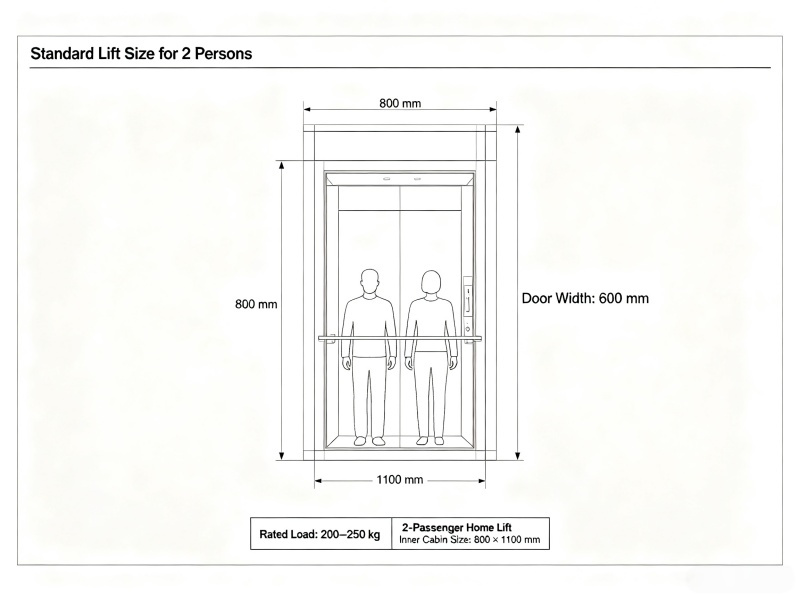
  • Capacity: 200–250 kg
  • Passengers: 1–2 people
  • Space required: As small as 1m × 1m

It’s ideal for:

  • Small houses
  • Duplex homes
  • Elderly or accessibility needs

In simple terms:
It’s the smallest functional home elevator you can install.


Average Price of 2 Person Home Lift in India

So, How Much Does a 2-Person Small Home Lift Cost in India?

As of 2025, If you’d like to know the price of a 2-person elevator in India, you can also read our article: “2 person small capsule lift for home price in india” the typical price range for a 2-person residential lift is:

Typical Price Range (2026)

CategoryPrice (INR)Price (USD)
Budget models₹6,00,000 – ₹10,00,000$7,000 – $12,000
Standard models₹10,00,000 – ₹18,00,000$12,000 – $22,000
Premium models₹18,00,000 – ₹30,00,000+$22,000 – $36,000+

Most real-world installations fall between:
₹11–22 lakh ($13,000–$26,000)


Quick takeaway:

  • Entry-level: ~$8K–$12K
  • Typical home use: ~$12K–$25K
  • Luxury/custom: $30K+

Price by Lift Technology

Different technologies = different price levels.


1. Hydraulic 2-Person Home Lift

Price:

  • ₹11,00,000 – ₹16,00,000
  • $13,000 – $19,000

Why choose it:

  • Smooth operation
  • Lower cost
  • Ideal for 2–3 floors

2. Traction (Machine Room-Less) Lift

Price:

  • ₹17,00,000 – ₹22,00,000
  • $20,000 – $26,000

Advantages:

  • Energy efficient
  • Faster
  • No separate machine room

3. Vacuum (Pneumatic) Lift

Price:

  • ₹15,00,000 – ₹25,00,000+
  • $18,000 – $30,000+

Best for:

  • Modern homes
  • Minimal civil work

4. Budget Chain/Basic Lift

Price:

  • ₹6,00,000 – ₹10,00,000
  • $7,000 – $12,000

Best for:

  • Cost-sensitive buyers
  • Basic functionality

Real Market Price Examples

Here’s what actual pricing looks like from suppliers:

  • Entry-level models start around ₹13.5 lakh (~$16,000)
  • Standard installations (G+1 homes):
    ₹12–25 lakh ($14,000–$30,000)
  • High-end models (multi-floor):
    ₹30 lakh+ ($36,000+)

What Affects the Price?

Two lifts may look similar—but cost very differently.


1. Number of Floors (Stops)

Each additional floor adds:

  • Rails
  • installation complexity

Extra cost:

  • ₹2–4 lakh per floor ($2,400–$5,000)

2. Cabin Design

  • Basic steel → cheaper
  • Glass / luxury interior → expensive

3. Civil Work

Includes:

  • Shaft construction
  • Pit
  • structure

Cost:

  • ₹50,000 – ₹3,00,000 ($600 – $3,600)

4. Technology Type

  • Hydraulic → cheaper
  • Vacuum → premium

5. Brand

  • Indian manufacturers → lower price
  • Imported brands → higher price

6. Customization

Adds cost:

  • Smart controls
  • Automatic doors
  • Interior finishes

Hidden Costs You Should Know

This is where many budgets go wrong.


1. Installation Cost

  • ₹50,000 – ₹2,00,000
  • $600 – $2,400

2. Annual Maintenance

  • ₹10,000 – ₹30,000/year
  • $120 – $360/year

3. Electricity Consumption

Hydraulic lifts use more power than traction models.


4. Government Approvals

  • Varies by city
  • Mandatory compliance (IS standards)

Price Comparison by Floors

Example Costs

FloorsPrice (INR)Price (USD)
G+1 (2 floors)₹10–20 lakh$12K–$24K
G+2 (3 floors)₹15–28 lakh$18K–$34K
G+3+₹20 lakh+$24K+

What You Get at Each Budget Level


₹6–10 Lakh ($7K–$12K)

  • Basic lift
  • Manual or simple controls
  • Limited features

₹10–18 Lakh ($12K–$22K)

  • Smooth operation
  • Better safety
  • Standard home use

₹18–30 Lakh ($22K–$36K)

  • Premium finishes
  • Smart features
  • Modern design

Why 2 Person Lifts Are Popular in India

Demand is growing because they offer:

  • Space-saving design
  • Lower cost than large elevators
  • Accessibility for elderly
  • Increased property value

Cost vs Value: What You Should Really Focus On

A cheaper lift might:

  • Break down more often
  • Require higher maintenance

A quality lift:

  • Lasts longer
  • Works smoothly
  • Saves money over time

Smart rule:

Don’t buy the cheapest—buy the right one for your home.


How to Choose the Right 2 Person Home Lift


Step 1: Define Your Use

  • Daily use → mid-range
  • Occasional use → budget

Step 2: Choose Technology

  • Budget → hydraulic/basic
  • Efficiency → traction
  • Design → vacuum

Step 3: Check Space

  • Shaft vs shaftless
  • Indoor vs outdoor

Step 4: Compare Quotes

Always get 3–5 quotations before buying.


Global Price Comparison

RegionAverage Price (USD)
India$7K – $30K
Europe$25K – $60K
USA$30K – $70K

Why India is cheaper:

  • Lower labor cost
  • Local manufacturing
  • Competitive suppliers

Final Thoughts

So, how much does a 2 person home lift cost in India?

Simple answer:

  • ₹6,00,000 – ₹30,00,000+
  • $7,000 – $36,000+

Most common range:

  • ₹11–22 lakh ($13K–$26K)

Bottom Line

A 2-person home lift is one of the most cost-effective and practical upgrades for modern Indian homes.

It’s not just about moving between floors—it’s about:

  • Comfort
  • Accessibility
  • Future-proofing your home

Choose wisely, and it becomes one of those investments you’ll appreciate every single day.

Scissor Lift Price in Saudi Arabia

The price of a scissor lift in Saudi Arabia typically ranges from $4,500 to over $45,000 USD (approximately SAR 16,900 to SAR 168,800), depending on lift height, platform capacity, power source, brand, automation features, and whether the machine is new or used. Small electric scissor lifts designed for indoor warehouse work are generally priced between $4,500–$12,000 USD (SAR 16,900–45,000), while heavy-duty diesel rough terrain scissor lifts for construction projects can exceed $35,000 USD (SAR 131,000+).

Saudi Arabia’s rapid growth in infrastructure, logistics, smart cities, oil & gas projects, aviation, warehousing, and commercial construction has significantly increased demand for scissor lifts. Large projects connected to Vision 2030, including NEOM, Red Sea Global, Riyadh Metro expansion, logistics parks, and industrial zones, are driving equipment purchases across the country.

However, many buyers searching online encounter massive price differences between suppliers. Some Chinese manufacturers advertise extremely low prices, while European and American brands often cost two or three times more. The reason is that scissor lift pricing depends on much more than platform height alone.

This article provides a complete analysis of scissor lift prices in Saudi Arabia, including competitor pricing, cost structure, electric vs diesel lift comparison, rental economics, local market conditions, import costs, and purchasing strategies.

What Is a Scissor Lift?

scissor lift is a mobile elevated work platform (MEWP) designed to lift workers, tools, and materials vertically using a crisscrossing support mechanism that resembles scissors.

Scissor lifts are widely used in:

  • Construction projects
  • Warehouses
  • Shopping malls
  • Airport maintenance
  • Industrial factories
  • Oil & gas facilities
  • Equipment installation
  • Facility management
  • Logistics centers

Compared with ladders or scaffolding, scissor lifts provide:

  • Better safety
  • Higher working efficiency
  • Larger platform space
  • Greater lifting capacity
  • Improved worker productivity

Saudi Arabia’s expanding industrial and construction sectors have made scissor lifts essential equipment across multiple industries.


Scissor Lift Price Table (Huichuang Lift Factory Reference)

Platform HeightLoad CapacityPower TypePrice (USD)Price (SAR)
6–8 m230–320 kgElectric$6,899≈ 25,870 SAR
8–10 m320 kgElectric / Hydraulic$8,200≈ 30,750 SAR
10–12 m320–450 kgHydraulic$9,800≈ 36,750 SAR
12–14 m450 kgHeavy Duty$11,999≈ 44,996 SAR

Prices are factory reference prices. Shipping, customs duties, and local certification costs are not included.


Average Scissor Lift Price in Saudi Arabia

Below is the realistic market price range for common scissor lift categories in Saudi Arabia.

Scissor Lift TypeUSD Price RangeSaudi Riyal (SAR)
Mini electric scissor lift$4,500 – $8,000SAR 16,900 – 30,000
Standard electric scissor lift$7,000 – $18,000SAR 26,200 – 67,500
Rough terrain diesel scissor lift$15,000 – $35,000SAR 56,200 – 131,000
High-reach heavy-duty lift$30,000 – $45,000+SAR 112,500 – 168,800+
Used scissor lift$3,000 – $20,000SAR 11,200 – 75,000

Prices vary depending on:

  • Lift height
  • Platform size
  • Weight capacity
  • Battery system
  • Hydraulic system
  • Brand reputation
  • Safety certifications
  • Import taxes and shipping

Why Scissor Lift Prices in Saudi Arabia Are Increasing

Several major factors are influencing equipment prices in Saudi Arabia.

1. Vision 2030 Infrastructure Projects

Saudi Arabia is investing hundreds of billions of dollars into:

  • NEOM
  • Riyadh development
  • Airports
  • Logistics hubs
  • Smart city projects
  • Industrial parks

Large-scale construction creates massive demand for aerial work platforms.

2. Growing Warehouse and Logistics Industry

E-commerce growth has increased demand for:

  • Warehouse maintenance
  • High-rack installation
  • Facility management

Electric scissor lifts are widely used in logistics facilities because they produce zero emissions indoors.

3. Oil & Gas Industry Demand

Saudi Arabia’s oil and gas sector frequently uses rough terrain diesel scissor lifts for:

  • Refinery maintenance
  • Pipeline projects
  • Industrial inspection
  • Equipment installation

Heavy-duty industrial lifts naturally cost more.

Electric Scissor Lift Price in Saudi Arabia

Electric scissor lifts are the most common category for indoor applications.

Typical price range:

  • $7,000–$18,000 USD
  • SAR 26,200–67,500

Common platform heights include:

Platform HeightUSD PriceSAR Price
6m electric lift$4,500 – $7,500SAR 16,900 – 28,100
8m electric lift$6,000 – $9,000SAR 22,500 – 33,700
10m electric lift$7,500 – $12,000SAR 28,100 – 45,000
12m electric lift$9,000 – $16,000SAR 33,700 – 60,000
14m electric lift$12,000 – $18,000SAR 45,000 – 67,500


Advantages of Electric Scissor Lifts

  • Zero emissions
  • Quiet operation
  • Lower maintenance cost
  • Suitable for indoor environments
  • Lower operating cost

Disadvantages

  • Limited rough terrain capability
  • Battery charging required
  • Lower outdoor performance

Electric lifts are especially popular in:

  • Airports
  • Shopping malls
  • Warehouses
  • Factories
  • Commercial buildings

Diesel Rough Terrain Scissor Lift Price in Saudi Arabia

Rough terrain diesel lifts are designed for outdoor and construction applications.

Typical price range:

  • $15,000–$35,000+ USD
  • SAR 56,200–131,000+

These lifts include:

  • Four-wheel drive
  • Large tires
  • High ground clearance
  • Stronger chassis
  • Larger platform capacities

Advantages

  • Excellent outdoor performance
  • Suitable for sand and rough surfaces
  • Higher lifting capacities
  • Better climbing ability

Disadvantages

  • Higher fuel cost
  • More maintenance
  • Noise and emissions
  • Higher purchase price

These machines are widely used in:

  • Construction projects
  • Oil fields
  • Infrastructure development
  • Industrial sites

Chinese vs European vs American Scissor Lift Prices

Brand origin significantly affects pricing.

Chinese Scissor Lifts

Typical price range:

  • $5,000–$20,000 USD
  • SAR 18,700–75,000

Advantages:

  • Competitive pricing
  • Fast delivery
  • Good customization
  • Lower spare parts cost

Disadvantages:

  • Quality varies between suppliers
  • Some brands have weaker service networks

Chinese manufacturers currently dominate Saudi Arabia’s mid-range scissor lift market because they provide strong value for money.

European Scissor Lifts

Typical price range:

  • $20,000–$45,000+ USD
  • SAR 75,000–168,800+

Popular brands include:

  • Haulotte
  • JLG
  • Genie

Advantages:

  • Excellent engineering
  • Advanced safety systems
  • Long-term reliability

Disadvantages:

  • Higher initial cost
  • Expensive spare parts

Competitor Price Comparison

Brand CategoryTypical Price RangeBest For
Chinese entry-level$5,000 – $12,000Budget buyers
Chinese mid-range$10,000 – $20,000Most contractors
European premium$20,000 – $45,000Large industrial projects
American premium$22,000 – $50,000Oil & gas sector

Factors Affecting Scissor Lift Prices

1. Platform Height

Higher lifts cost significantly more.

Example:

HeightAverage Price
6m$5,000
10m$10,000
14m$18,000
18m$30,000+

Higher lifts require:

  • Stronger hydraulic systems
  • Larger chassis
  • Better stabilization systems

2. Load Capacity

Higher platform capacity increases price.

Common capacities include:

  • 230 kg
  • 320 kg
  • 450 kg
  • 680 kg
  • 1000 kg+

Industrial applications often require larger capacities.

3. Battery System

Battery quality strongly influences electric lift pricing.

Common battery types:

  • Lead-acid batteries
  • AGM batteries
  • Lithium batteries

Lithium battery systems cost more but provide:

  • Longer lifespan
  • Faster charging
  • Lower maintenance

4. Safety Features

Modern lifts may include:

  • Tilt sensors
  • Overload protection
  • Automatic braking
  • Emergency lowering systems
  • Pothole protection

Additional safety systems increase cost but improve compliance with Saudi regulations.

5. Tire Type

Different tires affect pricing.

Options include:

  • Non-marking tires
  • Pneumatic tires
  • Solid tires
  • Rough terrain tires

Hidden Costs Buyers Often Ignore

The machine price is not the total investment.

Shipping and Import Cost

Imported lifts include:

  • Ocean freight
  • Customs clearance
  • Port handling
  • Insurance

Large diesel lifts are expensive to transport.

VAT in Saudi Arabia

Saudi Arabia applies VAT on equipment purchases.

Buyers must account for:

  • VAT
  • Registration fees
  • Inspection costs

Spare Parts and Maintenance

Annual maintenance costs may include:

  • Hydraulic oil
  • Battery replacement
  • Tire replacement
  • Electrical repairs
  • Service labor

Premium European parts are usually more expensive than Chinese alternatives.

Operator Training

Many companies also pay for:

  • Operator certification
  • Safety training
  • Equipment inspection

Used Scissor Lift Prices in Saudi Arabia

Used lifts are increasingly popular among smaller contractors.

Typical used lift prices:

Used Lift TypeUSD PriceSAR Price
Used 6m electric lift$3,000 – $5,500SAR 11,200 – 20,600
Used 10m electric lift$5,000 – $9,000SAR 18,700 – 33,700
Used rough terrain lift$10,000 – $22,000SAR 37,500 – 82,500

Advantages of Used Equipment

  • Lower investment cost
  • Faster ROI
  • Suitable for short-term projects

Risks

  • Battery degradation
  • Hydraulic wear
  • Unknown maintenance history
  • Limited warranty

Buying a used scissor lift without inspection is a little like buying a camel online from a blurry photo. Sometimes it works out beautifully. Sometimes you discover the “low mileage” camel has crossed three deserts already.


Scissor Lift vs Other Aerial Work Platforms

Compared to boom lifts, scissor lifts:

  • Offer higher vertical load capacity
  • Provide a larger working platform
  • Cost less to purchase and maintain
  • Are easier to operate and transport

If your work requires vertical lifting rather than horizontal outreach, a scissor lift is usually the smarter investment.


Buying Advice: How to Choose the Right Scissor Lift in Saudi Arabia

First, define your working height, not just platform height. Always include operator reach.

Second, check load requirements. Two workers plus tools can exceed 300 kg easily.

Third, consider the environment. Indoor projects favor electric lifts; outdoor sites need stronger hydraulics and wind resistance.

Fourth, ask for certification readiness. Even factory equipment should support CE or equivalent safety standards.

Finally, compare lifecycle cost, not just purchase price. A well-built lift reduces downtime, repairs, and replacement frequency.


Rental vs Buying Economics

Many Saudi companies compare renting versus purchasing.

Rental Advantages

  • Lower upfront cost
  • No maintenance responsibility
  • Flexible equipment selection

Buying Advantages

  • Lower long-term cost
  • Full equipment availability
  • Asset ownership

For long-term daily use, purchasing is usually more economical.

For short-term projects, rental often makes more financial sense.

Why Chinese Scissor Lifts Are Popular in Saudi Arabia

Chinese manufacturers have rapidly expanded in Saudi Arabia because they provide:

  • Competitive pricing
  • Acceptable quality
  • Faster delivery
  • OEM customization
  • Lower spare parts cost

Many Saudi contractors now prefer Chinese mid-range machines because they balance affordability and functionality.

How to Choose the Right Scissor Lift

Before purchasing, buyers should evaluate:

  1. Indoor or outdoor use
  2. Required working height
  3. Platform capacity
  4. Ground conditions
  5. Daily operating hours
  6. Maintenance availability
  7. Spare parts supply
  8. Budget

Choosing the wrong lift can increase operating cost and reduce efficiency.

Future Market Trends in Saudi Arabia

Several trends are shaping the Saudi scissor lift market.

Lithium Battery Technology

Lithium systems are becoming more popular because they:

  • Reduce charging time
  • Improve lifespan
  • Lower maintenance

Smart Fleet Management

Modern lifts increasingly include:

  • GPS tracking
  • Telematics
  • Remote diagnostics

Growing Demand from Mega Projects

Projects such as:

  • NEOM
  • Red Sea Global

will continue driving equipment demand.

Final Thoughts

Scissor lift prices in Saudi Arabia vary widely depending on lift height, power system, automation level, and brand reputation. Electric scissor lifts generally range from $4,500–$18,000 USD (SAR 16,900–67,500), while heavy-duty diesel rough terrain lifts can exceed $35,000 USD (SAR 131,000+).

Chinese manufacturers currently dominate the mid-range market because they offer competitive pricing and good functionality, while European and American brands continue leading the premium industrial sector.

For buyers, understanding the total ownership cost — including maintenance, spare parts, batteries, VAT, and transportation — is far more important than focusing only on the initial purchase price.

As Saudi Arabia continues investing heavily in infrastructure, logistics, and industrial development, demand for scissor lifts is expected to remain strong for many years ahead.

How much does a Portable Loading Ramp cost?

In warehouses, factories, logistics centers, farms, and construction sites, a portable loading ramp is one of the most practical solutions for loading and unloading goods quickly and safely. Whether you are moving pallets with a forklift, loading containers, or improving warehouse efficiency, choosing the right portable loading ramp can reduce labor costs and improve productivity significantly.

However, one of the most common questions buyers ask is: How much does a portable loading ramp cost?

The answer depends on several factors, including load capacity, ramp size, material, mobility, customization, and safety features. In this article, we will provide a detailed and accurate analysis of portable loading ramp pricing, specifications, applications, and comparisons to help buyers make the best purchasing decision.


What Is a Portable Loading Ramp?

A portable loading ramp is a movable metal ramp designed to bridge the height gap between the ground and a truck, shipping container, or loading dock. It allows forklifts, pallet jacks, and other material handling equipment to move goods efficiently.

Unlike fixed loading docks, portable loading ramps can be relocated easily, making them ideal for temporary or flexible loading operations.

Portable loading ramps are widely used in:

  • Warehouses
  • Manufacturing plants
  • Logistics centers
  • Farms
  • Construction sites
  • Retail distribution centers
  • Ports and container yards

Most portable loading ramps are made from high-strength steel and equipped with wheels for mobility.


Average Portable Loading Ramp Price

The cost of a portable loading ramp varies greatly depending on specifications and quality. Below is a general price range in the international market.

Ramp TypeLoad CapacityTypical SizeEstimated Price (USD)
Small Manual Ramp2–5 tons6–8 ft$500–$1,500
Standard Mobile Yard Ramp6–10 tons30 ft$3,000–$6,500
Heavy Duty Portable Ramp10–15 tons36 ft$6,500–$12,000
Hydraulic Portable Loading Ramp10–20 tons36–40 ft$8,000–$18,000
Customized Container Ramp8–15 tonsCustomized$10,000–$25,000

Prices may vary depending on:

  • Steel prices
  • Hydraulic system quality
  • Certification requirements
  • Shipping costs
  • Brand reputation
  • Country of manufacture

Chinese manufacturers generally offer lower factory prices compared to European or American suppliers.


Factors That Affect Portable Loading Ramp Cost

1. Load Capacity

The most important factor affecting price is the load-bearing capacity.

A ramp designed for light pallet movement costs much less than a heavy-duty forklift loading ramp.

Typical capacities include:

  • 5 tons
  • 8 tons
  • 10 tons
  • 12 tons
  • 15 tons
  • 20 tons

Higher capacities require:

  • Thicker steel plates
  • Reinforced support structures
  • Stronger hydraulic systems
  • Advanced welding technology

As a result, costs increase significantly.


2. Ramp Length and Width

Longer ramps provide smoother forklift climbing angles but require more material.

Common dimensions:

  • Length: 6 ft to 40 ft
  • Width: 6 ft to 8 ft

Larger ramps cost more because they use:

  • More steel
  • Larger support beams
  • Stronger wheel systems

A 40-foot heavy-duty ramp may cost double the price of a small 8-foot portable ramp.


3. Manual vs Hydraulic System

Manual ramps are cheaper but require more labor.

Hydraulic portable loading ramps allow operators to adjust the height quickly using:

  • Electric hydraulic pumps
  • Manual hydraulic systems
  • Battery-powered controls

Hydraulic models are more efficient for high-frequency loading operations.

Price comparison:

  • Manual loading ramp: $3,000–$5,000
  • Hydraulic loading ramp: $8,000–$18,000

Although hydraulic ramps cost more initially, they reduce labor costs over time.


4. Steel Material Quality

High-quality steel improves:

  • Durability
  • Corrosion resistance
  • Safety
  • Service life

Common materials include:

  • Q235 steel
  • Q345 steel
  • Galvanized steel
  • Anti-slip checker plate steel

Cheaper ramps often use thinner steel that may deform under heavy loads.

Premium manufacturers use:

  • Reinforced welding
  • Thick anti-slip deck plates
  • Industrial-grade support beams

These features increase the price but improve long-term value.


5. Safety Features

Modern portable loading ramps may include:

  • Safety side rails
  • Anti-slip surfaces
  • Forklift traction grids
  • Wheel locks
  • Emergency stop systems
  • Safety chains

Additional safety features increase manufacturing costs but reduce workplace accidents.


6. Certifications and Standards

International buyers often require certifications such as:

  • CE certification
  • ISO certification
  • ANSI standards
  • SGS inspection

Certified ramps usually cost more because manufacturers must meet strict engineering and testing requirements.


Portable Loading Ramp Specifications

Below is a common specification example for a hydraulic portable loading ramp.

SpecificationDetails
Capacity10 Tons
Ramp Length11 meters
Ramp Width2.1 meters
Adjustable Height1.2–1.7 meters
MaterialHigh-strength steel
SurfaceAnti-slip checker plate
Hydraulic SystemElectric hydraulic
TiresSolid rubber tires
Power Supply220V/380V
CertificationCE/ISO

Custom specifications are also available for different industries.


Applications of Portable Loading Ramps

Warehouse Loading Operations

Portable ramps allow forklifts to move directly into trucks or containers without permanent dock construction.

This improves:

  • Loading speed
  • Labor efficiency
  • Warehouse flexibility

Container Loading and Unloading

Many logistics companies use portable ramps for shipping container operations.

Forklifts can enter containers safely and efficiently.

This is especially useful in:

  • Temporary logistics sites
  • Outdoor freight yards
  • Remote warehouses

Agricultural Industry

Farmers use portable loading ramps for:

  • Grain transportation
  • Feed loading
  • Equipment movement

Portable ramps are practical for rural areas where fixed docks are unavailable.


Construction Sites

Construction companies often require temporary loading solutions.

Portable ramps help transport:

  • Cement pallets
  • Steel materials
  • Heavy machinery

Their mobility makes them ideal for changing job sites.


Portable Loading Ramp vs Fixed Dock Ramp

FeaturePortable Loading RampFixed Dock Ramp
MobilityHighNone
InstallationMinimalPermanent construction
CostLower initial investmentHigher construction cost
FlexibilityExcellentLimited
MaintenanceModerateModerate
Best ForTemporary or flexible operationsPermanent warehouses

Portable loading ramps are usually more cost-effective for businesses that need flexibility.


Portable Loading Ramp vs Dock Leveler

Many buyers compare portable ramps with dock levelers.

Portable Loading Ramp Advantages

  • Easy relocation
  • Lower installation cost
  • No building modification required
  • Suitable for outdoor use

Dock Leveler Advantages

  • Permanent loading dock integration
  • Faster repetitive operations
  • Cleaner warehouse appearance

For companies without permanent docks, portable loading ramps are usually the better investment.


How to Choose the Right Portable Loading Ramp

Determine Your Maximum Load

Calculate:

  • Forklift weight
  • Cargo weight
  • Safety margin

Always choose a ramp with higher capacity than your maximum operating load.


Consider Ramp Slope

A slope that is too steep may:

  • Reduce forklift stability
  • Increase accident risk
  • Damage equipment

Longer ramps provide smoother climbing angles.


Check Surface Design

Choose anti-slip surfaces for:

  • Rainy environments
  • Outdoor use
  • Heavy forklift traffic

Checker plates and traction grids improve safety significantly.


Evaluate Hydraulic Requirements

Hydraulic systems improve convenience but increase costs.

For high-volume operations, hydraulic ramps usually provide better long-term value.


Verify Manufacturer Experience

Reliable manufacturers offer:

  • Quality welding
  • Strong engineering support
  • Warranty service
  • Spare parts availability
  • International certifications

A cheap ramp with poor construction may lead to costly downtime later.


Factory Price vs Market Price

Factory-direct prices are often 20%–40% lower than distributor prices.

SourceTypical Price Difference
Factory DirectLowest
Trading CompanyMedium
Local DistributorHighest

Many international buyers purchase directly from Chinese manufacturers to reduce procurement costs.

However, buyers should also consider:

  • Shipping expenses
  • Import taxes
  • Installation support
  • After-sales service

Shipping Costs for Portable Loading Ramps

Shipping is a major factor because portable ramps are large and heavy.

Estimated international shipping costs:

  • Small ramps: $300–$1,000
  • Large hydraulic ramps: $2,000–$8,000

Sea freight is the most economical option for bulk orders.

Some manufacturers offer:

  • Knock-down designs
  • Container optimization
  • Export packaging

These solutions reduce transportation costs.


Maintenance Costs

Portable loading ramps require regular maintenance to ensure safety and long service life.

Typical maintenance includes:

  • Hydraulic oil replacement
  • Tire inspection
  • Welding checks
  • Surface cleaning
  • Lubrication

Annual maintenance costs are relatively low compared to the productivity benefits.


Why Cheap Portable Loading Ramps Can Be Risky

Extremely low-priced ramps may have:

  • Thin steel structures
  • Weak welds
  • Poor hydraulic systems
  • Inadequate safety testing

These issues can lead to:

  • Forklift accidents
  • Structural failure
  • Expensive downtime

Investing in quality equipment usually provides better long-term returns.


Future Market Trends

The portable loading ramp market continues to grow due to:

  • Expanding global logistics
  • E-commerce growth
  • Warehouse automation
  • Increased container transportation

Future trends include:

  • Smart hydraulic controls
  • Lightweight aluminum ramps
  • Solar-powered hydraulic systems
  • IoT safety monitoring

Manufacturers are also focusing on environmentally friendly production methods.


Conclusion

So, how much does a portable loading ramp cost?

The answer depends on capacity, size, hydraulic systems, material quality, and customization requirements. Small manual ramps may cost as little as $500, while heavy-duty hydraulic portable loading ramps can exceed $20,000.

For most industrial applications, a high-quality portable loading ramp typically costs between $3,000 and $12,000.

When selecting a portable loading ramp, buyers should focus not only on price but also on:

  • Safety
  • Durability
  • Efficiency
  • Certification
  • After-sales support

A well-designed portable loading ramp can improve warehouse productivity, reduce labor costs, and provide reliable long-term performance for logistics and material handling operations.

How to use single mast lift safely

Introduction

In the realm of modern construction, facility maintenance, and warehouse logistics, efficiency and safety are paramount. Among the various types of aerial work platforms available, the single mast lift (often referred to as a single mast vertical lift) has emerged as a cornerstone for low-to-medium height operations. These compact, versatile machines allow workers to access heights ranging from 4 meters to over 12 meters with a minimal footprint, making them ideal for narrow aisles, indoor environments, and congested job sites.

However, the convenience of a single mast lift comes with significant responsibilities. According to data from the Occupational Safety and Health Administration (OSHA) and the International Powered Access Federation (IPAF), falls from height remain one of the leading causes of workplace fatalities in the construction and maintenance sectors. A significant portion of these incidents involves the improper use of mobile elevating work platforms (MEWPs). Therefore, understanding how to use a single mast lift safely is not just a regulatory requirement; it is a moral imperative to protect human life.

This comprehensive guide delves into the critical safety protocols, operational best practices, and statistical realities surrounding single mast lifts. By combining industry research data with practical actionable advice, we aim to equip operators, site managers, and safety officers with the knowledge needed to create a hazard-free working environment.


Understanding the Single Mast Lift: Capabilities and Limitations

Before discussing safety procedures, it is essential to understand the machine itself. A single mast lift consists of a telescoping mast structure mounted on a chassis, designed to elevate a platform vertically. Unlike scissor lifts which offer a larger platform area, or boom lifts which offer horizontal reach, single mast lifts prioritize vertical height in a compact form factor.

Key Characteristics

  • Compact Design: Their narrow width allows them to pass through standard doorways and operate in tight spaces.
  • Vertical Movement: They primarily move up and down, though some models offer limited “drive-while-elevated” capabilities at reduced speeds and heights.
  • Load Capacity: Typically designed for one or two operators plus tools, with load capacities usually ranging from 150 kg to 250 kg (330 lbs to 550 lbs).

The Risk Profile

The very features that make single mast lifts useful also introduce specific risks. Their high center of gravity when elevated makes them susceptible to tipping if not used on level ground. Furthermore, the limited platform space can lead to overcrowding or improper positioning of the operator, increasing the risk of ejection or falls.

Research indicates that approximately 40% of MEWP accidents are attributed to instability (tipping over), while another 30% involve falls from the platform due to lack of fall protection or unsafe behavior. Understanding these statistics underscores the necessity of strict adherence to safety guidelines.

Properly maintained single mast lifts with intact safety cages and stable bases are the foundation of safe operation. Always conduct a full pre-use check before starting work.


Pre-Operation Safety Protocols

Safety begins long before the engine is started or the battery is connected. A rigorous pre-operation routine is the first line of defense against accidents.

1. Site Assessment and Hazard Identification

The environment plays a critical role in safe operation. Before bringing a single mast lift into an area, a thorough site assessment must be conducted.

  • Floor Conditions: The ground must be firm, level, and capable of supporting the weight of the lift and the load. Soft ground, debris, or uneven surfaces can cause the outriggers (if equipped) to sink or the wheels to shift, leading to a tip-over.
  • Overhead Hazards: Operators must look up. Power lines, pipes, sprinkler systems, and low-hanging beams pose electrocution and collision risks. A safe distance of at least 3 meters (10 feet) from energized power lines is generally mandated, though local regulations may vary.
  • Traffic and Pedestrians: In busy warehouses or public areas, the work zone must be cordoned off using cones, barriers, and signage to prevent collisions with other vehicles or pedestrians.

2. Machine Inspection (Pre-Start Check)

A daily inspection checklist is mandatory. This should include:

  • Structural Integrity: Check the mast sections for cracks, bends, or excessive wear. Inspect welds and pins.
  • Hydraulic System: Look for leaks in hoses, cylinders, and fittings. Low hydraulic fluid can lead to sudden drops or erratic movement.
  • Controls and Emergency Systems: Test all ground and platform controls. Ensure the emergency stop buttons function correctly and that the alarm systems (tilt alarms, overload sensors) are operational.
  • Wheels and Outriggers: Inspect tires for damage and proper inflation. Verify that outriggers extend and lock securely.
  • Fall Protection Anchorage: Ensure the designated anchor points for harnesses are intact and free of corrosion.

Data Insight: A study by the Center for Construction Research and Training (CPWR) found that 25% of equipment-related incidents could have been prevented if a proper pre-use inspection had been conducted and identified a mechanical fault.


 How to Use Single Mast Lift Safely

Once the site is deemed safe and the machine passes inspection, the operator can proceed. However, the operation phase requires unwavering focus and adherence to protocol.

1. Personal Protective Equipment (PPE)

No operator should ever enter the platform without appropriate PPE. This includes:

  • Hard Hat: To protect against falling objects and head injuries during collisions.
  • Safety Harness and Lanyard: This is non-negotiable. Operators must wear a full-body harness with a short lanyard attached to the manufacturer-designated anchor point. In the event of a tip-over or sudden stop, the harness prevents the operator from being ejected.
  • High-Visibility Vest: Essential for ensuring the operator is seen by others on the ground.
  • Non-slip Footwear: To maintain stability on the platform floor.

2. Loading and Positioning

Overloading is a primary cause of structural failure and tipping.

  • Weight Limits: Never exceed the rated load capacity specified on the machine’s data plate. This limit includes the weight of the operator(s), tools, and materials.
  • Distribution: Load should be evenly distributed on the platform floor. Do not place heavy items on the guardrails or lean ladders against the platform to gain extra height—this is a fatal violation known as “standing on the rails.”
  • Body Position: Keep your body centered within the platform. Leaning over the guardrails to reach further compromises the center of gravity and increases the risk of falling. If a task is out of reach, lower the platform and reposition the lift.

3. Movement and Maneuvering

  • Driving While Elevated: Only drive the lift while elevated if the manufacturer explicitly permits it and the terrain is perfectly level. Even then, travel at a slow, cautious speed. Many modern single mast lifts have speed restrictions automatically engaged when the platform is raised.
  • Outrigger Usage: If the lift is equipped with outriggers, they must be fully extended and locked before elevating the platform, unless the machine is specifically designed for “pothole protection” without them on certain models. Always consult the operator’s manual.
  • Wind Conditions: For outdoor use, wind is a critical factor. Most manufacturers recommend ceasing operation if wind speeds exceed 12.5 m/s (28 mph). Anemometers should be used to monitor conditions accurately.

4. Emergency Procedures

Operators must be trained on what to do in an emergency.

  • Power Failure: All lifts are equipped with a manual descent system (usually a pump or valve) to lower the platform in case of power loss. Operators should know its location and how to use it.
  • Entrapment: If the lift becomes stuck or tips slightly, the operator should stay inside the platform with their harness secured. Attempting to climb out while the machine is unstable often leads to falls. Rescue procedures should be initiated by ground personnel.

The control panel of a single mast vertical lift houses critical safety features like the emergency stop. Operators must be fully trained on these controls before using the equipment.


Statistical Analysis of Single Mast Lift Incidents

To emphasize the importance of these protocols, let us examine data trends related to MEWP accidents. The following table summarizes common causes of incidents involving vertical mast lifts, based on aggregated data from IPAF’s annual safety reports and OSHA records.

Incident CategoryPercentage of Total AccidentsPrimary CausePreventative Measure
Tip-Over / Instability38%Uneven ground, driving while elevated on slopes, hitting obstacles.Strict site assessment, outrigger usage, adherence to slope limits.
Fall from Platform29%No harness used, leaning over rails, climbing guardrails.Mandatory harness use, training on “feet on floor” policy.
Electrocution15%Contact with overhead power lines.Site survey, maintaining safe distances, using spotters.
Entrapment / Crushing12%Caught between platform and overhead structures.Awareness of surroundings, use of proximity sensors.
Mechanical Failure6%Lack of maintenance, hydraulic leaks, component fatigue.Daily inspections, scheduled preventative maintenance.

Table 1: Analysis of Single Mast Lift Incident Causes (Source: Aggregated IPAF & OSHA Data)

The data clearly indicates that human error and procedural violations account for the vast majority of accidents. Mechanical failures, while serious, are statistically less frequent when proper maintenance schedules are followed. This reinforces the argument that training and culture are the most effective safety tools.

The Cost of Non-Compliance

Beyond the human toll, accidents carry severe financial consequences. Direct costs include medical expenses and equipment repair, but indirect costs—such as project delays, legal fees, increased insurance premiums, and reputational damage—can be four to ten times higher than direct costs. Investing in comprehensive safety training and high-quality equipment is economically sound business practice.


Training and Certification: The Foundation of Safety

No amount of engineering can replace the need for a competent operator. Regulatory bodies worldwide, including OSHA in the US and HSE in the UK, mandate that only trained and authorized personnel operate MEWPs.

Effective training programs should cover:

  1. Classroom Theory: Understanding regulations, physics of stability, and hazard recognition.
  2. Practical Demonstration: Hands-on experience with the specific type of lift to be used.
  3. Evaluation: A formal assessment of the operator’s skills and knowledge.
  4. Refresher Courses: Periodic re-training to keep skills sharp and update knowledge on new regulations or technologies.

Certification should not be a “one-and-done” event. As technology evolves and job sites change, continuous learning is vital. Companies should foster a culture where safety is prioritized over speed, empowering workers to “stop work” if they perceive an unsafe condition without fear of reprisal.


Advanced Maintenance Strategies: Extending Lifespan and Ensuring Safety

While daily pre-use inspections are critical, a robust preventative maintenance (PM) program is the backbone of long-term safety for single mast lifts. Neglecting scheduled maintenance can lead to catastrophic component failures that daily checks might miss. Industry data suggests that hydraulic system failures account for nearly 20% of unplanned downtime in aerial work platforms, often stemming from degraded seals or contaminated fluid.

Key Maintenance Intervals

To maintain optimal safety standards, operators and facility managers should adhere to a tiered maintenance schedule:

  1. Daily/Pre-Shift: Visual inspection of tires, guardrails, controls, and hydraulic leaks (as previously discussed).
  2. Monthly/50-Hour Check:
    • Hydraulic Fluid Analysis: Check fluid levels and quality. Contaminated fluid can damage pumps and valves, leading to erratic platform movement.
    • Battery Care: For electric models, inspect battery water levels (if applicable), terminal corrosion, and charging cycles. A failing battery can cause sudden power loss at height.
    • Structural Fasteners: Torque check critical bolts on the mast sections and chassis. Vibration during operation can loosen connections over time.
  3. Annual/1000-Hour Certification:
    • A comprehensive inspection by a certified technician is mandatory in most jurisdictions. This includes non-destructive testing (NDT) of welds, load testing to verify capacity, and full functional testing of all safety interlocks and emergency systems.

Pro Tip: Maintain a digital logbook for every machine. Tracking maintenance history not only ensures compliance with warranty requirements but also helps identify recurring issues before they become safety hazards. At Huichuang Lift, we provide detailed maintenance manuals and support remote diagnostics to help our global partners keep their fleets in peak condition.


The Impact of Environmental Factors on Single Mast Operations

Single mast lifts are often praised for their indoor versatility, but they are increasingly used in semi-outdoor or challenging environments. Understanding how environmental factors affect stability is crucial for safe operation.

Temperature Extremes

  • Cold Weather: In temperatures below -10°C (14°F), hydraulic oil viscosity increases, causing slower response times and potential jerky movements. Battery capacity in electric lifts can drop by up to 40%, reducing operational time and potentially causing unexpected shutdowns.
    • Solution: Use cold-weather hydraulic fluids and keep batteries in heated storage when not in use. Allow the machine to warm up before full-load operation.
  • High Heat: Extreme heat can cause hydraulic seals to degrade faster and increase the risk of hose bursts. It also poses health risks to operators (heat stress), which can impair judgment.

Floor Surface Integrity

The “level ground” requirement is often misunderstood. A floor may look level but have hidden weaknesses.

  • Loading Docks and Mezzanines: These areas often have specific load-bearing limits. A single mast lift concentrates its weight on four small wheels. If the floor’s point-load capacity is exceeded, it can collapse.
  • Debris and Obstacles: Even small debris like wood scraps or loose cables can act as a pivot point, causing the lift to tip when elevated.
  • Slope Limitations: Most single mast lifts have a maximum slope rating of roughly 3 degrees (5%) for safe operation. Exceeding this, even slightly, drastically shifts the center of gravity. Modern lifts from manufacturers like Huichuang Lift come equipped with sensitive tilt sensors that sound an alarm and cut power to drive functions if the safe angle is exceeded, providing a critical layer of automated protection.

Leveraging Technology: Smart Safety Features in Modern Lifts

The landscape of aerial work safety is changing rapidly with the integration of IoT (Internet of Things) and smart sensor technology. Modern single mast lifts are no longer just mechanical devices; they are intelligent systems designed to prevent human error.

1. Load Sensing Systems

Advanced load cells continuously monitor the weight on the platform. If the load exceeds the rated capacity (e.g., two workers plus heavy tools), the system prevents elevation or alerts the operator immediately. This eliminates the guesswork and prevents structural overload.

2. Pothole Protection and Outrigger Interlocks

Newer models feature automatic pothole protection bars that deploy when the platform is raised. Furthermore, electronic interlocks ensure that the lift cannot be elevated unless the outriggers are fully extended and locked, removing the possibility of operator negligence in this critical step.

3. Telematics and Remote Monitoring

Fleet managers can now monitor lift usage in real-time. Telematics systems track:

  • Impact Detection: Alerts managers if the lift has been collided with, prompting an immediate safety inspection.
  • Usage Hours: Automates maintenance scheduling based on actual engine/motor hours rather than calendar dates.
  • Operator Behavior: Identifies unsafe patterns, such as frequent tilting or overloading, allowing for targeted re-training.

Huichuang Lift is at the forefront of integrating these technologies. Our latest R&D initiatives focus on embedding smart control systems into our hydraulic aerial work lifts, ensuring that our clients in North America, Europe, and beyond have access to the safest, most data-driven equipment on the market.


Regulatory Compliance: Navigating Global Standards

Operating a single mast lift requires adherence to a complex web of international and local regulations. Non-compliance can result in severe fines, work stoppages, and liability in the event of an accident.

Key Standards Overview

  • ANSI/SAIA A92.20 (USA): This standard outlines the design, calculations, safety requirements, and test methods for Mobile Elevating Work Platforms (MEWPs). It places a heavy emphasis on load sensing and training requirements.
  • EN 280 (Europe): The European standard for mobile elevating work platforms, focusing on stability calculations, structural integrity, and safety devices. Compliance is mandatory for the CE mark.
  • ASME A17.1 (Global/Elevator Specific): While primarily for elevators, aspects of this code influence the safety mechanisms of vertical lifting personnel platforms, particularly regarding emergency descent and locking mechanisms.

The Importance of Certified Equipment

Using equipment that lacks proper certification is a significant liability. Certified machines undergo rigorous third-party testing to ensure they meet these stringent standards.

  • CE Marking: Indicates conformity with health, safety, and environmental protection standards for products sold within the European Economic Area.
  • ISO 9001: Certifies that the manufacturer has a quality management system in place, ensuring consistent product quality.

Huichuang Lift proudly holds CE, ISO, and ASME A17.1 certifications. This guarantees that every single mast lift, home elevator, and boom lift we manufacture meets the rigorous safety benchmarks required in North America, South America, Europe, and Southeast Asia. When you partner with us, you are ensuring that your operations are compliant with global regulations, mitigating legal risks, and protecting your workforce.


Conclusion: Elevating Standards with Reliable Partners

Mastering how to use a single mast lift safely is a multifaceted endeavor that combines rigorous planning, disciplined operation, and a commitment to continuous improvement. The statistics are clear: the majority of accidents are preventable through adherence to established safety protocols, proper training, and the use of well-maintained equipment.

As industries continue to evolve, the demand for lifting solutions that marry high performance with uncompromising safety grows. Choosing the right equipment manufacturer is a critical step in this safety journey. You need a partner who not only builds machines to meet international standards but also understands the nuances of global safety requirements.

Partner with Jinan Huichuang Machinery Manufacturing Co., Ltd. (Huichuang Lift)

In the pursuit of excellence in aerial work solutions, Jinan Huichuang Machinery Manufacturing Co., Ltd. (commonly known as Huichuang Lift) stands out as a beacon of quality and reliability. Located in Jinan, Shandong—the renowned “Hometown of Hydraulic Lifting Platforms”—Huichuang Lift has positioned itself as a leader in the industry, driven by a mission to provide hassle-free lifting experiences and promote building accessibility.

Why Choose Huichuang Lift?

1. Uncompromised Safety and Quality Certifications

Safety is the core of Huichuang’s manufacturing philosophy. Our products are rigorously tested and certified to meet the highest international standards, including CEISO, and ASME A17.1. These certifications are not just badges; they are a testament to our commitment to exceeding international performance benchmarks. When you choose Huichuang, you are choosing equipment designed with the utmost attention to structural integrity, hydraulic reliability, and operator protection.

2. Advanced R&D and Manufacturing Capabilities

With a dedicated team of 200+ efficient staff and multiple state-of-the-art production workshops, Huichuang Lift boasts independent R&D capabilities for our two main production lines: Hydraulic Aerial Work Lifts and Home Elevators. Our product range also includes Articulating Boom Lifts and Telescopic Boom Lifts, catering to diverse application needs. Our rich experience in R&D ensures that every single mast lift we produce features high cost-effectiveness without compromising on quality or safety features like tilt sensors, overload protection, and emergency descent systems.

3. Global Reach and Reputation

Huichuang Lift has successfully expanded its market coverage beyond China to include North America, South America, Europe, and Southeast Asia. Our reputation for delivering reliable, safe, and efficient lifting solutions has earned us numerous awards and the trust of clients worldwide. We understand the varying regulatory landscapes of different regions and tailor our solutions accordingly.

4. Comprehensive Customer Support and Customization

We believe that our relationship with clients extends far beyond the sale. Huichuang Lift offers customized safe and efficient solutions to meet specific project requirements. Whether you need a specialized platform size, unique power sources, or specific control configurations, our OEM services can deliver. Our customer support framework covers pre-sales consultation, tailored solution design, and robust after-sales maintenance, ensuring your operations run smoothly without interruption.

5. A Vision for the Future

Our core objective is to shape industry standards and create more possibilities for users. We are actively recruiting global agents and seeking cooperation with excellent lifting service providers who share our vision of safety and innovation. By partnering with Huichuang Lift, you align yourself with a company that is dedicated to leveraging industry expertise to deliver exceptional services.

In conclusion, safe operation of single mast lifts requires the right knowledge, the right training, and undeniably, the right equipment. Let Huichuang Lift be your trusted partner in achieving your lifting goals safely and efficiently.

Articulating Boom Lift vs Telescopic Boom Lift: A Comprehensive Comparison

Working at height is one of those jobs where the wrong equipment doesn’t just slow you down—it can create safety risks, increase costs, and turn simple tasks into logistical headaches. That’s why choosing between an articulating boom lift and a telescopic boom lift matters more than most people think.

Both machines are widely used in construction, maintenance, logistics, and industrial operations. They look similar from a distance, but their behavior on the job is very different.

This guide focuses on what really matters: how they work, where they’re used, what problems they solve, and how they compare in real-world scenarios—without unnecessary complexity.


What’s the Real Difference (Quick Overview)

Before going deep, here’s the simple version:

  • Articulating Boom Lift (Knuckle Boom)
    Flexible arm with joints → reaches up, over, and around obstacles
  • Telescopic Boom Lift (Straight Boom)
    Straight extendable arm → reaches farther and faster in a straight line

If your job site is crowded and complex, go articulating.
If it’s open and you need distance, go telescopic.


Working Principle: How Each Machine Actually Operates

Understanding how these machines work explains everything else—their strengths, weaknesses, and ideal use cases.


Articulating Boom Lift Working Principle

An articulating boom lift uses multiple hinged sections connected by pivot joints. Hydraulic cylinders power these joints.

How it moves:

  1. The base rotates (usually 360°)
  2. The first boom section lifts upward
  3. Additional sections bend at joints (“knuckles”)
  4. The platform adjusts position with fine control

What makes it special:

  • Each joint can move independently
  • The operator can “navigate around” obstacles

Think of it like a robotic arm—precise, flexible, and adaptable.


Telescopic Boom Lift Working Principle

A telescopic boom lift uses nested straight sections that extend outward using hydraulic force.

How it moves:

  1. The base rotates
  2. The boom raises at an angle
  3. Sections slide out linearly (like a telescope)
  4. The platform reaches the target position directly

What makes it special:

  • Fast extension
  • Long horizontal reach
  • Fewer moving joints = simpler motion

Think of it like a spear—direct, powerful, and efficient.


Real-World Applications

Where each machine shines becomes obvious when you look at actual job sites.


Where Articulating Boom Lifts Excel

1. Complex Construction Sites

  • Steel structures
  • Renovation projects
  • Sites with obstacles

You can reach behind beams, over walls, and into tight corners.


2. Industrial Maintenance

  • Inside factories
  • Equipment repair
  • Pipe systems

Machines, conveyors, and structures don’t leave much room—flexibility matters.


3. Indoor Operations

  • Warehouses
  • Shopping malls
  • Airports

Electric articulating lifts are quiet and emission-free.


4. Utility Work

  • Electrical wiring
  • HVAC systems
  • Ceiling maintenance

Precision positioning is critical.


Where Telescopic Boom Lifts Excel

1. Large Construction Projects

  • High-rise buildings
  • Bridge construction
  • Infrastructure work

You need reach, not flexibility.


2. Exterior Building Work

  • Facade installation
  • Glass curtain walls
  • Painting

Straight-line access saves time.


3. Open Job Sites

  • Oil & gas fields
  • Mining operations
  • Wind farms

No obstacles, just distance.


4. Heavy Lifting at Height

  • Structural installation
  • Equipment placement

Telescopic lifts often support higher load capacities at reach.


Pain Points Solved by Each Machine

Let’s talk about real problems—because that’s what drives equipment decisions.


Problem 1: “We Can’t Reach the Work Area”

  • Articulating lift solution: Navigate around obstacles
  • Telescopic lift solution: Extend farther in open space

Problem 2: “The Site Is Too Crowded”

  • Articulating lifts shine here
  • Telescopic lifts struggle due to straight movement

Problem 3: “We Need Speed”

  • Telescopic lifts are faster
  • Fewer adjustments, direct reach

Problem 4: “Setup Takes Too Long”

Both lifts are faster than scaffolding, but:

  • Telescopic = quicker positioning
  • Articulating = more adjustments

Problem 5: “Safety Concerns at Height”

Both machines improve safety by:

  • Providing stable platforms
  • Reducing ladder/scaffold use
  • Offering controlled movement

Problem 6: “Labor Costs Are Too High”

Boom lifts reduce:

  • Manual labor
  • Setup crews
  • Project time


Head-to-Head Comparison (What Actually Matters)

FeatureArticulating Boom LiftTelescopic Boom Lift
MovementMulti-directionalStraight-line
FlexibilityVery highLow
Horizontal ReachModerateVery long
PrecisionExcellentGood
SpeedModerateFast
Best EnvironmentTight, complexOpen, wide
CostHigherSlightly lower
Learning CurveHigherEasier

Efficiency in Real Jobs

Let’s be honest—no one buys equipment for theory. It’s about getting work done faster and cheaper.


Scenario 1: Factory Maintenance

  • Pipes overhead
  • Machines blocking access
  • Limited space

Winner: Articulating Boom Lift
You need flexibility, not distance.


Scenario 2: High-Rise Exterior Work

  • Open air
  • No obstacles
  • Long reach required

Winner: Telescopic Boom Lift
Straight, fast, efficient.


Scenario 3: Warehouse Lighting Repair

  • Narrow aisles
  • Indoor use
  • Precision needed

Winner: Articulating (electric model)


Scenario 4: Bridge Construction

  • Large open space
  • Long horizontal reach

Winner: Telescopic Boom Lift


Competitive Analysis: Beyond Just These Two

Boom lifts don’t exist in isolation. Let’s see how they compare to alternatives.


Boom Lifts vs Scissor Lifts

FeatureBoom LiftScissor Lift
MovementMulti-directionalVertical only
FlexibilityHighLow
ReachExtendedLimited
CostHigherLower

Reality:
Scissor lifts are cheaper—but useless if you need horizontal reach.


Boom Lifts vs Scaffolding

FeatureBoom LiftScaffolding
Setup TimeMinutesHours or days
MobilityHighNone
SafetyControlledDepends on setup
LaborLowHigh

Reality:
Scaffolding is still used—but mainly when continuous access is needed.


Articulating vs Telescopic (Final Verdict)

SituationBest Choice
Tight spacesArticulating
Obstacles presentArticulating
Long distance reachTelescopic
Open environmentsTelescopic
Fast positioningTelescopic
Precision workArticulating

Cost vs Value (What People Often Misjudge)

A common mistake is choosing based on purchase price alone.

Articulating Boom Lift

  • Higher upfront cost
  • Saves time in complex jobs
  • Reduces repositioning

Telescopic Boom Lift

  • Lower complexity
  • Faster for large-scale work
  • Better ROI in open environments

Key insight:
The cheapest machine can become the most expensive if it slows your project.


Safety Considerations

Both machines are designed with safety in mind, but usage matters.

Key safety features:

  • Tilt sensors
  • Emergency stop systems
  • Load limit protection
  • Guardrails

Real-world tip:

Most accidents don’t come from machine failure—they come from misuse.


Future Trends

The industry is evolving fast, and both types are improving.


1. Electrification

  • More battery-powered models
  • Ideal for indoor and urban environments

2. Smart Controls

  • Remote diagnostics
  • Real-time monitoring
  • Predictive maintenance

3. Lightweight Materials

  • Better efficiency
  • Easier transport

4. Automation Potential

  • Semi-autonomous positioning
  • Integration with digital jobsite systems

How to Choose (Practical Decision Guide)

If you’re still unsure, ask these questions:

  1. Are there obstacles?
    Yes → Articulating
    No → Telescopic
  2. Do you need long reach?
    Yes → Telescopic
  3. Is space limited?
    Yes → Articulating
  4. Is speed critical?
    Yes → Telescopic
  5. Is precision required?
    Yes → Articulating

Conclusion

Articulating boom lifts and telescopic boom lifts are not competitors in the traditional sense—they are tools designed for different problems.

  • Articulating boom lifts are about flexibility, precision, and access in complex environments.
  • Telescopic boom lifts are about speed, distance, and efficiency in open spaces.

Choosing the right one isn’t about which is “better.” It’s about which one fits your job.

Get that right, and everything else—time, cost, safety—falls into place.

If you want to get wholesale prices from the source factory, don’t hesitate to get in touch with our experts.

What Is the Standard Lift Size for 2, 4, 6, and 8 Persons?

The standard lift size for 2, 4, 6, and 8 persons with practical dimension data. Learn typical cabin sizes from 0.8–1.6 m² to 2.0–2.8 m² and choose the right home or commercial elevator based on real-world design experience.

Choosing the correct lift size is one of the most important decisions in residential and commercial building design. Whether you are planning a home elevator, apartment lift, office elevator, hotel lift, or villa lift, understanding the standard lift size for 2, 4, 6, and 8 persons helps ensure safety, comfort, building compliance, and long-term usability.

Many people assume elevator size only depends on passenger quantity. In reality, lift dimensions are influenced by:

  • Passenger capacity
  • Wheelchair accessibility
  • Building structure
  • Local safety regulations
  • Elevator type
  • Door opening size
  • Machine room configuration

This guide explains the standard elevator sizes for 2-person, 4-person, 6-person, and 8-person lifts using accurate industry data and practical explanations that are easy to understand.


What Does “Lift Size” Actually Mean?

When manufacturers talk about elevator size, they usually refer to four main measurements:

1. Cabin Size

The usable space inside the elevator cabin.

2. Shaft Size

The structural opening in the building where the lift is installed.

3. Door Opening Size

The width and height of the elevator entrance.

4. Pit and Overhead Requirements

Space below and above the elevator for safe operation.

These measurements vary depending on:

  • Hydraulic elevator
  • Traction elevator
  • Machine-room-less (MRL) elevator
  • Home lift
  • Commercial passenger elevator

1. Standard 2-Person Lift Size (Home Lift)

A 2-person elevator is commonly used in:

  • Small homes
  • Villas
  • Duplex apartments
  • Elderly accessibility projects

It is the most compact passenger lift option.


Standard Capacity

  • Passenger capacity: 2 persons
  • Rated load: 180–250 kg

Standard Cabin Size

Typical internal cabin dimensions:

  • Width: 800–1000 mm
  • Depth: 800–1000 mm

Common standard:

900 × 900 mm


Standard Shaft Size

Typical shaft dimensions:

  • Width: 1200–1500 mm
  • Depth: 1200–1500 mm

Door Size

Typical door opening:

  • Width: 600–700 mm
  • Height: 2000 mm

Best Applications

2-person lifts are ideal for:

  • Elderly users
  • Wheelchair assistance in small homes
  • Low-rise residential buildings

Advantages

  • Minimal installation space
  • Lower installation cost
  • Lower electricity consumption
  • Easy integration into existing homes

Limitations

  • Limited wheelchair space
  • Small cargo capacity
  • Not suitable for commercial traffic

lift size for 2 persons.webp


2. Standard 4-Person Lift Size (Small Residential or Light Commercial)

A 4-person elevator is one of the most common residential elevator sizes.

Used in:

  • Villas
  • Apartments
  • Small offices
  • Retail stores

Standard Capacity

  • Passenger capacity: 4 persons
  • Rated load: 320–400 kg

Standard Cabin Size

Typical cabin dimensions:

1100 × 1400 mm

Other common sizes:

  • 1000 × 1250 mm
  • 1100 × 1300 mm

Standard Shaft Size

Typical shaft dimensions:

  • Width: 1500–1800 mm
  • Depth: 1500–1800 mm

Door Size

Typical door opening:

  • Width: 700–800 mm
  • Height: 2000–2100 mm

Advantages

  • Comfortable for family use
  • Better wheelchair accessibility
  • More flexible interior design

Common Applications

  • Residential buildings
  • Boutique hotels
  • Office buildings
  • Home accessibility projects


3. Standard 6-Person Lift Size (Medium Commercial or Residential Block)

The 6-person elevator is widely used in:

  • Medium-size apartments
  • Commercial buildings
  • Hospitals
  • Hotels

It offers a good balance between space efficiency and passenger capacity.


Standard Capacity

  • Passenger capacity: 6 persons
  • Rated load: 450–630 kg

Most common:

450 kg or 630 kg


Standard Cabin Size

Typical cabin dimensions:

1100 × 1400 mm to 1400 × 1600 mm

Popular standard:

  • 1350 × 1400 mm
  • 1400 × 1500 mm

Standard Shaft Size

Typical shaft dimensions:

  • Width: 1800–2200 mm
  • Depth: 1800–2400 mm

Door Size

Typical door opening:

  • Width: 800–900 mm
  • Height: 2100 mm

Advantages

  • Better passenger flow
  • Suitable for moderate commercial traffic
  • Wheelchair-friendly design

Common Uses

  • Hotels
  • Office buildings
  • Apartment complexes
  • Medical facilities


4. Standard 8-Person Lift Size (Commercial, Public Building)

An 8-person lift is considered a standard commercial passenger elevator.

Widely used in:

  • Shopping malls
  • Hotels
  • Hospitals
  • Office towers
  • Large residential buildings

Standard Capacity

  • Passenger capacity: 8 persons
  • Rated load: 630–800 kg

Most common:

630 kg


Standard Cabin Size

Typical cabin dimensions:

1400 × 1600 mm

Other common sizes:

  • 1350 × 1500 mm
  • 1600 × 1500 mm

Standard Shaft Size

Typical shaft dimensions:

  • Width: 2200–2500 mm
  • Depth: 2200–2800 mm

Door Size

Typical door opening:

  • Width: 800–1000 mm
  • Height: 2100 mm

Advantages

  • High passenger comfort
  • Faster passenger movement
  • Better traffic efficiency

Common Applications

  • Commercial buildings
  • Hospitals
  • Hotels
  • Shopping centers


How Are Lift Sizes Calculated? (The Practical Formula)

Lift engineers don’t guess—they follow a formula stitched together from physics and ergonomics:

Person Capacity = 75 kg × Number of Passengers
Internal Area = Passenger Load × 0.075–0.09 m² | Practical Range Based on Movement Room

More passengers require not just more floor space but also stronger motors, thicker guide rails, and larger shafts. That’s why the jump from 6 to 8 persons feels bigger than just “2 more people.”


Elevator Size Comparison Table

CapacityRated LoadCabin Size (Approx.)Shaft Size (Approx.)
2 Person180–250 kg900 × 900 mm1200 × 1200 mm
4 Person320–400 kg1100 × 1400 mm1500 × 1500 mm
6 Person450–630 kg1350 × 1400 mm1800 × 2000 mm
8 Person630–800 kg1400 × 1600 mm2200 × 2400 mm

Hydraulic Lift vs Traction Lift Size Requirements

Lift type affects required dimensions.


Hydraulic Elevator

Advantages:

  • Smaller overhead requirement
  • Good for homes
  • Lower installation cost

Disadvantages:

  • Requires hydraulic power unit space
  • Slightly larger pit depth in some models

Traction Elevator

Advantages:

  • Faster speed
  • Better for high-rise buildings
  • Energy efficient for tall buildings

Disadvantages:

  • Larger overhead requirements
  • More complex installation

Wheelchair Accessibility Standards

Accessibility regulations are increasingly important.

Many countries require elevators to accommodate:

  • Wheelchairs
  • Elderly passengers
  • Medical transport

Recommended Accessible Cabin Size

Minimum recommended:

1100 × 1400 mm

Better wheelchair-friendly size:

1400 × 1600 mm


Door Width Recommendation

Minimum:

800 mm

Preferred:

900 mm


Home Elevator vs Commercial Elevator Sizes


Home Elevators

Characteristics:

  • Compact design
  • Lower passenger traffic
  • Smaller shafts

Typical capacity:

  • 2–4 persons

Commercial Elevators

Characteristics:

  • Larger cabins
  • Higher traffic capacity
  • Faster speed

Typical capacity:

  • 6–20 persons

Common Elevator Pit and Overhead Requirements

Besides cabin size, installation space is critical.


Pit Depth

Typical:

  • 200–1500 mm

Hydraulic lifts often need:

  • Smaller overhead
  • Moderate pit depth

Overhead Clearance

Typical:

  • 2500–4500 mm

Traction elevators usually require more overhead space.


How to Choose the Right Lift Size


1. Building Traffic

More users require larger capacity.


2. Wheelchair Accessibility

If accessibility is required:

  • Larger cabin
  • Wider doors

are necessary.


3. Building Space

Small homes may only support:

  • 2-person lifts
  • Compact shaft structures

4. Future Needs

Always consider:

  • Aging residents
  • Increased building occupancy
  • Furniture transportation

Common Mistakes When Choosing Lift Size


Choosing Too Small

Results:

  • Passenger discomfort
  • Poor accessibility
  • Limited resale value

Ignoring Shaft Dimensions

The cabin size alone is not enough.

Structural shaft size is equally important.


Forgetting Door Width

Narrow doors reduce accessibility and usability.


Energy Consumption by Lift Size

Larger lifts consume more energy because of:

  • Bigger motors
  • Heavier counterweights
  • Larger cabins

However, modern elevators use:

  • Variable frequency drives (VFD)
  • Energy-saving systems
  • Smart standby modes

to reduce electricity consumption.


International Standards and Compliance

Different countries follow different standards:

  • EN81 (Europe)
  • ASME A17.1 (USA)
  • IS standards (India)
  • GB standards (China)

Most modern elevator manufacturers design products according to:

international safety standards


Future Trends in Elevator Design

Modern lifts are evolving toward:

  • Machine-room-less systems
  • Smart controls
  • Touchless operation
  • Energy-efficient motors
  • Compact shaft design

Home elevators are also becoming:

  • Smaller
  • Quieter
  • More affordable

Final Thoughts

The standard lift size for 2, 4, 6, and 8 persons depends on much more than passenger count alone.

The right elevator size should balance:

  • Passenger comfort
  • Building space
  • Accessibility
  • Safety regulations
  • Long-term usability

For small homes:

  • 2-person and 4-person lifts are usually sufficient.

For commercial and public buildings:

  • 6-person and 8-person elevators provide better traffic efficiency and accessibility.

Before choosing an elevator, always evaluate:

  • Cabin dimensions
  • Shaft size
  • Door width
  • Pit depth
  • Future building requirements

A properly sized lift improves:

safety, convenience, property value, and user experience for many years.