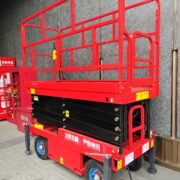
How Much Does a Scissor Lift Cost?(2026)

Scissor lifts are among the most widely used aerial work platforms in construction, warehousing, facility maintenance, manufacturing, aviation, and logistics industries. They provide a safe and efficient way to lift workers, tools, and materials vertically to working heights that would otherwise require scaffolding or ladders.

One of the most common questions buyers ask is: How much does a scissor lift cost?

The answer depends on several factors, including lift height, load capacity, power source, drive system, manufacturer, country of origin, and customization requirements. A small manual scissor lift may cost only a few thousand dollars, while a large rough-terrain diesel scissor lift can exceed $80,000.

This guide provides a comprehensive breakdown of scissor lift factory, wholesale, market, and ownership costs to help buyers make informed purchasing decisions.

What Is a Scissor Lift?

A scissor lift is a type of mobile elevated work platform (MEWP) that uses crisscrossing metal supports to raise a platform vertically.

The lifting mechanism resembles a pair of scissors opening and closing, which is where the machine gets its name.

Scissor lifts are commonly used for:

  • Building construction
  • Warehouse operations
  • Equipment installation
  • Electrical maintenance
  • Painting projects
  • Ceiling work
  • Industrial manufacturing
  • Aircraft maintenance
  • Inventory management

Compared with ladders and scaffolding, scissor lifts provide:

  • Greater safety
  • Higher efficiency
  • Increased productivity
  • Better load capacity

Average Scissor Lift Cost in 2026

The average market price of a new scissor lift ranges from $4,000 to $80,000+, depending on specifications.

Typical Price Range

Scissor Lift TypeFactory PriceMarket Price
Manual Scissor Lift$1,000-$3,000$2,000-$5,000
Semi-Electric Scissor Lift$2,000-$5,000$3,500-$8,000
Electric Scissor Lift$5,000-$25,000$8,000-$35,000
Self-Propelled Scissor Lift$8,000-$35,000$12,000-$50,000
Hydraulic Scissor Lift$6,000-$20,000$10,000-$30,000
Rough Terrain Scissor Lift$15,000-$60,000$25,000-$80,000
Diesel Scissor Lift$20,000-$70,000$30,000-$90,000

Factory-direct purchasing can reduce costs by 20% to 50% compared with buying through distributors.

Scissor Lift Prices by Working Height

Working height is the most important factor affecting price.

6m (20ft) Scissor Lift

Specifications:

  • Working height: 6m
  • Platform height: 4m
  • Capacity: 230kg-300kg

Price:

Purchase TypePrice
Factory Price$4,000-$6,500
Wholesale Price$5,000-$8,000
Retail Market Price$6,500-$12,000

Suitable for:

  • Indoor maintenance
  • Warehouses
  • Retail facilities

8m (26ft) Scissor Lift

Specifications:

  • Working height: 8m
  • Capacity: 230kg-450kg

Price:

Purchase TypePrice
Factory Price$5,000-$8,500
Market Price$8,000-$15,000

Popular for:

  • Commercial construction
  • Facility management

10m (32ft) Scissor Lift

Specifications:

  • Working height: 10m
  • Capacity: 320kg-500kg

Price:

Purchase TypePrice
Factory Price$7,000-$12,000
Market Price$10,000-$20,000

Applications:

  • Electrical installation
  • HVAC projects
  • Manufacturing plants

12m (39ft) Scissor Lift

Price:

Purchase TypePrice
Factory Price$9,000-$15,000
Market Price$14,000-$25,000

14m (46ft) Scissor Lift

Price:

Purchase TypePrice
Factory Price$12,000-$20,000
Market Price$18,000-$35,000

16m (52ft) Scissor Lift

Price:

Purchase TypePrice
Factory Price$15,000-$28,000
Market Price$25,000-$45,000

Electric Scissor Lift Cost

Electric scissor lifts have become the most popular models worldwide because of their low operating costs and environmentally friendly operation.

Advantages include:

  • Zero emissions
  • Quiet operation
  • Lower maintenance
  • Suitable for indoor use

Electric Scissor Lift Price List

Working HeightFactory PriceMarket Price
6m$4,000-$6,500$7,000-$12,000
8m$5,000-$8,500$8,000-$15,000
10m$7,000-$12,000$10,000-$20,000
12m$9,000-$15,000$14,000-$25,000
14m$12,000-$20,000$18,000-$35,000

Electric models account for more than 60% of global scissor lift sales.

Self-Propelled Scissor Lift Cost

Self-propelled models allow operators to drive while elevated, significantly improving productivity.

Benefits

  • Reduced labor costs
  • Faster project completion
  • Improved site mobility
  • Increased efficiency

Price Range

Working HeightFactory PriceMarket Price
8m$8,000-$12,000$12,000-$20,000
10m$10,000-$16,000$15,000-$28,000
12m$12,000-$20,000$18,000-$35,000
14m$15,000-$25,000$22,000-$45,000

Rough Terrain Scissor Lift Cost

Rough-terrain scissor lifts are designed for outdoor construction environments.

Features include:

  • Four-wheel drive
  • Large tires
  • High ground clearance
  • Diesel engines
  • Automatic leveling systems

Rough Terrain Price List

Working HeightFactory PriceMarket Price
10m$15,000-$25,000$25,000-$40,000
12m$18,000-$30,000$30,000-$50,000
14m$22,000-$40,000$35,000-$60,000
16m$28,000-$50,000$45,000-$80,000

New vs Used Scissor Lift Cost

Many buyers compare new and used equipment before purchasing.

New Scissor Lift

Advantages:

  • Full warranty
  • Latest technology
  • Longer lifespan
  • Lower repair costs

Price:

$5,000-$80,000+

Used Scissor Lift

Advantages:

  • Lower upfront investment
  • Immediate availability

Disadvantages:

  • Higher maintenance costs
  • Unknown service history
  • Limited warranty

Price:

$2,000-$40,000

Comparison Table

FactorNewUsed
Purchase CostHigherLower
WarrantyFullLimited
LifespanLongerShorter
ReliabilityHigherLower
MaintenanceLowerHigher

For long-term ownership, new equipment often provides better value.
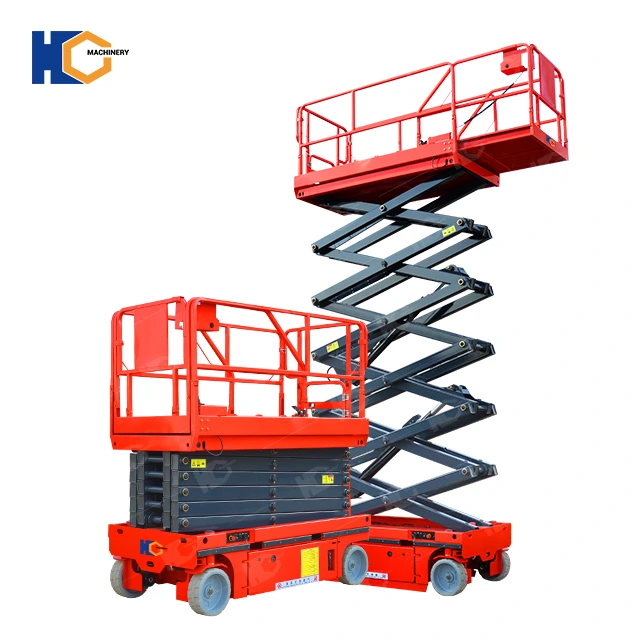
Factory Price vs Market Price

Many buyers are surprised by the large gap between factory prices and retail market prices.

Why Are Market Prices Higher?

Distributors add costs for:

  • Inventory storage
  • Shipping
  • Local certification
  • Technical support
  • Warranty service
  • Dealer profits

Typical markups range from 20% to 100%.

Example

A 10m electric scissor lift may cost:

  • Factory Price: $8,500
  • Distributor Price: $12,000
  • Retail Price: $16,000

Direct factory purchasing can generate substantial savings.

Factors Affecting Scissor Lift Cost

Lift Height

The higher the platform, the higher the cost.

Additional height requires:

  • More steel
  • Larger hydraulic cylinders
  • Enhanced stability systems

Load Capacity

Higher capacity increases:

  • Structural requirements
  • Hydraulic system size
  • Manufacturing costs

Power Source

Power options include:

  • Manual
  • Electric
  • Battery
  • Hydraulic
  • Diesel

Diesel-powered models generally cost more.

Brand Reputation

Premium brands command higher prices due to reliability and resale value.

Certifications

International certifications increase manufacturing costs:

  • ANSI
  • CE
  • ISO9001
  • CSA
  • AS/NZS

However, certified equipment improves safety and market acceptance.

Customization

Custom options can increase costs by 10% to 40%.

Examples include:

  • Extended platforms
  • Larger capacities
  • Explosion-proof systems
  • Non-marking tires
  • Lithium batteries
  • Special paint colors

Cost of Owning a Scissor Lift

Purchase price is only part of the total ownership cost.

Annual Maintenance

Typical maintenance expenses:

Lift TypeAnnual Cost
Small Electric$300-$800
Self-Propelled$500-$1,500
Rough Terrain$1,000-$3,000

Battery Replacement

Lead-acid batteries:

  • Lifespan: 3-5 years
  • Replacement cost: $800-$3,000

Lithium batteries:

  • Lifespan: 8-10 years
  • Replacement cost: $2,000-$8,000

Insurance

Commercial equipment insurance:

  • $200-$2,000 annually

Operator Training

Training costs:

  • $100-$500 per operator

Renting vs Buying a Scissor Lift

Some businesses choose rental instead of ownership.

Rental Rates

Lift TypeDailyWeeklyMonthly
Electric Scissor Lift$100-$250$400-$800$1,000-$2,500
Rough Terrain Lift$250-$500$1,000-$2,500$3,000-$7,000

When Renting Makes Sense

  • Short-term projects
  • Seasonal demand
  • Limited budgets

When Buying Makes Sense

  • Frequent usage
  • Long-term projects
  • Equipment rental businesses

If a lift will be used more than six months per year, purchasing often yields better financial returns.

How to Reduce Scissor Lift Purchasing Costs

Buy Directly from Manufacturers

Factory-direct purchasing eliminates dealer markups.

Potential savings:

20%-50%

Order Multiple Units

Bulk purchases typically qualify for wholesale pricing.

Purchase During Industry Promotions

Many manufacturers offer:

  • End-of-year discounts
  • Trade show pricing
  • Seasonal promotions

Select Appropriate Specifications

Avoid overspending on unnecessary:

  • Lift height
  • Capacity
  • Features

Matching equipment to project requirements maximizes ROI.

Best Scissor Lift for Different Applications

Warehouse Operations

Recommended:

  • 6m-10m electric scissor lift

Indoor Maintenance

Recommended:

  • Self-propelled electric lift

Construction Sites

Recommended:

  • Rough terrain scissor lift

Industrial Manufacturing

Recommended:

  • Hydraulic scissor lift

Equipment Rental Companies

Recommended:

  • 8m-12m self-propelled electric models

These units have the highest rental demand globally.

Final Verdict: How Much Should You Expect to Pay for a Scissor Lift?

The cost of a scissor lift varies significantly depending on lift height, power source, capacity, and intended application. In 2026, buyers can expect factory prices to range from approximately $4,000 for small electric models to more than $60,000 for large rough-terrain machines. Retail market prices typically range from $6,500 to $90,000 due to distributor markups, logistics, certifications, and after-sales services.

For most warehouses, maintenance contractors, and industrial facilities, an 8m to 12m electric self-propelled scissor lift offers the best balance between price, performance, and operating costs. Buyers seeking maximum savings should consider purchasing directly from manufacturers, where factory-direct pricing can reduce overall investment by 20% to 50% while maintaining the same equipment specifications and safety standards.

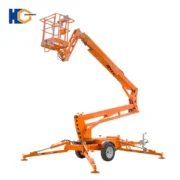
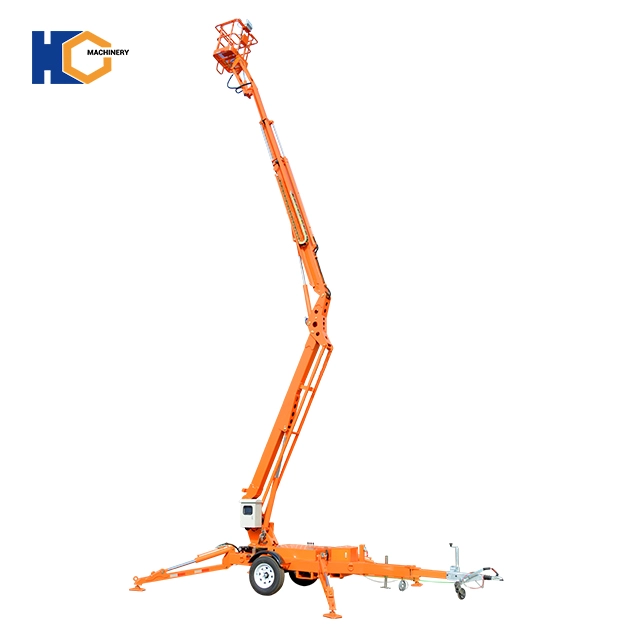
Towable Boom Lift for Sale: Premium Q700 Manganese Steel Trailer-Mounted Aerial Work Platform

If you are searching for a reliable, high-performance towable boom lift for sale to handle complex, high-altitude operations across diverse job sites, our trailer-mounted boom lift is a top-tier solution for global construction, municipal maintenance, commercial renovation, and industrial aerial tasks. Also known as a towable cherry picker, this mobile boom lift is meticulously engineered to address the core limitations of traditional aerial equipment, including limited mobility, fixed working angles, and limited environmental adaptability.

Built with high-grade Q700 manganese steel, supporting adjustable working heights from 10m to 20m, and equipped with a full 360° continuous-rotation turntable and a spacious 1.1×0.65m customized work basket, our towable boom lift balances exceptional structural stability, flexible operation, and universal site adaptability. Whether you need equipment for short-term project use, long-term enterprise procurement, or a rental fleet investment, this multifunctional towable boom lift delivers safe, efficient, and cost-effective high-altitude work support for complex indoor and outdoor scenarios.

Towable boom lifts have become increasingly popular in the global aerial work industry due to their trailer-mounted towable design, which requires no professional flatbed transportation and can be easily towed by ordinary vehicles across multiple job sites. Unlike self-propelled boom lifts that rely on flat, hard ground, our towable model features a compact structure, quick setup, and strong adaptability across terrain, making it suitable for urban roads, construction sites, commercial plazas, and suburban outdoor environments. Upgraded with industrial-grade safety configurations and intelligent control systems, our towable boom lift outperforms ordinary trailer boom lifts in durability, operational flexibility, and safety performance. Below is a comprehensive and detailed introduction.

Product Specification

ModelPlatform

Height

Working

Height

Load CapacityPlatform DimensionsRotation AngleWeight
HCZB-1010 meters12 meters200 kg0.9m x 0.7m360° continuous1700 kg
HCZB-1212 meters14 meters200 kg0.9m x 0.7m360° continuous2000 kg
HCZB-1414 meters16 meters200 kg0.9m x 0.7m360° continuous2400 kg
HCZB-1616 meters18 meters200 kg0.9m x 0.7m360° continuous2600 kg
HCZB-1818 meters20 meters200 kg0.9m x 0.7m360° continuous4300 kg
HCZB-2019.8 meters22 meters200 kg0.9m x 0.7m360° continuous4500 kg

Customized platform dimensions and load capacities are available upon request.

Technical Specifications Table

SpecificationDetails
​Power SourceDiesel, electric, or dual-power options
Drive SystemHydraulic or electric
OutriggersHydraulic, with automatic leveling
Control SystemProportional joystick controls for precision
Platform Capacity200 kg (supports 1-2 workers with tools)
Rotation360° continuous rotation
Safety FeaturesEmergency stop, overload protection, anti-skid platform
TransportationTrailer-mounted, suitable for towing by standard vehicles
Working Temperature-10°C to 40°C (designed for various climates)

Core Technical Parameters & Exclusive Product Advantages

Our towable boom lift meets upgraded industrial manufacturing standards and offers multiple exclusive core advantages that set it apart from ordinary trailer boom lifts on the market. The product focuses on structural durability, operational flexibility, and full-process safety protection, with highlighted configurations including premium Q700 manganese steel boom structure, 10–20m stepless adjustable height, 360° full-range rotation, and 1.1×0.65m oversized work basket, fully meeting the diverse high-altitude operation needs of global users.

  1. High-Strength Q700 Manganese Steel Boom Structure

The entire telescopic boom and main load-bearing frame of our towable boom lift are forged from high-purity Q700 manganese steel, which is far superior to the ordinary Q345 carbon steel used in most low-end towable boom lifts. This aviation-grade structural material features ultra-high tensile strength, excellent fatigue resistance, and strong wind resistance, ensuring the boom remains stable and free of deformation during long-term high-altitude telescopic operation and heavy load-bearing. Even in harsh outdoor environments with strong winds, high temperatures, and rain erosion, the boom structure maintains precise telescoping accuracy and stable load-bearing performance. The entire machine employs advanced electrophoretic coating technology, forming a dense anti-rust, anti-corrosion protective layer that resists UV radiation and environmental corrosion, effectively extending the equipment’s service life and reducing long-term maintenance costs.

  1. 10–20m Flexible Stepless Height Adjustment

This towable boom lift supports stepless, free height adjustment from 10m to 20m, covering almost all conventional high-altitude operating scenarios. The standard model achieves a maximum lift height of 16 m and a safe working height of 18 m, perfectly matching the needs of daily municipal maintenance, construction and renovation, and commercial facility repair. For special engineering projects requiring ultra-high or customized working heights, we provide exclusive height customization services within the 10–20m range, breaking the single-height limitation of traditional fixed boom lifts and greatly improving equipment versatility and reuse rate.

  1. 360° Full-Range Continuous Rotating Turntable

Equipped with a high-precision 360° continuous-rotation turntable, our boom lift enables true dead-angle-free, full-range aerial operation. Operators can freely adjust the boom angle and working orientation on-site without towing or repositioning the entire piece of equipment, saving a significant amount of on-site adjustment time and greatly improving construction efficiency. This core advantage is particularly prominent in complex scenarios such as full-surface construction of building exterior walls, multi-angle equipment maintenance, and cross-range installation work, thereby solving the efficiency bottleneck of ordinary fixed-angle boom lifts that require frequent repositioning.

  1. 1.1×0.65m Spacious Custom Work Basket

The equipment is equipped with a customized oversized work basket measuring 1.1×0.65m, providing ample operating space for on-site operators and construction tools. The widened platform supports 2–3 workers to conduct cooperative aerial operations and place maintenance tools, installation accessories, and testing equipment simultaneously, avoiding the space crowding and frequent tool-handling problems of narrow, ordinary baskets. The basket is fitted with an automatic tilt-leveling device to ensure a horizontal, stable working surface on uneven ground. Integrated LED lighting and on-site tool-charging sockets are designed to support night construction and dim indoor environments, enabling 24-hour efficient operation.

  1. Full-Coverage Safety Protection System

Safety is the core design priority of our towable boom lift. The built-in high-sensitivity tilt sensor monitors ground balance in real time and triggers an audible and visual alarm when the ground is uneven, reducing tipping risk. Outrigger safety warning lights remind operators of unstable support conditions and standardize operating steps. Each boom is equipped with an independent emergency lowering valve that can smoothly lower the platform to the ground and ensure safe personnel evacuation in the event of a sudden power or equipment failure. The industrial-grade PLC intelligent control system ensures precise, smooth boom telescoping and lifting, with built-in multi-layer misoperation-limit protection to prevent operational errors.

  1. Stable Traction & Multi-Power Compatibility

Fitted with an authentic German-imported ALKO tow hook, the equipment fully complies with global road traction safety standards, ensuring stable, safe cross-site towing without shaking or displacement. It supports four mainstream power supply modes, including AC, DC, diesel, and gasoline, freely adapting to indoor plug-in fixed operation and outdoor powerless field operation. A complete manual emergency operation system is provided to ensure normal equipment adjustment in the event of electrical faults. The core fixed parameters include a stable load capacity of 250 kg and an electric control mode, with full support for personalized functional customization.

Diverse Application Scenarios of Towable Boom Lift

Benefiting from its flexible towable design, ultra-stable boom structure, wide height coverage, and full-angle operating capability, our towable boom lift is widely used across multiple industries and complex scenarios, making it an indispensable, high-efficiency aerial work equipment.

Construction Engineering: Ideal for building exterior wall painting, thermal insulation construction, exterior wall renovation, and high-altitude component installation. The 360° rotating boom and wind-resistant Q700 manganese steel structure adapt to complex open-air construction sites, enabling multi-angle, dead-angle-free operation and significantly improving construction progress.

Municipal Maintenance: Perfect for urban street lamp replacement, traffic signal debugging, bridge inspection, outdoor billboard installation and removal, and high-altitude pruning in urban greening. The convenient towable design enables fast transfer between urban road sites, adapting to the frequent mobile operations required by municipal projects.

Industrial Factory Operation: Suitable for factory pipeline maintenance, high-altitude equipment debugging, ceiling structure repair, and warehouse high-level cargo sorting. The low-noise operation will not interfere with normal factory production, and the anti-corrosion electrophoretic coating is suitable for long-term indoor and outdoor factory environments.

Commercial & Public Facility Maintenance: Widely applied in shopping malls, hotels, exhibition halls, and office buildings for interior decoration, ceiling maintenance, lighting replacement, and stage layout. The flexible angle adjustment and night lighting configuration meet refined indoor operational needs without disrupting commercial operations.

Special Scenario Operations: Adaptable for outdoor event lighting installation, high-altitude cleaning, power line maintenance, and emergency rescue operations. The multi-power-supply design ensures normal operation in power-outage conditions, providing reliable equipment support for special aerial tasks.

Successful Project Cases


Our towable boom lifts have been exported to more than 30 countries and regions worldwide, accumulating extensive, verifiable practical project experience across municipal, industrial, and commercial sectors.

European Municipal Facility Renovation Project: A local municipal engineering company in Germany purchased 7 sets of our 10–18m adjustable towable boom lifts for urban street lamp renewal and traffic facility maintenance. The standard ALKO tow hook fully complies with European road towing standards, while the 360° rotating boom solves the problem of multi-angle dead-end maintenance for urban facilities. The high-strength manganese steel structure reliably withstands local windy and rainy conditions. After six months of continuous operation, the customer reported zero equipment failures and a 40% increase in overall working efficiency.

Southeast Asian Industrial Park Renovation Project: A large industrial park in Vietnam customized 12 sets of 20m high towable boom lifts for factory exterior wall renovation and pipeline overhaul. The Q700 manganese steel structure and electrophoretic anti-corrosion coating effectively resist localized high-temperature, high-humidity corrosive environments. The 1.1×0.65m work basket supports team cooperative operation, helping the customer complete the large-area factory renovation project on schedule with excellent construction quality.

Real Customer Evaluations

We adhere to strict product quality control and full-cycle after-sales service, winning consistent high praise from global cooperative customers.

European Municipal Contractor: “We have used many brands of towable boom lifts, and Huichuang’s products are the most cost-effective. The Q700 manganese steel boom is very sturdy with no shaking at high altitudes. The 360° rotation function saves us a lot of time on site adjustments, and the multi-power design perfectly adapts to complex urban construction environments. The failure rate is extremely low, making it our long-term preferred equipment.”

Southeast Asian Factory Engineering Manager: “This towable boom lift has excellent high-temperature resistance and anti-rust performance, suitable for our tropical working environment. The 1.1×0.65m work basket is spacious and practical for teamwork. The customizable 10–20m height range meets all our factory maintenance needs, and the after-sales technical support is timely and professional.”

Middle East Equipment Leasing Merchant: “The full-range height coverage and flexible rotating function make this towable boom lift suitable for almost all local aerial projects. Complete safety configurations and simple operation reduce user thresholds and maintenance costs. It has a high rental return rate and is a very reliable aerial work equipment.”

Standard Product Customization Process

We provide one-stop personalized customization services for towable boom lifts to meet the special environmental adaptation and project-specific needs of different global customers, with standardized and efficient whole-process procedures:

Step 1: One-on-One Demand Communication: Our professional technical team communicates with customers in depth to confirm customized parameters, including working height, power supply mode, load requirements, and special anti-corrosion, wind-resistant, and explosion-proof configurations, then provides targeted product schemes and accurate formal quotations.

Step 2: Contract Signing & Exclusive Production: After the customer confirms the scheme and quotation, both parties sign a formal legal sales contract. The factory arranges independent production scheduling and strictly manufactures in accordance with customized technical standards.

Step 3: Strict Factory Testing: All finished equipment undergoes multiple rigorous tests, including boom telescoping stability, full load-bearing test, safety alarm function test, and rotation smoothness test to ensure all indicators meet international standards.

Step 4: Delivery & Full-Cycle After-Sales Service: We support on-site or video factory inspection, and provide complete product qualification certificates and operation manuals. Free remote installation guidance, professional operation training, and 24-hour long-term technical support are provided to ensure stable equipment operation.

Competitor Product Comparison Advantages

Compared with ordinary towable boom lifts of other brands on the market, our products have comprehensive and obvious competitive advantages:

Superior Structural Material: Most competing products use ordinary Q345 steel and simple spray painting, which are prone to deformation and rust after long-term outdoor use. Our Q700 manganese steel offers 30% higher structural strength and better wind resistance, paired with a full-body electrophoretic coating for longer service life and greater environmental adaptability.

More Flexible Functional Design: Most peer products only support a fixed single height and lack a rotating function. Our 10–20m stepless height adjustment and 360° full-range rotation greatly expand application scenarios and improve working efficiency. Meanwhile, our standard 1.1×0.65m work basket is larger and more practical than most narrow platforms of competing products.

Complete Safety Configuration: Ordinary low-cost boom lifts have only basic lifting-limit protection. Our full-process safety system, including a real-time anti-tipping alarm and independent emergency lowering valves, effectively mitigates operational risks and fully meets high-standard engineering safety requirements.

Stronger Adaptability & Better Service: The four-in-one multi-power mode adapts to various complex working environments without power restrictions. We offer full parameter customization and a comprehensive after-sales guarantee, whereas most brands only provide a single standard product with limited technical support.

Competitive Analysis

The Premium Q700 Manganese Steel Towable Boom Lift is a high-performance trailer-mounted aerial work platform designed for construction, facility maintenance, municipal projects, landscaping, and industrial installations. Compared with traditional aerial work equipment, it offers excellent mobility, extended working range, and lower ownership costs.

Product Positioning

The Q700 manganese steel towable boom lift is positioned as a cost-effective alternative to self-propelled boom lifts and truck-mounted aerial platforms, particularly for customers who require flexible deployment across multiple job sites.

Competitive Comparison

FeatureQ700 Towable Boom LiftSelf-Propelled Boom LiftScissor LiftTruck-Mounted Boom Lift
Working Height10m-28m+10m-48m+6m-18m14m-60m+
Horizontal OutreachExcellentExcellentLimitedExcellent
Mobility Between SitesExcellentModerateModerateExcellent
Purchase CostLow-MediumHighLowVery High
Transportation CostLowHighModerateHigh
Operating CostLowHighLowHigh
Maintenance CostLowHighLowHigh
Setup TimeFastFastFastModerate
Rough Terrain CapabilityGoodExcellentLimitedExcellent
Indoor ApplicationsLimitedLimitedExcellentLimited
ROI for Rental CompaniesHighModerateHighModerate

Q700 Towable Boom Lift vs Self-Propelled Boom Lift

Self-propelled boom lifts are widely used on large construction projects because operators can drive and position the machine while elevated.

Advantages of Q700 Towable Boom Lift:

  • 30%-60% lower purchase price
  • Easier transportation using standard vehicles
  • Lower maintenance expenses
  • Lower fuel and operating costs
  • Ideal for rental fleets and small contractors

Advantages of Self-Propelled Boom Lift:

  • Better maneuverability on large job sites
  • Faster repositioning
  • Suitable for continuous daily operation

Q700 Towable Boom Lift vs Scissor Lift

Scissor lifts provide vertical lifting only, while boom lifts offer both vertical and horizontal reach.

Comparison ItemQ700 Boom LiftScissor Lift
Vertical ReachExcellentGood
Horizontal ReachExcellentNone
Obstacle AvoidanceExcellentPoor
Outdoor ApplicationsExcellentGood
Narrow Space AccessGoodModerate

The Q700 boom lift is the preferred solution when operators need to work around obstacles such as machinery, roofs, pipelines, trees, and building facades.

Q700 Towable Boom Lift vs Truck-Mounted Aerial Platform

Truck-mounted lifts are designed for utility companies and large infrastructure projects.

Advantages of Q700 Towable Boom Lift:

  • Lower acquisition cost
  • Lower licensing requirements
  • Easier storage
  • Better affordability for small and medium businesses

Advantages of Truck-Mounted Lift:

  • Faster road travel
  • Greater working heights
  • Better suited for utility maintenance

Advantages of Q700 Manganese Steel Structure

One of the key competitive strengths of this boom lift is its Q700 high-strength manganese steel construction.

Compared with ordinary structural steel, Q700 offers:

  • Higher tensile strength
  • Better fatigue resistance
  • Reduced boom weight
  • Improved structural stability
  • Longer service life

This allows manufacturers to achieve greater working heights without significantly increasing machine weight.

Ideal Application Scenarios

The Q700 Towable Boom Lift performs particularly well in:

  • Building maintenance
  • Exterior wall cleaning
  • Sign installation
  • Street lighting maintenance
  • Tree trimming
  • Warehouse construction
  • Airport maintenance
  • Solar panel installation
  • Facility management projects

Pain Points Solved

Compared with competing aerial work platforms, the Q700 Towable Boom Lift effectively solves several common industry challenges:

High Equipment Costs

The towable design significantly reduces acquisition costs compared with self-propelled and truck-mounted alternatives.

Transportation Difficulties

Users can easily tow the machine between projects using a pickup truck or utility vehicle.

Limited Working Reach

The articulated or telescopic boom provides access to difficult-to-reach locations.

High Maintenance Expenses

The simplified hydraulic and mechanical structure reduces service requirements and operating costs.

Final Evaluation

For contractors, rental companies, municipalities, and maintenance service providers, the Premium Q700 Manganese Steel Trailer-Mounted Aerial Work Platform delivers one of the best balances between performance, mobility, and investment cost. While self-propelled and truck-mounted boom lifts offer advantages in large-scale operations, the Q700 towable boom lift stands out for its lower purchase price, ease of transport, strong outreach capability, and high return on investment, making it an excellent choice for businesses seeking versatile aerial access equipment without the expense of larger powered platforms.

FAQ

  1. What is the working height range of this lift?
    The lift is available in models with working heights ranging from 10 to 22 meters, making it suitable for a range of construction and maintenance applications.
  2. What power options are available?
    Our lifts come with diesel, electric, and dual-power options, allowing you to choose based on your project’s needs and site requirements.
  3. Is this lift easy to transport?
    Yes, the lift is trailer-mounted, making it easy to tow and position on different job sites. It’s designed for flexibility and quick relocation.
  4. What safety features are included?
    The lift includes emergency stop, overload protection, anti-skid platform, and 360° rotation with hydraulic outriggers for stability on uneven terrain.
  5. What is the maximum load capacity?
    The maximum platform load capacity is 200 kg, allowing it to safely support 1-2 operators with tools.
  6. Is the lift CE certified?
    Yes, this lift is CE certified, ensuring it meets European safety and quality standards for construction and maintenance equipment.
  7. Can this lift be used on uneven ground?
    Yes, it is equipped with hydraulic outriggers (spider legs) with automatic leveling, making it stable on various terrains.
  8. How does the control system work?
    The lift has user-friendly, proportional joystick controls, allowing precise adjustments to the height, reach, and rotation.
  9. What is the lead time for delivery?
    Depending on the model and customization options, the lead time ranges from 15 to 40 days.
  10. Is there a warranty?
    Yes, we provide a warranty covering parts and labor for manufacturing defects. Maintenance packages are also available.

Conclusion

Our towable boom lift for sale is a high-quality, cost-effective trailer-mounted aerial work solution tailored for global industrial, municipal, and commercial users. With premium Q700 manganese steel boom construction, flexible 10–20m full-range height adjustment, practical 360° dead-angle-free rotation, and an ultra-spacious 1.1×0.65m work basket, it comprehensively outperforms ordinary peer products in structural stability, operational flexibility, and safety performance. Widely applicable to construction, municipal maintenance, industrial operations, and commercial renovations, it is an ideal choice for enterprise project procurement and rental fleet investment. We support global sales, personalized customization, and comprehensive full-cycle after-sales protection, and welcome customers worldwide to inquire and purchase reliable, high-quality towable boom lift equipment.

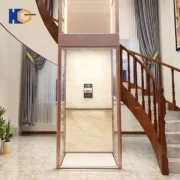
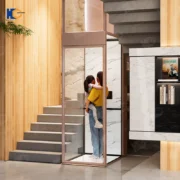
How Much Does a Small Home Elevator Cost?

A small home elevator is no longer considered a luxury reserved for mansions. As populations age and multi-story homes become more common, residential elevators have become an increasingly practical solution for improving accessibility, convenience, and property value. Whether you are building a new home or retrofitting an existing one, understanding the cost of a small home elevator is essential before making an investment.

So, how much does a small home elevator cost?

The answer depends on the elevator type, travel height, number of floors, load capacity, customization requirements, installation complexity, and local labor costs. In 2026, the average cost of a small home elevator ranges from $10,000 to $80,000, while high-end customized models can exceed $100,000.

This guide provides a comprehensive breakdown of residential elevator prices, including hydraulic, traction, vacuum, shaftless, platform, and capsule home elevators.

Average Small Home Elevator Cost

The total cost of a residential elevator includes:

  • Elevator equipment
  • Guide rails
  • Drive system
  • Control system
  • Cabin
  • Installation
  • Shipping
  • Construction modifications
  • Permits and inspections

Average Price Range by Elevator Type

Elevator TypeEquipment PriceInstalled Price
Shaftless Home Elevator$10,000-$25,000$15,000-$35,000
Hydraulic Home Elevator$15,000-$40,000$25,000-$60,000
Traction Home Elevator$20,000-$50,000$30,000-$80,000
Vacuum Elevator$30,000-$60,000$40,000-$90,000
Platform Lift$5,000-$15,000$8,000-$25,000
Capsule Home Elevator$25,000-$70,000$35,000-$100,000+

For most homeowners, the total project cost typically falls between $25,000 and $50,000.

Cost by Number of Floors

The number of stops significantly affects elevator pricing.

2-Story Home Elevator

Most common residential installation.

TypeInstalled Cost
Shaftless$15,000-$30,000
Hydraulic$25,000-$45,000
Traction$30,000-$50,000
Capsule Elevator$35,000-$70,000

3-Story Home Elevator

Requires additional rails, wiring, and safety systems.

TypeInstalled Cost
Shaftless$20,000-$35,000
Hydraulic$30,000-$55,000
Traction$35,000-$65,000
Capsule Elevator$40,000-$80,000

4-Story Home Elevator

Common in luxury villas and townhouses.

TypeInstalled Cost
Hydraulic$40,000-$70,000
Traction$45,000-$85,000
Capsule Elevator$50,000-$100,000+

Shaftless Home Elevator Cost

Shaftless elevators are among the most affordable residential elevator options.

Unlike traditional elevators, they do not require:

  • Elevator shaft
  • Machine room
  • Pit excavation

Advantages

  • Lower installation cost
  • Quick installation
  • Compact footprint
  • Energy efficient

Typical Pricing

CapacityEquipment Price
250 kg$10,000-$15,000
320 kg$12,000-$18,000
400 kg$15,000-$22,000

Installed costs typically range from $15,000 to $35,000.

These elevators are ideal for small homes, seniors, and wheelchair users.

Hydraulic Home Elevator Cost

Hydraulic elevators remain one of the most popular residential elevator solutions worldwide.

The system uses a hydraulic cylinder and pump to move the cabin.

Advantages

  • Smooth ride quality
  • High lifting capacity
  • Proven technology
  • Reliable performance

Typical Pricing

FloorsInstalled Cost
2 Floors$25,000-$45,000
3 Floors$35,000-$60,000
4 Floors$45,000-$70,000

Additional Costs

  • Machine room construction
  • Hydraulic oil
  • Pit excavation
  • Maintenance

Hydraulic elevators offer excellent value for homeowners seeking comfort and durability.

Traction Home Elevator Cost

Traction elevators use a motor and steel ropes or belts to move the cabin.

They are increasingly popular because of their energy efficiency and quiet operation.

Advantages

  • No hydraulic oil
  • Lower energy consumption
  • Higher travel speed
  • Smooth operation
  • Modern appearance

Typical Pricing

FloorsInstalled Cost
2 Floors$30,000-$50,000
3 Floors$40,000-$65,000
4 Floors$50,000-$85,000

Premium Models

Luxury traction elevators featuring:

  • Glass cabins
  • Automatic doors
  • Smart controls
  • Luxury interiors

Can exceed $100,000.

Vacuum Elevator Cost

Vacuum elevators use air pressure differences to move the cabin.

They are among the most visually impressive home elevator designs.

Advantages

  • Minimal construction
  • Transparent design
  • Low maintenance
  • Small footprint

Typical Pricing

SizeInstalled Cost
Single Passenger$40,000-$60,000
Two Passenger$50,000-$75,000
Wheelchair Accessible$65,000-$90,000

Vacuum elevators are often selected for luxury homes where aesthetics are a major consideration.

Platform Lift Cost

A vertical platform lift is a cost-effective accessibility solution.

Although technically not a full elevator, it serves many of the same purposes.

Applications

  • Wheelchair access
  • Elderly mobility
  • Small elevation changes
  • Residential accessibility

Pricing

Lift HeightInstalled Cost
1-2 m$8,000-$12,000
3-4 m$12,000-$18,000
5-6 m$15,000-$25,000

Platform lifts are often the most economical solution.

Capsule Home Elevator Cost

Capsule elevators are becoming one of the hottest trends in luxury residential construction.

These elevators feature:

  • Panoramic glass
  • Modern architecture
  • Premium finishes
  • Custom lighting

Pricing

TypeInstalled Cost
Standard Capsule Lift$35,000-$60,000
Luxury Capsule Lift$50,000-$80,000
Fully Customized Capsule Lift$80,000-$150,000+

These elevators are commonly installed in:

  • Villas
  • Luxury residences
  • Beach houses
  • Modern architectural homes

Factory Price vs Market Price

Many homeowners are surprised by the difference between factory pricing and final installed pricing.

Factory Price

Factory prices generally include:

  • Elevator equipment
  • Standard accessories
  • Packaging

Market Price

Market prices typically include:

  • Shipping
  • Customs duties
  • Installation
  • Construction modifications
  • Permits
  • Testing

Example

ItemCost
Elevator Factory Price$15,000
Shipping$2,500
Installation$5,000
Construction Work$4,000
Permits$1,000
Total Cost$27,500

This explains why installed costs can be substantially higher than factory quotations.

Factors That Affect Home Elevator Cost

Travel Height

The greater the travel distance, the higher the cost.

Additional height requires:

  • Longer guide rails
  • More wiring
  • Larger drive systems

Cabin Size

Larger cabins increase costs due to:

  • Additional materials
  • Stronger motors
  • Higher load capacities

Weight Capacity

Typical residential capacities include:

CapacityTypical Use
250 kg2 Persons
320 kgSmall Family
400 kgStandard Home Use
500 kgWheelchair Access
630 kgLuxury Homes

Higher capacities generally increase prices.

Door Type

Manual doors cost less than automatic doors.

Typical upgrade cost:

  • Automatic swing door: $1,000-$3,000
  • Automatic sliding door: $3,000-$8,000

Interior Decoration

Luxury cabin upgrades include:

  • Stainless steel walls
  • Wood finishes
  • Marble flooring
  • Smart touch panels
  • LED lighting

Customization can add $3,000-$20,000 or more.

Installation Cost Breakdown

Installation typically accounts for 20%-40% of the total project cost.

Installation Components

ItemTypical Cost
Labor$3,000-$15,000
Electrical Work$1,000-$5,000
Shaft Construction$3,000-$20,000
Pit Construction$1,000-$5,000
Inspection$500-$2,000

Retrofitting existing homes often costs more than installing elevators during new construction.

Maintenance Costs

Home elevators require regular maintenance.

Annual Maintenance Cost

Elevator TypeAnnual Cost
Shaftless$200-$500
Hydraulic$300-$800
Traction$400-$1,000
Vacuum$300-$700

Routine maintenance helps ensure:

  • Safety
  • Reliability
  • Longer lifespan
  • Warranty compliance

How to Save Money on a Home Elevator

Buy Directly from the Manufacturer

Purchasing directly from a factory can reduce equipment costs by 20%-40%.

Choose Standard Specifications

Avoid unnecessary customization.

Install During New Construction

Building an elevator-ready shaft during construction is far cheaper than retrofitting later.

Select the Appropriate Capacity

Oversized elevators increase both equipment and installation costs.

Compare Multiple Quotes

Always compare:

  • Equipment quality
  • Warranty coverage
  • Installation experience
  • Maintenance services

Is a Small Home Elevator Worth the Investment?

For many homeowners, the answer is yes.

Benefits include:

  • Improved accessibility
  • Aging-in-place convenience
  • Increased property value
  • Enhanced safety
  • Greater independence for seniors and disabled individuals

In luxury homes, elevators can also become a desirable architectural feature that differentiates the property in the real estate market.

Conclusion

The cost of a small home elevator varies widely depending on the elevator type, number of floors, capacity, level of customization, and installation requirements. Entry-level shaftless elevators can cost as little as $15,000 installed, while luxury capsule elevators may exceed $100,000.

For most homeowners, hydraulic and traction elevators remain the best balance between performance, comfort, reliability, and long-term value. If budget is the primary concern, platform lifts and shaftless elevators offer affordable accessibility solutions. For homeowners seeking a premium experience, panoramic glass capsule elevators provide exceptional aesthetics and modern design.

When evaluating residential elevator costs, focus not only on the purchase price but also on installation, maintenance, energy efficiency, and long-term usability. A properly selected home elevator can provide decades of convenience, improve quality of life, and add significant value to your property.

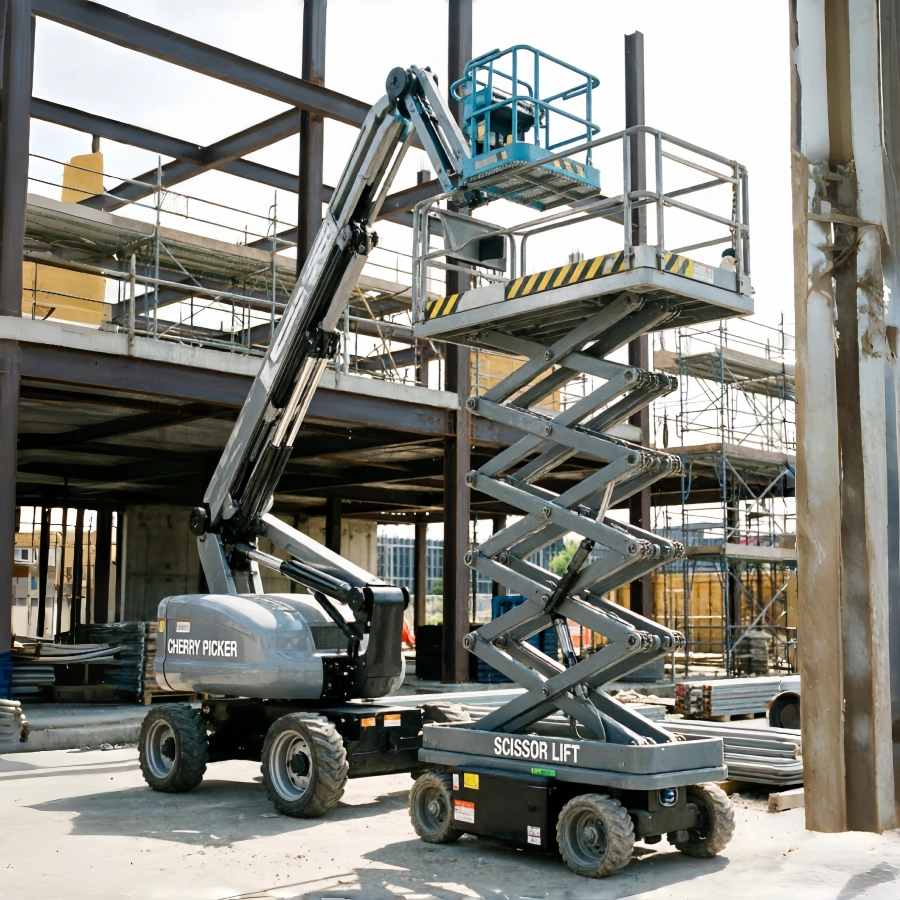
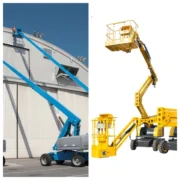
Cherry Picker vs Scissor Lift: Which is better?

When working at height, choosing the right aerial work platform can significantly impact productivity, safety, and operating costs. Two of the most popular elevated access machines are the cherry picker and the scissor lift. While both are designed to lift workers and materials above ground level, they serve different purposes and perform best in different environments.

For contractors, facility managers, warehouse operators, construction companies, and industrial maintenance teams, understanding the differences between a cherry picker and a scissor lift is essential before investing in equipment or renting a machine.

This comprehensive guide compares cherry pickers and scissor lifts in terms of design, working principles, lifting height, reach, stability, applications, safety, operating costs, and overall advantages to help you determine which machine is best for your project.

What Is a Cherry Picker?

A cherry picker is an aerial work platform equipped with a hydraulic boom that extends vertically and horizontally. The machine gets its name from its original use in harvesting fruit from orchards.

Modern cherry pickers are widely used in construction, utility maintenance, telecommunications, tree care, and industrial inspections.

A typical cherry picker consists of:

  • Chassis or base
  • Rotating turntable
  • Hydraulic boom arm
  • Work platform or basket
  • Control system
  • Stabilization system

Unlike a scissor lift, a cherry picker can move around obstacles and access hard-to-reach areas.

Common Types of Cherry Pickers

Articulating Boom Lift

Features multiple joints that allow the boom to bend around obstacles.

Applications:

  • Building maintenance
  • Tree trimming
  • Industrial plants
  • Electrical installations

Telescopic Boom Lift

Uses a straight boom that extends outward.

Applications:

  • High-rise construction
  • Bridge maintenance
  • Utility work
  • Long-reach operations

Towable Cherry Picker

Portable and economical.

Applications:

  • Residential projects
  • Landscaping
  • Sign installation

Truck-Mounted Cherry Picker

Mounted on a commercial vehicle.

Applications:

  • Streetlight maintenance
  • Utility line repair
  • Municipal projects

What Is a Scissor Lift?

A scissor lift is a vertical lifting platform that raises workers and equipment using a crisscross support structure resembling a pair of scissors.

Unlike a cherry picker, a scissor lift only moves vertically and cannot provide horizontal outreach.

The machine consists of:

  • Base frame
  • Scissor mechanism
  • Hydraulic or electric lifting system
  • Platform deck
  • Safety rails
  • Control system

Scissor lifts are widely used for jobs requiring a large working platform and higher load capacity.

Common Types of Scissor Lifts

Electric Scissor Lift

Ideal for indoor use.

Benefits:

  • Zero emissions
  • Low noise
  • Compact design
  • Minimal maintenance

Applications:

  • Warehouses
  • Shopping malls
  • Airports
  • Factories

Hydraulic Scissor Lift

Uses hydraulic cylinders for lifting.

Applications:

  • Industrial facilities
  • Loading docks
  • Maintenance operations

Rough Terrain Scissor Lift

Designed for outdoor environments.

Features:

  • Four-wheel drive
  • Large tires
  • Enhanced stability

Applications:

  • Construction sites
  • Infrastructure projects
  • Mining operations

Towable Mobile Scissor Lift

Portable and easy to transport.

Applications:

  • Temporary projects
  • Rental fleets
  • Small contractors

Cherry Picker vs Scissor Lift: Key Differences

1. Working Range

The biggest difference between the two machines is their reach capability.

Cherry Picker

Provides:

  • Vertical reach
  • Horizontal outreach
  • Over-obstacle access
  • Multi-directional positioning

Workers can reach areas above roofs, around structures, and behind obstacles.

Scissor Lift

Provides:

  • Vertical movement only
  • No side outreach
  • Straight-up access

Suitable when work is directly above the machine.

Winner

Cherry Picker

2. Platform Capacity

Load capacity is another major factor.

Cherry Picker

Typical platform capacity:

  • 200–450 kg (440–990 lbs)

Usually accommodates:

  • 1–2 workers
  • Small tools
  • Light materials

Scissor Lift

Typical platform capacity:

  • 230–1,500 kg (500–3,300 lbs)

Can accommodate:

  • Multiple workers
  • Heavy tools
  • Building materials

Winner

Scissor Lift

3. Working Height

Both machines offer significant elevation capabilities.

Cherry Picker Heights

Typical range:

  • 10–58 meters
  • 33–190 feet

Specialized models can exceed:

  • 70 meters
  • 230 feet

Scissor Lift Heights

Typical range:

  • 6–18 meters
  • 20–60 feet

Large rough terrain models:

  • Up to 28 meters
  • Around 92 feet

Winner

Cherry Picker

4. Stability

Scissor Lift

Scissor lifts have:

  • Wide base
  • Large platform
  • Lower center of gravity

This provides excellent stability.

Cherry Picker

Boom extension shifts the center of gravity.

Advanced systems compensate through:

  • Counterweights
  • Stabilizers
  • Load sensors

Winner

Scissor Lift

5. Maneuverability

Cherry Picker

Advantages:

  • Reach over obstacles
  • Navigate complex structures
  • Access confined work areas

Articulating booms can bend around walls, pipes, and machinery.

Scissor Lift

Limited to vertical movement.

The machine must be positioned directly beneath the work area.

Winner

Cherry Picker

6. Workspace Size

Cherry Picker

Platform sizes are relatively small.

Usually designed for:

  • One operator
  • One assistant

Scissor Lift

Platforms are significantly larger.

Many models feature:

  • Extendable decks
  • Additional workspace
  • Multiple operator capacity

Winner

Scissor Lift

7. Indoor Applications

Electric Scissor Lift

Excellent for:

  • Warehouses
  • Distribution centers
  • Retail facilities
  • Manufacturing plants

Advantages:

  • Quiet operation
  • Compact dimensions
  • Zero emissions

Electric Cherry Picker

Can also be used indoors but generally requires more space.

Winner

Scissor Lift

8. Outdoor Applications

Cherry Picker

Ideal for:

  • Utility maintenance
  • Building exteriors
  • Tree trimming
  • Sign installation

Rough Terrain Scissor Lift

Suitable for:

  • Construction
  • Structural work
  • Material handling

Winner

Cherry Picker

Cherry Picker Advantages

Exceptional Reach

The greatest advantage of a cherry picker is its ability to reach difficult locations.

Operators can work:

  • Over rooftops
  • Around machinery
  • Across obstacles
  • Along building facades

Greater Height Capacity

Boom lifts generally offer much higher working heights than scissor lifts.

Increased Flexibility

A single machine can perform a wide variety of access tasks.

Ideal for Complex Structures

Perfect for:

  • Industrial plants
  • Refineries
  • Stadiums
  • Utility networks

Cherry Picker Disadvantages

Higher Purchase Cost

Cherry pickers typically cost more than equivalent scissor lifts.

Lower Platform Capacity

Not suitable for transporting large quantities of materials.

More Complex Operation

Requires additional operator training.

Increased Maintenance

Boom mechanisms involve more hydraulic and mechanical components.

Scissor Lift Advantages

Higher Load Capacity

Can safely lift:

  • Multiple workers
  • Equipment
  • Construction materials

Large Working Platform

Provides ample space for productivity.

Superior Stability

Ideal for precision work.

Lower Cost

Generally cheaper to purchase and maintain.

Easy Operation

Controls are straightforward and user-friendly.

Scissor Lift Disadvantages

No Horizontal Reach

Cannot access areas beyond the platform footprint.

Limited Height

Most models cannot match the working height of boom lifts.

Obstacle Restrictions

The machine must be positioned directly below the work area.

Typical Applications for Cherry Pickers

Telecommunications

Used for:

  • Cell tower maintenance
  • Antenna installation
  • Communication infrastructure

Utility Services

Applications include:

  • Power line repair
  • Streetlight maintenance
  • Electrical inspections

Tree Care

Ideal for:

  • Pruning
  • Tree removal
  • Orchard maintenance

Construction

Common uses:

  • Steel erection
  • Exterior finishing
  • High-rise work

Industrial Maintenance

Suitable for:

  • Equipment inspection
  • Plant maintenance
  • Pipe installation

Typical Applications for Scissor Lifts

Warehousing

Used for:

  • Inventory management
  • Rack maintenance
  • Facility upgrades

Manufacturing

Applications include:

  • Production line maintenance
  • Equipment servicing
  • Lighting replacement

Commercial Buildings

Used for:

  • HVAC maintenance
  • Ceiling repairs
  • Painting projects

Construction

Ideal for:

  • Drywall installation
  • Interior finishing
  • Material lifting

Cost Comparison

Cherry Picker Price Range

Approximate factory prices:

TypePrice Range
Towable Cherry Picker$8,000–$25,000
Articulating Boom Lift$25,000–$120,000
Telescopic Boom Lift$35,000–$180,000
Truck Mounted Cherry Picker$40,000–$250,000+

Scissor Lift Price Range

Approximate factory prices:

TypePrice Range
Mini Scissor Lift$3,000–$8,000
Electric Scissor Lift$5,000–$25,000
Hydraulic Scissor Lift$8,000–$35,000
Rough Terrain Scissor Lift$15,000–$60,000

Scissor lifts generally offer a lower total ownership cost.

Safety Comparison

Both machines are safe when operated correctly.

Cherry Picker Safety Features

  • Tilt sensors
  • Load monitoring systems
  • Emergency lowering
  • Anti-entrapment devices
  • Fall protection anchor points

Scissor Lift Safety Features

  • Guardrails
  • Emergency stop buttons
  • Overload protection
  • Pothole protection systems
  • Automatic braking

Which Is Safer?

Neither machine is inherently safer.

Safety depends on:

  • Operator training
  • Proper maintenance
  • Site conditions
  • Compliance with regulations

How to Choose Between a Cherry Picker and a Scissor Lift

Choose a Cherry Picker if you need:

  • Horizontal outreach
  • Access around obstacles
  • Extreme working heights
  • Exterior building maintenance
  • Utility and telecommunications work

Choose a Scissor Lift if you need:

  • Large platform space
  • High load capacity
  • Indoor operation
  • Stable working conditions
  • Lower equipment costs

Cherry Picker vs Scissor Lift: Which One Wins?

There is no universal winner because each machine is designed for different working environments.

If your project requires reaching over obstacles, accessing difficult locations, or working at extreme heights, a cherry picker is the superior choice. Its flexibility and outreach capabilities make it indispensable for utility work, exterior construction, and industrial maintenance.

If your project involves lifting multiple workers, tools, and materials straight upward in a stable environment, a scissor lift is often the better investment. It offers greater platform capacity, lower operating costs, and improved productivity for indoor and vertical-access tasks.

For many contractors and equipment rental companies, maintaining both cherry pickers and scissor lifts provides the flexibility to handle a wide variety of projects efficiently, safely, and cost-effectively.

Productivity Comparison: Cherry Picker vs Scissor Lift

Productivity is one of the most important factors when selecting aerial access equipment. While both machines improve workplace efficiency compared to ladders and scaffolding, they do so in different ways.

Cherry Picker Productivity

A cherry picker increases productivity by reducing the time required to access difficult locations. Operators can quickly reposition the boom to reach multiple work points without moving the machine repeatedly.

Advantages include:

  • Faster access to elevated areas
  • Ability to work around obstacles
  • Reduced setup time
  • Increased flexibility on complex projects

For example, when installing signage on a commercial building, an articulating boom lift can move around architectural features and reach several installation points from a single position.

Scissor Lift Productivity

A scissor lift excels when workers need a large, stable workspace.

Advantages include:

  • Larger platform for multiple workers
  • Ability to carry tools and materials simultaneously
  • Reduced trips up and down
  • Improved efficiency for repetitive tasks

For warehouse maintenance, ceiling installation, or indoor construction, scissor lifts often outperform cherry pickers because workers have more room to operate.

Environmental Impact

As sustainability becomes increasingly important, many companies consider environmental performance when purchasing equipment.

Electric Cherry Pickers

Benefits include:

  • Zero emissions
  • Quiet operation
  • Lower energy costs
  • Reduced maintenance requirements

These models are commonly used in:

  • Airports
  • Shopping centers
  • Hospitals
  • Data centers

Electric Scissor Lifts

Electric scissor lifts are among the most environmentally friendly aerial work platforms available.

Benefits include:

  • Battery-powered operation
  • No exhaust emissions
  • Low noise levels
  • Reduced carbon footprint

They are ideal for indoor facilities where air quality is a priority.

Maintenance Requirements

Equipment maintenance directly affects uptime and long-term ownership costs.

Cherry Picker Maintenance

Cherry pickers typically require more frequent inspections because they contain:

  • Boom sections
  • Hydraulic hoses
  • Articulating joints
  • Rotation systems
  • Stabilizers

Regular inspections should include:

  • Hydraulic fluid levels
  • Structural components
  • Safety devices
  • Platform controls
  • Boom wear points

Scissor Lift Maintenance

Scissor lifts generally have fewer moving parts.

Routine maintenance includes:

  • Lubricating scissor arms
  • Battery inspections
  • Hydraulic system checks
  • Tire inspections
  • Safety system testing

Because of their simpler structure, maintenance costs are usually lower than those of boom lifts.

Training Requirements

Proper operator training is essential for workplace safety.

Cherry Picker Training

Operators must understand:

  • Load limits
  • Boom positioning
  • Stability calculations
  • Wind limitations
  • Emergency procedures

The learning curve is typically higher because the machine can move in multiple directions.

Scissor Lift Training

Training focuses on:

  • Platform capacity
  • Safe elevation procedures
  • Surface conditions
  • Emergency controls

Most operators can learn basic scissor lift operation more quickly than boom lift operation.

Industry-Specific Recommendations

Construction Industry

Best Choice: Combination of Both

Construction projects often require:

  • Cherry pickers for exterior work
  • Scissor lifts for interior finishing

Many contractors use both machines throughout different project phases.

Warehouse Industry

Best Choice: Scissor Lift

Reasons:

  • Large platform
  • High load capacity
  • Indoor compatibility
  • Excellent maneuverability in aisles

Telecommunications Industry

Best Choice: Cherry Picker

Reasons:

  • Superior outreach
  • High working height
  • Access to towers and poles
  • Ability to reach equipment above obstacles

Facility Maintenance

Best Choice: Depends on the Task

For ceiling repairs and lighting maintenance:

  • Scissor lift

For exterior facade work:

  • Cherry picker

Tree Care Industry

Best Choice: Cherry Picker

Reasons:

  • Ability to move around branches
  • Adjustable working angles
  • Better access to elevated tree canopies

Return on Investment (ROI)

When purchasing aerial equipment, return on investment is a critical consideration.

Cherry Picker ROI

A cherry picker often delivers better ROI when:

  • Projects require complex access
  • High-reach applications are common
  • Labor costs are high
  • Frequent repositioning would otherwise be necessary

Although the initial investment is higher, productivity gains can justify the cost.

Scissor Lift ROI

A scissor lift often provides excellent ROI because of:

  • Lower purchase price
  • Reduced maintenance costs
  • Lower training requirements
  • Higher worker productivity on vertical-access tasks

For warehouses, factories, and indoor construction, scissor lifts typically offer the fastest payback period.

Future Trends in Aerial Work Platforms

The aerial lift industry is evolving rapidly.

Emerging technologies include:

  • Lithium-ion battery systems
  • Smart fleet management
  • Remote diagnostics
  • Telematics tracking
  • Autonomous positioning assistance
  • Advanced safety sensors

Both cherry pickers and scissor lifts are becoming more energy-efficient and connected through digital monitoring systems.

Manufacturers are also focusing on:

  • Reduced emissions
  • Lightweight designs
  • Enhanced operator comfort
  • Improved safety features

Frequently Asked Questions (FAQ)

Is a cherry picker safer than a scissor lift?

Neither is inherently safer. Safety depends on operator training, site conditions, maintenance quality, and adherence to safety regulations.

Can a scissor lift replace a cherry picker?

Only for applications requiring straight vertical access. If horizontal outreach or obstacle clearance is necessary, a cherry picker is the better option.

Which machine has a higher lifting capacity?

Scissor lifts generally have much higher platform capacities than cherry pickers.

Which is cheaper to buy?

Scissor lifts are typically less expensive to purchase and maintain.

Which is better for indoor work?

Electric scissor lifts are usually the preferred solution for indoor applications because of their compact design and large platform space.

Which is better for outdoor construction?

Cherry pickers are often preferred for outdoor construction because of their superior reach and versatility.

Final Verdict: Cherry Picker vs Scissor Lift

The choice between a cherry picker and a scissor lift ultimately depends on your work environment, height requirements, platform capacity needs, and budget.

A cherry picker is the best solution for projects requiring maximum reach, flexibility, and access around obstacles. It is the preferred machine for utility work, telecommunications, tree care, exterior construction, and industrial maintenance.

A scissor lift is the best solution for projects requiring a large work platform, high lifting capacity, superior stability, and lower operating costs. It is widely used in warehouses, manufacturing plants, commercial buildings, and indoor construction projects.

For rental companies, contractors, and industrial operators, owning both types of aerial work platforms often provides the greatest flexibility, allowing businesses to tackle a wider range of projects efficiently and safely. By understanding the strengths and limitations of each machine, buyers can make a more informed investment decision and maximize productivity while maintaining the highest safety standards.

How Much Does a Cargo Lift Cost?

Cargo lifts have become an essential solution for warehouses, factories, retail stores, logistics centers, restaurants, automotive workshops, and residential buildings that need to move heavy goods safely between floors. Compared with manual handling, forklifts, or ramps, cargo lifts significantly improve efficiency, reduce labor costs, and enhance workplace safety.

One of the most common questions buyers ask is: How much does a cargo lift cost?

The answer depends on many factors, including lift type, lifting height, load capacity, platform size, installation environment, safety features, and customization requirements. A small cargo lift may cost as little as $3,000–$8,000, while a large industrial freight elevator can exceed $100,000.

This comprehensive guide explains cargo lift pricing, specifications, applications, competitor comparisons, installation costs, and how to choose the right cargo lift for your business.

What Is a Cargo Lift?

A cargo lift is a vertical transportation system designed specifically for moving goods, equipment, pallets, tools, and materials between different levels of a building.

Unlike passenger elevators, cargo lifts prioritize load capacity, durability, and operational efficiency.

Common applications include:

  • Warehouses
  • Manufacturing plants
  • Retail stores
  • Distribution centers
  • Restaurants
  • Hotels
  • Automotive repair shops
  • Construction sites
  • Shopping malls
  • Residential homes

Cargo lifts can transport loads ranging from a few hundred kilograms to several tons.

Average Cargo Lift Cost in 2026

The following table shows typical cargo lift prices.

Cargo Lift TypeCapacityPrice Range (USD)
Small Goods Lift100–300 kg$3,000–$8,000
Dumbwaiter Lift50–300 kg$2,500–$10,000
Hydraulic Cargo Lift500–5,000 kg$8,000–$50,000
Guide Rail Cargo Lift500–10,000 kg$10,000–$80,000
Freight Elevator1,000–10,000 kg$20,000–$150,000+
Scissor Cargo Lift500–20,000 kg$5,000–$40,000
Custom Industrial Cargo LiftCustomized$30,000–$200,000+

Prices vary depending on country, manufacturer, customization, and installation conditions.

Main Factors That Affect Cargo Lift Cost

Load Capacity

Load capacity is one of the biggest factors in pricing.

Typical capacities include:

CapacityTypical Cost
100 kg$2,500–$5,000
500 kg$5,000–$12,000
1 Ton$8,000–$20,000
2 Tons$12,000–$30,000
5 Tons$25,000–$60,000
10 Tons$50,000–$150,000+

Higher capacities require stronger steel structures, larger hydraulic cylinders, and more powerful drive systems.

Lifting Height

The higher the lift travel distance, the more expensive the system becomes.

Typical examples:

Travel HeightEstimated Cost
3 m$3,000–$8,000
6 m$5,000–$15,000
9 m$8,000–$25,000
12 m$12,000–$40,000
18 m+$30,000–$100,000+

Additional guide rails, hydraulic hoses, electrical wiring, and structural supports increase costs as height increases.

Platform Size

Larger platforms require more materials and stronger support structures.

Common platform dimensions include:

  • 1.5 m × 1.5 m
  • 2 m × 2 m
  • 2.5 m × 2.5 m
  • 3 m × 3 m
  • Custom sizes

Large pallet-handling platforms are generally more expensive than standard models.

Installation Environment

Installation complexity directly affects project cost.

Factors include:

  • Indoor installation
  • Outdoor installation
  • Pit requirements
  • Structural modifications
  • Power supply availability
  • Building permits

Complex installation projects may increase total investment by 20%–50%.

Hydraulic Cargo Lift Cost

Hydraulic cargo lifts are among the most popular material-handling solutions worldwide.

Features

  • Smooth lifting operation
  • High load capacity
  • Simple maintenance
  • Lower purchase cost

Typical Pricing

CapacityPrice Range
500 kg$5,000–$10,000
1 Ton$8,000–$15,000
2 Tons$10,000–$25,000
5 Tons$20,000–$50,000

Advantages

  • Affordable investment
  • Reliable performance
  • Easy installation
  • Suitable for warehouses and factories

Disadvantages

  • Slower speed than traction systems
  • Hydraulic oil maintenance required

Guide Rail Cargo Lift Cost

Guide rail cargo lifts are widely used where forklifts cannot efficiently transport goods between floors.

Typical Specifications

ItemValue
Capacity500–10,000 kg
Travel Height3–20 m
Speed3–12 m/min
Drive SystemHydraulic

Price Range

  • Small models: $8,000–$15,000
  • Medium models: $15,000–$40,000
  • Large models: $40,000–$80,000+

Applications

  • Warehouses
  • Industrial workshops
  • Logistics centers
  • Auto repair facilities

Freight Elevator Cost

Freight elevators are designed for heavy-duty commercial and industrial use.

Typical Capacities

  • 1 Ton
  • 2 Tons
  • 3 Tons
  • 5 Tons
  • 10 Tons

Price Range

CapacityCost
1 Ton$20,000–$40,000
2 Tons$30,000–$60,000
5 Tons$50,000–$100,000
10 Tons$80,000–$150,000+

Freight elevators typically include:

  • Fully enclosed cabins
  • Automatic doors
  • Advanced safety systems
  • Multi-floor operation

Scissor Cargo Lift Cost

Scissor lifts are commonly used for loading docks and material positioning.

Specifications

  • Capacity: 500–20,000 kg
  • Lift height: 1–12 m
  • Indoor and outdoor applications

Price Range

CapacityPrice
500 kg$3,000–$6,000
1 Ton$4,000–$10,000
5 Tons$10,000–$25,000
10 Tons$20,000–$40,000

Advantages

  • Compact design
  • Easy operation
  • High stability

Limitations

  • Lower travel heights
  • Limited multi-floor applications

Cargo Lift Installation Cost

Many buyers focus on equipment pricing while overlooking installation expenses.

Installation may include:

  • Foundation work
  • Pit construction
  • Steel structure fabrication
  • Electrical wiring
  • Hydraulic system setup
  • Testing and commissioning

Typical installation costs:

Lift TypeInstallation Cost
Small Lift$1,000–$3,000
Medium Lift$3,000–$10,000
Large Lift$10,000–$50,000+

Installation can represent 15%–40% of total project cost.

New vs Used Cargo Lift Cost

New Cargo Lift

Advantages:

  • Manufacturer warranty
  • Latest safety technology
  • Longer service life
  • Lower maintenance

Typical cost:

$3,000–$200,000+

Used Cargo Lift

Advantages:

  • Lower purchase price
  • Faster return on investment

Typical savings:

20%–60%

Before purchasing used equipment, inspect:

  • Hydraulic cylinders
  • Pumps
  • Control systems
  • Guide rails
  • Structural welds
  • Safety locks

A poorly maintained used lift can become more expensive than a new one due to repairs.

Competitor Comparison: Cargo Lift vs Freight Elevator

Many businesses compare cargo lifts and freight elevators before investing.

FeatureCargo LiftFreight Elevator
CostLowerHigher
InstallationEasierMore Complex
SpeedModerateFaster
CapacityExcellentExcellent
Cabin EnclosureOptionalStandard
MaintenanceLowerHigher

Cargo lifts are generally more economical for industrial facilities focused solely on goods transportation.

Competitor Comparison: Cargo Lift vs Forklift

Forklift

Advantages:

  • Mobile operation
  • Flexible movement

Disadvantages:

  • Requires trained operators
  • Limited vertical transport
  • Safety concerns on ramps

Cargo Lift

Advantages:

  • Permanent vertical transport solution
  • Reduced labor costs
  • Improved safety

Disadvantages:

  • Fixed installation

For facilities requiring frequent inter-floor transport, cargo lifts are usually more efficient.

Competitor Comparison: Cargo Lift vs Conveyor System

FeatureCargo LiftConveyor
Vertical MovementExcellentLimited
Installation CostModerateHigh
FlexibilityHighLow
Space RequirementSmallLarge

Conveyors work best for continuous material flow, while cargo lifts are ideal for vertical transportation.

Operating and Maintenance Costs

Annual operating expenses should be considered before making a purchase.

Electricity Consumption

Hydraulic cargo lifts generally consume:

  • 2–15 kW depending on capacity

Electricity costs are relatively low compared with labor savings.

Annual Maintenance

Typical maintenance expenses:

Lift TypeAnnual Cost
Small Cargo Lift$200–$500
Medium Cargo Lift$500–$1,500
Large Freight Elevator$2,000–$10,000

Routine maintenance includes:

  • Hydraulic oil replacement
  • Lubrication
  • Safety inspections
  • Electrical testing

How to Choose the Right Cargo Lift

Before purchasing, consider the following questions:

What Is the Maximum Load?

Always select a lift with at least 20% additional capacity above normal operating requirements.

What Is the Required Travel Height?

Choose a lift designed specifically for your building’s floor-to-floor distance.

Indoor or Outdoor Installation?

Outdoor lifts require:

  • Weather-resistant controls
  • Corrosion protection
  • Waterproof electrical systems

How Frequently Will It Be Used?

High-cycle operations often justify investing in premium components and heavy-duty systems.

What Is Your Budget?

General recommendations:

BudgetRecommended Lift
Under $10,000Small Hydraulic Cargo Lift
$10,000–$30,000Guide Rail Cargo Lift
$30,000–$80,000Heavy-Duty Cargo Lift
$80,000+Freight Elevator System

Future Trends in Cargo Lift Technology

The cargo lift industry continues evolving with new technologies.

Emerging trends include:

  • Smart monitoring systems
  • IoT connectivity
  • Remote diagnostics
  • Energy-efficient hydraulic systems
  • Variable frequency drives
  • Automated loading integration
  • Predictive maintenance software

These innovations help reduce operating costs and improve reliability.

Conclusion

So, how much does a cargo lift cost? The answer depends on capacity, lifting height, platform size, installation conditions, and customization requirements. Small cargo lifts may cost as little as $3,000, while heavy-duty industrial freight elevators can exceed $150,000.

For most warehouses, factories, and commercial buildings, hydraulic guide-rail cargo lifts offer the best balance of affordability, reliability, and performance. Businesses requiring high-capacity or multi-floor transportation may benefit from investing in larger freight elevator systems.

By evaluating your load requirements, lifting height, operating environment, and long-term business goals, you can select a cargo lift that delivers maximum productivity, safety, and return on investment for many years.
If you are planning to purchase a cargo lift, consider our cargo lift factory. Our prices are definitely much lower than the market average. Contact us now!

How much does a boom lift cost?

Boom lifts are among the most versatile aerial work platforms used in construction, maintenance, warehousing, industrial plants, telecommunications, utilities, shipyards, airports, and large infrastructure projects. Their ability to provide safe access to elevated and hard-to-reach work areas makes them essential equipment across many industries.

One of the most common questions buyers ask is: “How much does a boom lift cost?”

The answer depends on several factors, including lift type, working height, platform capacity, power source, manufacturer, customization requirements, and whether the equipment is new or used. Entry-level boom lifts may cost less than $20,000, while large telescopic boom lifts can exceed $250,000.

This comprehensive guide explains boom lift pricing, specifications, operating costs, competitor comparisons, and how to select the best boom lift for your project or rental fleet.

What Is a Boom Lift?

A boom lift is a type of aerial work platform (AWP) designed to lift workers, tools, and materials vertically and horizontally to elevated work areas.

Unlike scissor lifts that move primarily straight upward, boom lifts use articulated or telescopic arms to reach over obstacles and access difficult locations.

Common applications include:

  • Building construction
  • Exterior painting
  • Steel structure installation
  • Window cleaning
  • Electrical maintenance
  • Airport maintenance
  • Telecommunications tower servicing
  • Industrial facility maintenance
  • Warehouse operations
  • Bridge inspection

Boom lifts significantly improve safety and productivity compared to ladders and scaffolding.

Average Boom Lift Cost in 2026

The following table provides general pricing for different categories of boom lifts.

Boom Lift TypeWorking HeightNew Price Range
Towable Boom Lift10–18 m$15,000–$40,000
Electric Articulating Boom Lift12–20 m$30,000–$90,000
Diesel Articulating Boom Lift16–28 m$60,000–$150,000
Electric Telescopic Boom Lift20–28 m$80,000–$180,000
Diesel Telescopic Boom Lift20–45 m$90,000–$250,000+
Ultra High-Reach Boom Lift45–58 m$250,000–$600,000+

Prices vary according to manufacturer, configuration, and market conditions.

Factors That Affect Boom Lift Pricing

Working Height

Height is one of the biggest factors influencing boom lift costs.

Typical price ranges:

Platform HeightEstimated Cost
10–15 m$15,000–$50,000
16–20 m$40,000–$90,000
20–30 m$80,000–$180,000
30–45 m$150,000–$300,000
45 m+$300,000–$600,000+

As height increases, manufacturers must use stronger structures, larger hydraulic systems, and more sophisticated stability controls.

Boom Type

There are two primary boom lift designs.

Articulating Boom Lift

Features:

  • Multiple hinged joints
  • Better maneuverability
  • Can reach over obstacles

Applications:

  • Indoor maintenance
  • Complex construction sites
  • Industrial plants

Typical price:

$30,000–$180,000

Telescopic Boom Lift

Features:

  • Straight extending boom
  • Greater horizontal outreach
  • Faster positioning

Applications:

  • Large construction projects
  • Bridges
  • Stadiums
  • Infrastructure work

Typical price:

$60,000–$250,000+

Power Source

Electric Boom Lift

Advantages:

  • Zero emissions
  • Quiet operation
  • Suitable for indoor environments

Price range:

$30,000–$150,000

Diesel Boom Lift

Advantages:

  • Higher power output
  • Rough terrain capability
  • Longer operating cycles

Price range:

$60,000–$250,000+

Hybrid Boom Lift

Advantages:

  • Lower fuel consumption
  • Reduced emissions
  • Flexible indoor/outdoor use

Price range:

$80,000–$200,000+

Platform Capacity

Higher capacities require stronger structural components.

Common capacities include:

  • 200 kg
  • 230 kg
  • 250 kg
  • 300 kg
  • 450 kg

Larger capacities generally increase equipment costs by 10% to 30%.

Towable Boom Lift Cost

Towable boom lifts are ideal for contractors requiring mobility and lower ownership costs.

Specifications:

ItemTypical Value
Working Height10–18 m
Capacity200–250 kg
Weight1,500–3,500 kg

Price range:

  • Economy models: $15,000–$25,000
  • Premium models: $25,000–$40,000

Advantages:

  • Lower purchase cost
  • Easy transportation
  • Reduced maintenance

Disadvantages:

  • Limited height
  • Smaller platform capacity

Electric Boom Lift Cost

Electric boom lifts are increasingly popular due to environmental regulations and indoor applications.

Typical pricing:

HeightPrice Range
12 m$30,000–$50,000
16 m$45,000–$80,000
20 m$70,000–$120,000

Industries using electric boom lifts include:

  • Warehousing
  • Manufacturing
  • Airports
  • Shopping centers
  • Hospitals

Electric lifts generally have lower operating costs than diesel models.

Diesel Boom Lift Cost

Diesel boom lifts dominate outdoor construction and infrastructure projects.

Typical pricing:

HeightPrice Range
20 m$70,000–$120,000
26 m$90,000–$160,000
34 m$140,000–$250,000
45 m$250,000–$450,000

Advantages:

  • Powerful engine performance
  • Rough terrain capability
  • Long operating hours

Disadvantages:

  • Higher fuel consumption
  • More maintenance
  • Increased emissions

New vs Used Boom Lift Pricing

Many buyers must decide between purchasing new equipment and used equipment.

New Boom Lift

Advantages:

  • Manufacturer warranty
  • Latest technology
  • Better safety systems
  • Longer service life

Typical cost:

$20,000–$600,000+

Used Boom Lift

Advantages:

  • Lower investment
  • Faster ROI

Typical cost:

$10,000–$250,000

Before purchasing used equipment, inspect:

  • Hydraulic cylinders
  • Boom sections
  • Tires
  • Platform controls
  • Structural welds
  • Safety systems
  • Battery condition

A well-maintained used boom lift can save 30%–60% compared with a new unit.

Boom Lift Rental Cost

Many companies choose rental instead of ownership.

Average rental rates:

Rental PeriodCost
Daily$250–$1,500
Weekly$800–$5,000
Monthly$2,500–$15,000

Rental is often ideal for short-term projects.

Ownership becomes more economical for businesses with regular equipment utilization.

Competitor Comparison: Boom Lift vs Scissor Lift

Many buyers compare boom lifts and scissor lifts before purchasing.

FeatureBoom LiftScissor Lift
Vertical ReachExcellentExcellent
Horizontal ReachExcellentLimited
ManeuverabilityExcellentModerate
Purchase CostHigherLower
Indoor UseGoodExcellent
Outdoor UseExcellentGood
Complex Work AreasExcellentLimited

Scissor lifts generally cost:

$8,000–$80,000

Boom lifts generally cost:

$15,000–$600,000+

If work requires outreach over obstacles, boom lifts are usually the better choice.

Competitor Comparison: Articulating vs Telescopic Boom Lift

Articulating Boom Lift

Advantages:

  • Flexible movement
  • Better obstacle avoidance
  • Compact working envelope

Disadvantages:

  • Lower outreach
  • More complex maintenance

Telescopic Boom Lift

Advantages:

  • Maximum outreach
  • Faster positioning
  • Higher productivity

Disadvantages:

  • Less maneuverability around obstacles

Comparison table:

FeatureArticulatingTelescopic
Reach Around ObstaclesExcellentModerate
Horizontal OutreachGoodExcellent
Maintenance ComplexityHigherLower
ProductivityGoodExcellent
Industrial MaintenanceExcellentGood
Construction ProjectsGoodExcellent

Competitor Comparison: Boom Lift vs Scaffolding

Traditional scaffolding still exists in many industries, but boom lifts offer significant advantages.

Scaffolding

Advantages:

  • Low equipment cost
  • Suitable for long-duration stationary work

Disadvantages:

  • Time-consuming setup
  • Higher labor requirements
  • Reduced flexibility

Boom Lift

Advantages:

  • Fast deployment
  • Increased productivity
  • Better mobility
  • Enhanced safety

Disadvantages:

  • Higher initial investment

For large projects, boom lifts often reduce overall labor costs enough to offset the higher purchase price.

Major Factors Influencing ROI

When calculating return on investment, consider:

Equipment Utilization

The more frequently a boom lift is used, the faster the investment is recovered.

Maintenance Costs

Annual maintenance typically ranges from:

$1,000–$15,000

Depending on:

  • Usage frequency
  • Lift size
  • Operating environment

Fuel and Electricity

Electric models:

  • Lower operating expenses
  • Lower maintenance costs

Diesel models:

  • Higher fuel expenses
  • Greater outdoor productivity

Resale Value

Premium manufacturers typically maintain higher resale values.

Well-maintained boom lifts often retain:

  • 50%–70% of value after five years

How to Choose the Right Boom Lift

Before purchasing, ask the following questions:

What Height Do You Need?

Avoid paying for unnecessary height.

Choose the smallest model capable of completing the job safely.

Indoor or Outdoor Use?

Indoor:

  • Electric boom lift

Outdoor:

  • Diesel rough terrain boom lift

Mixed environments:

  • Hybrid models

What Obstacles Exist?

For congested environments:

  • Articulating boom lifts

For open job sites:

  • Telescopic boom lifts

What Is Your Budget?

Recommended options:

BudgetSuggested Equipment
Under $30,000Towable Boom Lift
$30,000–$80,000Electric Articulating Lift
$80,000–$150,000Diesel Articulating Lift
$150,000–$300,000Large Telescopic Lift
$300,000+Ultra High-Reach Boom Lift

Future Trends in Boom Lift Technology

The aerial work platform industry continues evolving rapidly.

Key developments include:

  • Lithium battery systems
  • Autonomous positioning technology
  • Smart telematics
  • Remote diagnostics
  • Predictive maintenance
  • Advanced anti-collision systems
  • Hybrid powertrains
  • Lightweight high-strength steel structures

These innovations improve safety, productivity, and operating efficiency while reducing ownership costs.

Conclusion

The cost of a boom lift varies widely depending on type, height, capacity, and power source. Entry-level towable boom lifts may start around $15,000, while large diesel telescopic models can exceed $250,000. Ultra-high-reach boom lifts used in major infrastructure projects can cost more than $600,000.

When evaluating boom lift prices, buyers should look beyond the purchase price and consider operating expenses, maintenance requirements, productivity gains, resale value, and project needs. Comparing boom lifts with scissor lifts, scaffolding, and alternative access solutions can help identify the most cost-effective option.

For contractors, rental companies, industrial facilities, and construction firms, selecting the right boom lift can significantly improve safety, efficiency, and long-term profitability. By understanding the factors that influence boom lift costs and comparing competing equipment types, buyers can make informed investment decisions that deliver strong returns for years to come.

Cargo Lift Price in Malaysia

Cargo lifts are becoming increasingly important in Malaysia’s industrial, commercial, warehouse, retail, and residential sectors. As businesses continue to modernize logistics and improve vertical transportation efficiency, demand for cargo lifts has grown rapidly across cities such as Kuala Lumpur, Johor Bahru, Penang, Selangor, and Kota Kinabalu. Whether for factories, shopping malls, restaurants, workshops, or multi-story warehouses, cargo lifts help move heavy goods safely and efficiently between floors.

One of the most common questions buyers ask is: how much does a cargo lift cost in Malaysia?

The answer depends on multiple factors including lift type, load capacity, lifting height, platform size, hydraulic or traction system, customization requirements, installation environment, and safety standards. Small hydraulic cargo lifts may cost only a few thousand dollars, while large industrial freight elevators can cost tens of thousands.

This guide provides a detailed analysis of cargo lift prices in Malaysia using both Malaysian Ringgit (MYR/RM) and US Dollars (USD), helping buyers clearly understand the market before making a purchase.

For reference:

  • 1 USD ≈ 4.70 MYR (exchange rates may fluctuate)

What Is a Cargo Lift?

A cargo lift is a vertical lifting platform or freight elevator designed specifically for transporting goods instead of passengers. Cargo lifts are commonly installed in:

  • Warehouses
  • Factories
  • Restaurants
  • Shopping malls
  • Retail stores
  • Automotive workshops
  • Logistics centers
  • Residential villas

Cargo lifts can transport:

  • Pallets
  • Machinery
  • Boxes
  • Food supplies
  • Industrial materials
  • Furniture
  • Vehicles

Compared with manual handling, cargo lifts improve:

  • Productivity
  • Workplace safety
  • Labor efficiency
  • Material transportation speed

Average Cargo Lift Price in Malaysia

The overall price range for cargo lifts in Malaysia is very wide.

Cargo Lift TypePrice Range (MYR)Price Range (USD)
Small hydraulic cargo liftRM 12,000–RM 25,000$2,550–$5,320
Standard warehouse cargo liftRM 25,000–RM 60,000$5,320–$12,770
Heavy-duty industrial cargo liftRM 60,000–RM 150,000$12,770–$31,900
Freight elevator with enclosed shaftRM 100,000–RM 300,000+$21,280–$63,800+
Customized large-capacity cargo liftRM 300,000+$63,800+

These prices usually include:

  • Lift platform
  • Hydraulic or traction system
  • Electrical controls
  • Basic installation

However, advanced customization, civil construction, and imported components can significantly increase the final cost.

Cargo Lift Price by Type

Hydraulic Cargo Lift

Hydraulic cargo lifts are the most common and affordable option in Malaysia.

Average Price

CapacityMYRUSD
500kgRM 12,000–RM 18,000$2,550–$3,830
1000kgRM 18,000–RM 35,000$3,830–$7,450
2000kgRM 35,000–RM 60,000$7,450–$12,770

Advantages

  • Lower installation cost
  • Stable lifting
  • Simple maintenance
  • Suitable for low-rise buildings

Disadvantages

  • Slower speed
  • Limited lifting height
  • Hydraulic oil maintenance required

Hydraulic lifts are widely used in factories, warehouses, and retail stores because they offer good value for money.

Guide Rail Cargo Lift

Guide rail cargo lifts are designed for industrial and warehouse applications.

Average Price

CapacityMYRUSD
1000kgRM 25,000–RM 45,000$5,320–$9,570
3000kgRM 45,000–RM 90,000$9,570–$19,150
5000kgRM 90,000–RM 180,000$19,150–$38,300

Features

  • Strong steel structure
  • High load capacity
  • Reliable operation
  • Long lifespan

These lifts are common in:

  • Manufacturing plants
  • Automotive facilities
  • Heavy logistics centers

Scissor Cargo Lift

Scissor lifts are mainly used for short lifting heights.

Average Price

Platform SizeMYRUSD
Small platformRM 10,000–RM 20,000$2,130–$4,260
Medium platformRM 20,000–RM 40,000$4,260–$8,510
Large industrial platformRM 40,000–RM 80,000$8,510–$17,020

Advantages

  • Compact design
  • Strong vertical stability
  • Easy operation

Limitations

  • Lower lifting height
  • Larger floor footprint

Scissor cargo lifts are frequently used in loading docks and warehouses.

Freight Elevator

Freight elevators are enclosed vertical elevators designed for larger buildings.

Average Price

FloorsMYRUSD
2 floorsRM 80,000–RM 150,000$17,020–$31,900
3–5 floorsRM 150,000–RM 300,000$31,900–$63,800
High-rise industrial elevatorRM 300,000+$63,800+

Advantages

  • High travel speed
  • Professional appearance
  • Better safety
  • Suitable for high-rise buildings

Applications

  • Shopping malls
  • Hotels
  • Commercial centers
  • Large warehouses

Freight elevators are more expensive because they require:

  • Shaft construction
  • Advanced control systems
  • Safety certification
  • Stronger motors

Dumbwaiter Lift

Dumbwaiters are small cargo lifts designed for light goods.

Average Price

CapacityMYRUSD
50kg–100kgRM 8,000–RM 15,000$1,700–$3,190
100kg–300kgRM 15,000–RM 30,000$3,190–$6,380

Common Applications

  • Restaurants
  • Cafes
  • Hotels
  • Hospitals

They are ideal for transporting:

  • Food
  • Documents
  • Medical supplies
  • Kitchen equipment

Cargo Lift Price by Lifting Height

Lifting height directly affects pricing.

Lifting HeightAverage Price (MYR)Average Price (USD)
2–3 metersRM 12,000–RM 25,000$2,550–$5,320
4–6 metersRM 25,000–RM 60,000$5,320–$12,770
7–12 metersRM 60,000–RM 120,000$12,770–$25,530
12m+RM 120,000+$25,530+

Higher lifting heights require:

  • Stronger hydraulic systems
  • Larger motors
  • Enhanced guide rails
  • More safety features

Cargo Lift Price by Load Capacity

Load capacity is one of the largest pricing factors.

Load CapacityMYRUSD
300kgRM 10,000–RM 18,000$2,130–$3,830
500kgRM 15,000–RM 25,000$3,190–$5,320
1000kgRM 25,000–RM 45,000$5,320–$9,570
2000kgRM 45,000–RM 80,000$9,570–$17,020
5000kgRM 80,000–RM 180,000$17,020–$38,300

Heavy-duty industrial lifts require stronger:

  • Steel platforms
  • Cylinders
  • Motors
  • Structural support systems

Factors Affecting Cargo Lift Prices in Malaysia

Imported vs Local Manufacturing

Imported European or Japanese cargo lifts usually cost more than Chinese or locally assembled systems.

Imported Premium Brands

Advantages:

  • Advanced safety technology
  • Longer lifespan
  • Better finishing

Disadvantages:

  • Higher purchase price
  • Expensive spare parts

Chinese or Local Brands

Advantages:

  • Lower cost
  • Faster delivery
  • Affordable maintenance

Disadvantages:

  • Quality varies between manufacturers

Installation Complexity

Simple open-platform lifts are cheaper than enclosed systems.

Costs rise when projects require:

  • Concrete shaft construction
  • Structural reinforcement
  • Custom platform sizes
  • Outdoor weather protection

Safety Standards

Malaysia increasingly emphasizes industrial safety compliance.

Advanced safety options include:

  • Overload protection
  • Emergency stop systems
  • Safety interlocks
  • Explosion-proof controls
  • Anti-fall devices

More safety features mean higher prices but better operational security.

Indoor vs Outdoor Installation

Outdoor lifts require:

  • Weatherproof materials
  • Rust-resistant coatings
  • Waterproof electrical systems

This increases overall cost.

Malaysia’s humid climate can be particularly harsh on low-quality steel components. Rust works surprisingly fast in tropical weather — almost like it has performance bonuses enabled.

High-Quality vs Low-Quality Cargo Lifts

Low-Quality Cargo Lifts

Price Range

RM 10,000–RM 30,000 ($2,130–$6,380)

Characteristics

  • Thin steel structure
  • Basic hydraulic systems
  • Limited safety protection
  • Lower-quality motors
  • Shorter lifespan

Risks

  • Frequent breakdowns
  • Hydraulic leakage
  • High maintenance cost
  • Reduced lifting stability

Cheap lifts may look attractive initially but often become expensive over time.

High-Quality Cargo Lifts

Price Range

RM 50,000–RM 300,000+ ($10,640–$63,800+)

Features

  • Strong steel construction
  • Advanced hydraulic systems
  • Intelligent controls
  • Enhanced safety devices
  • Long-term reliability

Advantages

  • Longer service life
  • Lower downtime
  • Higher safety
  • Better operational efficiency

For industrial operations, investing in quality equipment usually reduces long-term costs.

Cargo Lift Installation Costs in Malaysia

Installation expenses vary based on project difficulty.

Installation ItemMYRUSD
Basic installationRM 3,000–RM 10,000$640–$2,130
Shaft constructionRM 10,000–RM 80,000$2,130–$17,020
Electrical setupRM 2,000–RM 10,000$430–$2,130
Structural reinforcementRM 5,000–RM 30,000$1,060–$6,380

Some suppliers include installation in package pricing while others charge separately.

Maintenance Costs

Cargo lifts require regular maintenance to ensure safety and durability.

Annual Maintenance Cost

Lift TypeMYRUSD
Small hydraulic liftRM 1,000–RM 3,000$210–$640
Warehouse cargo liftRM 3,000–RM 8,000$640–$1,700
Freight elevatorRM 8,000–RM 20,000$1,700–$4,260

Regular maintenance includes:

  • Hydraulic oil inspection
  • Motor testing
  • Safety checks
  • Lubrication
  • Electrical inspection

Best Industries for Cargo Lifts in Malaysia

Cargo lifts are widely used in:

  • Warehousing
  • E-commerce logistics
  • Manufacturing
  • Food processing
  • Automotive workshops
  • Hotels
  • Retail stores
  • Construction projects

As Malaysia’s logistics and industrial sectors continue growing, demand for cargo lifts is expected to increase significantly.

How to Choose the Right Cargo Lift

Determine Load Capacity

Always calculate:

  • Maximum cargo weight
  • Future expansion needs

Evaluate Lifting Height

Higher buildings require stronger systems.

Check Local Safety Regulations

Ensure compliance with Malaysian industrial safety standards.

Compare Supplier Reputation

Reliable suppliers usually provide:

  • Better warranties
  • Technical support
  • Spare parts availability

Consider Long-Term Operating Cost

Cheap lifts often create:

  • Frequent repairs
  • Downtime
  • Higher maintenance expenses

Final Thoughts

Cargo lift prices in Malaysia vary widely depending on type, load capacity, lifting height, customization, and quality. Small hydraulic lifts may cost as little as RM 12,000 ($2,550), while large industrial freight elevators can exceed RM 300,000 ($63,800).

For most businesses, the best approach is to balance upfront budget with long-term reliability. A high-quality cargo lift may cost more initially, but it often delivers:

  • Better safety
  • Longer lifespan
  • Lower maintenance costs
  • Improved productivity

As Malaysia continues expanding its industrial and logistics infrastructure, cargo lifts remain one of the most important investments for efficient material handling and warehouse automation.

Choosing the right cargo lift is not only about price — it is about operational efficiency, workplace safety, and long-term business performance.

Scissor lift vs boom lift pros and cons

When working at height, choosing the right aerial work platform can directly affect safety, productivity, operating costs, and project efficiency. Two of the most popular lifting solutions in construction, warehousing, maintenance, and industrial operations are the scissor lift and the boom lift. Although both machines are designed to elevate workers and materials, they serve very different purposes.

Understanding the difference between a scissor lift vs boom lift is essential for contractors, warehouse operators, facility managers, and rental companies. Some projects require vertical lifting capacity and large platform space, while others demand horizontal outreach and flexible maneuverability around obstacles.

This comprehensive guide explains the pros and cons of scissor lifts and boom lifts, compares their features, applications, costs, safety considerations, and performance, and helps you determine which machine is best for your specific job site.

What Is a Scissor Lift?

A scissor lift is a type of aerial work platform that moves vertically using crisscrossing metal supports known as a pantograph or scissor mechanism. Hydraulic, electric, or pneumatic systems extend the platform upward in a straight vertical direction.

Scissor lifts are commonly used for:

  • Indoor maintenance
  • Warehouse operations
  • Ceiling installation
  • Electrical work
  • Painting
  • Inventory management
  • Factory maintenance
  • Retail store setup

These machines provide stable vertical elevation with large working platforms capable of carrying multiple workers and tools simultaneously.

Main Features of a Scissor Lift

  • Vertical lifting only
  • Large platform capacity
  • Stable working surface
  • Compact design
  • Suitable for indoor and outdoor use
  • Available in electric and diesel models

What Is a Boom Lift?

A boom lift is an aerial platform equipped with a hydraulic arm that can extend both vertically and horizontally. Unlike scissor lifts, boom lifts can reach over obstacles and access difficult working areas.

Boom lifts are widely used for:

  • Construction projects
  • High-rise building maintenance
  • Tree trimming
  • Outdoor repairs
  • Bridge inspection
  • Telecommunications
  • Utility work
  • Sign installation

Boom lifts are available in two primary types:

Articulating Boom Lift

An articulating boom lift features multiple hinged sections that allow the arm to bend around obstacles.

Telescopic Boom Lift

A telescopic boom lift uses a straight extendable arm for maximum horizontal outreach and height.

Scissor Lift vs Boom Lift: Core Differences

The biggest difference between a scissor lift vs boom lift lies in movement and reach capability.

FeatureScissor LiftBoom Lift
MovementVertical onlyVertical + horizontal
Platform SizeLargeSmaller
Working HeightModerateHigher
Horizontal ReachNoneExcellent
StabilityVery stableLess stable than scissor lifts
ManeuverabilityGood in tight indoor spacesBetter around obstacles
Lift CapacityHigherLower
Best UseVertical accessDifficult access areas
Indoor ApplicationsExcellentGood
Outdoor ApplicationsModerateExcellent
Purchase CostLowerHigher

Pros of Scissor Lifts

Scissor lifts remain one of the most cost-effective and widely used aerial work platforms in the world.

1. Excellent Stability

One major advantage of scissor lifts is platform stability. Because the lifting structure moves directly upward, the center of gravity remains balanced during operation.

This stability makes scissor lifts ideal for:

  • Long-duration tasks
  • Precision work
  • Indoor construction
  • Maintenance operations

Workers often feel more comfortable on scissor lifts because there is less sway compared to boom lifts.

2. Larger Platform Space

Scissor lifts typically provide larger working platforms than boom lifts.

Benefits include:

  • Space for multiple workers
  • Room for tools and materials
  • Increased productivity
  • Reduced trips up and down

This makes them ideal for warehouse shelving installation, ceiling repairs, and electrical projects.

3. Higher Load Capacity

Scissor lifts generally support heavier loads than boom lifts.

Some heavy-duty scissor lifts can handle:

  • Multiple operators
  • Construction materials
  • HVAC equipment
  • Large toolkits

This lifting power improves workflow efficiency on industrial projects.

4. Lower Equipment Cost

Compared to boom lifts, scissor lifts are more affordable to:

  • Purchase
  • Rent
  • Maintain
  • Transport

Businesses with limited budgets often choose scissor lifts for routine elevated work.

5. Ideal for Indoor Use

Electric scissor lifts produce:

  • Low noise
  • Zero emissions
  • Smooth operation

This makes them perfect for:

  • Warehouses
  • Shopping malls
  • Factories
  • Airports
  • Hospitals

6. Easier Operation

Scissor lifts are generally simpler to operate and require less advanced maneuvering skills than boom lifts.

New operators can often learn controls more quickly.

Cons of Scissor Lifts

Despite their advantages, scissor lifts also have several limitations.

1. No Horizontal Reach

The biggest disadvantage of a scissor lift is the inability to extend sideways.

If obstacles block vertical access, the machine must be repositioned.

This can reduce efficiency on complex job sites.

2. Limited Outdoor Capability

Many electric scissor lifts are designed mainly for indoor use.

Outdoor challenges include:

  • Rough terrain
  • Uneven surfaces
  • Wind exposure
  • Muddy ground

Diesel rough-terrain scissor lifts improve outdoor performance but still lack the flexibility of boom lifts.

3. Lower Maximum Height

Although modern scissor lifts can reach impressive heights, they generally cannot match the vertical reach of boom lifts.

Typical working heights:

  • Scissor lifts: 20–50 feet
  • Boom lifts: up to 180+ feet

4. Restricted Access Around Obstacles

Scissor lifts cannot reach over:

  • Machinery
  • Pipes
  • Roofing structures
  • Utility lines

This limits their use in crowded environments.

Pros of Boom Lifts

Boom lifts offer exceptional versatility and access capabilities.

1. Horizontal Outreach

The greatest advantage of a boom lift is its ability to reach horizontally.

This feature allows operators to:

  • Reach over obstacles
  • Access difficult areas
  • Reduce machine repositioning
  • Improve efficiency on large sites

2. Superior Height Capability

Boom lifts can achieve significantly greater working heights than scissor lifts.

Some telescopic boom lifts exceed 180 feet, making them ideal for:

  • High-rise construction
  • Stadium maintenance
  • Bridge inspection
  • Industrial facilities

3. Better Outdoor Performance

Many boom lifts are designed specifically for rugged outdoor environments.

Features may include:

  • Four-wheel drive
  • Rough terrain tires
  • High ground clearance
  • Diesel engines

These machines handle uneven construction sites more effectively.

4. Flexible Positioning

Articulating boom lifts can bend around structures and obstacles.

This flexibility is extremely valuable for:

  • Tree trimming
  • Building maintenance
  • Utility repairs
  • Industrial inspection

5. Reduced Repositioning Time

Because boom lifts can extend horizontally, operators spend less time moving equipment.

This improves productivity on complex projects.

Cons of Boom Lifts

Boom lifts also have disadvantages that should be considered carefully.

1. Higher Cost

Boom lifts are significantly more expensive than scissor lifts.

Costs include:

  • Higher purchase price
  • Increased rental fees
  • More maintenance
  • Greater fuel consumption

For small businesses, this can be a major factor.

2. Smaller Platform Capacity

Boom lifts usually accommodate fewer workers and less material.

Smaller baskets limit:

  • Tool storage
  • Worker capacity
  • Material transportation

3. More Complex Operation

Operating a boom lift requires more advanced training due to:

  • Horizontal movement
  • Height management
  • Balance considerations
  • Obstacle navigation

Improper operation can increase accident risks.

4. Less Stability at Maximum Reach

As the boom extends outward, platform movement may increase.

Operators may experience:

  • More sway
  • Wind sensitivity
  • Reduced comfort

This is especially noticeable at high elevations.

5. Larger Turning Radius

Boom lifts often require more operating space, making them less suitable for tight indoor environments.

Scissor Lift vs Boom Lift for Indoor Applications

For indoor work, scissor lifts are often the preferred choice.

Why Scissor Lifts Excel Indoors

  • Compact dimensions
  • Non-marking tires
  • Quiet electric operation
  • Stable platforms
  • Better load capacity

Common indoor applications include:

  • Warehouse inventory work
  • Lighting installation
  • HVAC maintenance
  • Retail renovations

When Boom Lifts Work Better Indoors

Boom lifts are useful indoors when workers need to:

  • Reach over obstacles
  • Access complex ceiling structures
  • Navigate around machinery

Articulating electric boom lifts are especially popular in factories and industrial facilities.

Scissor Lift vs Boom Lift for Outdoor Applications

Outdoor job sites often favor boom lifts because of their flexibility and terrain capability.

Best Outdoor Uses for Boom Lifts

  • Steel structure construction
  • Telecommunications
  • Exterior painting
  • Utility maintenance
  • Wind turbine inspection

Outdoor Advantages of Rough Terrain Scissor Lifts

Rough terrain scissor lifts still perform well for:

  • Large outdoor installations
  • Solar panel projects
  • Stadium maintenance
  • Industrial shutdowns

Their larger platforms remain valuable for team-based work.

Safety Comparison

Safety is one of the most important considerations when choosing aerial equipment.

Scissor Lift Safety Advantages

Scissor lifts generally offer:

  • Better platform stability
  • Simpler controls
  • Lower tipping risk
  • Safer vertical lifting

These factors make them popular for beginner operators.

Boom Lift Safety Challenges

Boom lifts require greater caution because of:

  • Extended outreach
  • Wind sensitivity
  • Dynamic movement
  • Obstacle navigation

Proper operator certification and training are essential.

Maintenance Comparison

Maintenance costs vary significantly between these machines.

Scissor Lift Maintenance

Scissor lifts usually have:

  • Simpler hydraulic systems
  • Fewer moving joints
  • Lower maintenance costs

Routine servicing includes:

  • Hydraulic inspection
  • Battery maintenance
  • Platform checks
  • Safety testing

Boom Lift Maintenance

Boom lifts involve more complex systems, including:

  • Articulating joints
  • Extended hydraulic arms
  • Advanced control systems

Maintenance requirements are generally higher and more expensive.

Fuel and Power Options

Both scissor lifts and boom lifts are available in different power configurations.

Electric Models

Advantages include:

  • Zero emissions
  • Quiet operation
  • Indoor suitability
  • Lower operating cost

Diesel Models

Benefits include:

  • Greater power
  • Outdoor capability
  • Rough terrain performance
  • Longer operation time

Hybrid and lithium battery models are also becoming increasingly popular.

Rental Cost Comparison

Rental pricing depends on:

  • Lift height
  • Power type
  • Terrain capability
  • Brand
  • Region

However, boom lifts usually cost more than scissor lifts.

Typical Daily Rental Range

Equipment TypeDaily Rental Cost
Electric Scissor Lift$100–$250
Rough Terrain Scissor Lift$250–$500
Articulating Boom Lift$300–$800
Telescopic Boom Lift$500–$1,500

Long-term rentals often reduce daily rates significantly.

Industries That Prefer Scissor Lifts

Scissor lifts are widely used in:

  • Warehousing
  • Retail
  • Manufacturing
  • Aviation maintenance
  • Facility management
  • Logistics centers

Their combination of affordability and efficiency makes them highly versatile.

Industries That Prefer Boom Lifts

Boom lifts dominate industries requiring difficult access, including:

  • Construction
  • Telecommunications
  • Utility maintenance
  • Oil and gas
  • Infrastructure inspection
  • Arboriculture

Their outreach capabilities provide access impossible for scissor lifts.

Which Lift Is Better for Construction?

The answer depends on the project type.

Choose a Scissor Lift If You Need:

  • Straight vertical access
  • Large platform capacity
  • Indoor operation
  • Lower operating costs
  • Multiple workers on the platform

Choose a Boom Lift If You Need:

  • Horizontal outreach
  • Obstacle navigation
  • Extreme working heights
  • Outdoor rough terrain capability
  • Flexible access angles

Environmental Considerations

Electric aerial platforms are becoming more important because of sustainability goals.

Electric Scissor Lift Benefits

  • Lower emissions
  • Reduced noise pollution
  • Lower energy consumption

Electric Boom Lift Benefits

  • Cleaner operation on indoor/outdoor mixed sites
  • Improved urban project compliance

Many cities now encourage low-emission construction equipment.

Future Trends in Aerial Work Platforms

The aerial lift industry is evolving rapidly.

Emerging Trends Include:

  • Lithium battery systems
  • Smart telematics
  • Autonomous safety features
  • Remote diagnostics
  • AI-assisted operation
  • Lightweight materials

Manufacturers are also focusing on improved energy efficiency and operator safety.

How to Choose Between a Scissor Lift and Boom Lift

Before selecting equipment, ask these questions:

1. Do You Need Horizontal Reach?

If yes, choose a boom lift.

2. Is Platform Capacity Important?

If yes, a scissor lift may be better.

3. Will You Work Indoors or Outdoors?

Indoor projects often favor electric scissor lifts.

Outdoor rugged environments usually favor boom lifts.

4. Are There Obstacles?

Boom lifts excel when obstacles block direct access.

5. What Is Your Budget?

Scissor lifts are generally more economical.

Final Verdict: Scissor Lift vs Boom Lift

The debate between scissor lift vs boom lift ultimately comes down to job requirements.

Scissor lifts are cost-effective, stable, and ideal for vertical access tasks involving multiple workers and materials. They perform exceptionally well indoors and on projects where horizontal outreach is unnecessary.

Boom lifts provide unmatched flexibility, superior height, and horizontal reach. They are the preferred solution for outdoor construction, obstacle navigation, and high-access maintenance projects.

Neither machine is universally better. The best choice depends on:

  • Working height
  • Access complexity
  • Terrain conditions
  • Budget
  • Platform capacity needs
  • Safety requirements

For many contractors and industrial operators, having access to both types of aerial lifts provides maximum operational flexibility.

As construction technology continues to evolve, modern scissor lifts and boom lifts are becoming safer, smarter, and more energy efficient. Choosing the right equipment today can dramatically improve productivity, reduce labor costs, and enhance workplace safety for years to come.

How Much Does a Shaftless Home Elevator Cost?

As modern homes continue to evolve toward accessibility, convenience, and luxury living, shaftless home elevators have become one of the fastest-growing residential mobility solutions in the global market. Homeowners are increasingly searching for compact elevators that can fit into existing homes without requiring major structural modifications. This is exactly where shaftless home elevators stand out.

But one of the biggest questions buyers ask is: How much does a shaftless home elevator cost?

The answer depends on several factors, including elevator size, number of floors, drive system, customization, installation complexity, and safety features. Some compact shaftless elevators may cost less than a luxury kitchen remodel, while high-end, customized models can reach premium pricing.

In this complete guide, we will explain:

  • What a shaftless home elevator is
  • How it works
  • Different drive systems
  • Price ranges by size and floors
  • Installation costs
  • Maintenance costs
  • Advantages and disadvantages
  • Comparison with traditional home elevators

By the end of this article, readers will have a clear and professional understanding of shaftless home elevator pricing and how to choose the right system for their home.


What Is a Shaftless Home Elevator?

A shaftless home elevator is a compact residential elevator that travels between floors without a traditional enclosed shaft.

Unlike conventional elevators that need:

  • A concrete shaft
  • Machine room
  • Deep pit
  • Large overhead clearance

Shaftless elevators are built with a self-contained structure that moves through a floor cutout between levels.

These elevators are specifically designed for:

  • Private homes
  • Duplex houses
  • Villas
  • Small residential buildings
  • Elderly accessibility upgrades

Most shaftless elevators are intended for:

  • 2-floor homes
  • Occasionally 3-floor configurations

Because they require minimal construction, shaftless elevators are popular for retrofit projects in existing homes.


How Does a Shaftless Home Elevator Work?

Shaftless home elevators operate using compact drive systems integrated directly into the elevator structure.

The elevator travels vertically through a floor opening while guide rails and safety systems stabilize the cabin.

Depending on the model, shaftless elevators may use:

  • Traction drive systems
  • Hydraulic systems
  • Pneumatic vacuum technology
  • Screw drive systems

Unlike commercial elevators, these systems are designed specifically for low-rise residential travel.


Main Working Principle

The elevator cabin moves between floors along guide rails using a motorized lifting mechanism.

Safety sensors and automatic locks secure the elevator during operation.

Most shaftless systems include:

  • Integrated control systems
  • Emergency stop buttons
  • Backup battery systems
  • Obstruction sensors
  • Automatic door locks

Because the elevator structure itself supports movement, a separate concrete shaft is usually unnecessary.


Types of Shaftless Home Elevators

Different drive technologies greatly affect pricing, comfort, maintenance, and installation requirements.


Traction Shaftless Elevators

Traction systems use:

  • Electric motors
  • Counterweights
  • Steel belts or ropes

Advantages:

  • Smooth ride quality
  • Energy efficiency
  • Quiet operation
  • Modern appearance

Disadvantages:

  • Higher initial cost
  • More advanced engineering requirements

Traction shaftless elevators are increasingly popular in luxury residential projects.


Hydraulic Shaftless Elevators

Hydraulic systems use fluid pressure to raise the elevator cabin.

Advantages:

  • Strong lifting power
  • Smooth operation
  • Reliable technology

Disadvantages:

  • More maintenance
  • Hydraulic oil requirements
  • Larger equipment size

Hydraulic systems are common in traditional residential elevators but less common in ultra-compact shaftless models.


Pneumatic Vacuum Elevators

Vacuum elevators use air pressure differences to move the cabin.

Advantages:

  • Futuristic appearance
  • Minimal construction
  • Transparent panoramic design
  • Energy-efficient downward travel

Disadvantages:

  • Higher purchase price
  • Limited capacity
  • Slower travel speed

These elevators are highly popular in luxury homes.


Screw Drive Shaftless Elevators

Screw-driven elevators use a rotating threaded shaft to move the cabin.

Advantages:

  • Compact design
  • High safety
  • No pit requirement
  • Low structural impact

Disadvantages:

  • Slower speed
  • Slightly more mechanical noise

Screw drive systems are commonly used in compact residential elevators.


Average Shaftless Home Elevator Cost

The average shaftless home elevator price typically ranges from:

Elevator TypeAverage Price Range
Basic 2-Floor Shaftless Elevator$15,000–$30,000
Mid-Range Residential Elevator$30,000–$50,000
Luxury Custom Elevator$50,000–$100,000+

This pricing usually includes:

  • Elevator equipment
  • Basic installation
  • Standard controls

However, customization and structural modifications can significantly increase costs.


Shaftless Home Elevator Cost by Size

Elevator size is one of the biggest pricing factors.

Larger cabins require:

  • Stronger motors
  • Reinforced structures
  • Larger floor openings
  • Higher capacity systems

Small Single-Person Shaftless Elevator

Typical Specifications

  • Capacity: 170–250 kg
  • Cabin size: 0.8m × 0.8m
  • Floors: 2

Average Price

  • $15,000–$25,000

Best for:

  • Elderly accessibility
  • Wheelchair alternatives
  • Compact homes

These are among the most affordable shaftless elevators.


Standard Two-Person Home Elevator

Typical Specifications

  • Capacity: 250–400 kg
  • Cabin size: 1m × 1m to 1.2m × 1.2m
  • Floors: 2–3

Average Price

  • $25,000–$45,000

Best for:

  • Family homes
  • Daily residential use
  • Multi-story accessibility

This is the most common residential category.


Wheelchair Accessible Shaftless Elevator

Typical Specifications

  • Capacity: 350–500 kg
  • Wider cabin dimensions
  • ADA-friendly access

Average Price

  • $35,000–$60,000

These elevators require:

  • Larger structural openings
  • Enhanced safety systems
  • Stronger lifting systems

Accessibility upgrades often increase costs significantly.


Luxury Panoramic Shaftless Elevator

Typical Specifications

  • Glass cabin
  • Premium finishes
  • Smart controls
  • Designer interiors

Average Price

  • $50,000–$100,000+

Luxury homeowners often choose:

  • Panoramic glass designs
  • Touchscreen controls
  • Customized lighting
  • Smart home integration

These elevators combine functionality with architectural aesthetics.


Shaftless Home Elevator Cost by Number of Floors

The number of stops directly affects pricing because additional floors require:

  • Longer rail systems
  • More engineering
  • Increased installation labor
  • Additional safety controls

2-Story Shaftless Elevator Cost

Typical Price

  • $15,000–$35,000

This is the most common installation type.

Advantages:

  • Lower installation complexity
  • Faster installation
  • Minimal structural modifications

Most shaftless elevators are optimized for 2-floor travel.


3-Story Shaftless Elevator Cost

The 3-Story Shaftless Elevator is the most commonly used floor for home elevators. Many people are interested in learning more; you can visit our product introduction.

Typical Price

  • $30,000–$60,000

Additional costs include:

  • Extended rails
  • More powerful motors
  • Enhanced safety systems

Not all shaftless elevator models support 3-floor operation.


4-Story Residential Elevator Cost

Typical Price

  • $50,000–$100,000+

At this height, many homeowners transition toward:

  • Traditional residential elevators
  • Traction systems
  • Enclosed shaft systems

True shaftless solutions become less common for taller homes.


Installation Costs

Installation costs vary depending on:

  • Home structure
  • Flooring material
  • Electrical upgrades
  • Floor opening modifications
  • Labor rates


Typical Installation Cost Breakdown

Installation ItemEstimated Cost
Structural Floor Opening$2,000–$10,000
Electrical Work$1,000–$5,000
Elevator Assembly$3,000–$10,000
Permits and Inspection$500–$3,000

Complex retrofit projects may cost more.

Older homes often require additional reinforcement.


Why Shaftless Elevators Are Cheaper Than Traditional Elevators

Traditional residential elevators usually require:

  • Full concrete shaft
  • Machine room
  • Deep pit excavation
  • Major construction work

Shaftless elevators reduce these expenses dramatically.

This lowers:

  • Construction costs
  • Installation time
  • Structural modifications

For many homeowners, this is the main advantage.


Advantages of Shaftless Home Elevators


Space Saving Design

Shaftless elevators require significantly less space than traditional elevators.

This makes them ideal for:

  • Existing homes
  • Small houses
  • Retrofit projects

Easier Installation

Most shaftless elevators install faster because they require:

  • Minimal construction
  • No machine room
  • Smaller floor openings

Some projects can be completed within days.


Lower Construction Costs

Reduced structural work lowers total project costs.


Improved Accessibility

These elevators help:

  • Elderly homeowners
  • Wheelchair users
  • Mobility-impaired residents

Aging-in-place home design is a major growth driver.


Modern Appearance

Many shaftless elevators feature:

  • Glass panels
  • Compact architecture
  • Minimalist aesthetics

They often become attractive design features within homes.


Disadvantages of Shaftless Home Elevators


Limited Travel Height

Most shaftless systems are designed primarily for:

  • 2 floors
  • Occasionally 3 floors

They are not ideal for tall residential buildings.


Smaller Cabin Size

Compact designs often mean:

  • Lower passenger capacity
  • Limited cargo space

Large furniture transportation may be difficult.


Lower Speed

Shaftless elevators usually move slower than commercial traction elevators.


Limited Weight Capacity

Most systems support:

  • 170–500 kg

Heavy-duty applications may require traditional elevator systems.


Maintenance Costs

Although residential elevators generally require less maintenance than commercial systems, regular servicing is still essential.


Average Maintenance Costs

Service TypeAnnual Cost
Basic Maintenance$300–$800
Premium Service Plans$1,000–$2,500

Maintenance may include:

  • Motor inspection
  • Rail lubrication
  • Battery testing
  • Sensor calibration
  • Safety inspection

Energy Consumption

Most shaftless elevators use relatively low electricity.

Typical power consumption:

  • Similar to household appliances
  • Often less than HVAC systems

Traction and vacuum systems are especially energy efficient.


Competitor Price Analysis

Let’s compare shaftless elevators with other residential mobility solutions.

Shaftless Elevator vs Stair Lift

FeatureShaftless ElevatorStair Lift
Average Cost$20,000-$40,000$3,000-$12,000
Wheelchair AccessYesNo
Property Value ImpactHighLow
Multiple UsersYesLimited
AppearancePremiumFunctional

While stair lifts cost less initially, shaftless elevators offer superior long-term value.

Shaftless Elevator vs Platform Lift

FeatureShaftless ElevatorPlatform Lift
Cost$20,000-$40,000$6,000-$20,000
Travel HeightMultiple FloorsLimited
AestheticsExcellentModerate
Property ValueHighModerate

Platform lifts are ideal for accessibility, while shaftless elevators provide a more luxurious solution.

Shaftless Elevator vs Vacuum Elevator

FeatureShaftless ElevatorVacuum Elevator
CostLowerHigher
Cabin SizeLargerSmaller
MaintenanceLowModerate
Design AppealHighVery High

Vacuum elevators attract luxury buyers but generally cost more.

Home Value Impact

One overlooked benefit is an increase in property value.

Real estate professionals often report that residential elevators:

  • Expand the buyer pool
  • Improve accessibility appeal
  • Enhance luxury perception
  • Increase resale potential

Luxury homes with elevators often command premium market prices.

Maintenance Costs

Modern shaftless elevators require relatively little maintenance.

Annual Maintenance Costs

Elevator TypeAnnual Cost
Screw Drive$150-$500
Hydraulic$300-$800
Traction$300-$1,000
Vacuum$500-$1,200

Regular servicing extends system lifespan and improves reliability.

Lifespan of a Shaftless Home Elevator

A quality residential elevator typically lasts:

Standard Lifespan

15-25 years

Premium Systems

25-35 years

Factors affecting longevity include:

  • Usage frequency
  • Maintenance quality
  • Installation quality
  • Environmental conditions

Shaftless Elevator vs Traditional Home Elevator

FeatureShaftless ElevatorTraditional Elevator
Shaft RequiredNoYes
Machine RoomUsually noOften yes
Installation ComplexityLowerHigher
Space RequirementCompactLarger
Travel HeightLimitedGreater
CostLower to moderateHigher
Construction TimeFasterLonger

Shaftless elevators are best for homeowners seeking affordable accessibility with minimal remodeling.


Who Should Buy a Shaftless Home Elevator?

Shaftless elevators are ideal for:

  • Elderly homeowners
  • Aging-in-place renovations
  • Small homes
  • Luxury residential upgrades
  • Existing home retrofits

They are especially popular among homeowners who want elevator convenience without major construction.


Future Trends in Shaftless Elevator Technology

The residential elevator market continues to evolve rapidly.

Emerging innovations include:

  • Smart home integration
  • AI diagnostics
  • Touchless controls
  • Ultra-quiet motors
  • Panoramic glass cabins
  • Energy regeneration systems

Manufacturers are also developing:

  • Smaller footprints
  • Faster installation systems
  • Eco-friendly materials

The future of home elevators is increasingly compact, intelligent, and stylish.


Conclusion

So, how much does a shaftless home elevator cost?

The answer depends on elevator size, number of floors, drive technology, level of customization, and installation complexity. Most shaftless home elevators cost between $15,000 and $50,000, while luxury custom systems may exceed $100,000.

Compared with traditional residential elevators, shaftless elevators offer:

  • Lower construction costs
  • Easier installation
  • Compact space requirements
  • Modern aesthetics
  • Improved accessibility

They are especially suitable for existing homes where adding a traditional shaft would be difficult or expensive.

As residential accessibility and aging-in-place design continue growing worldwide, shaftless home elevators are expected to become one of the most popular vertical mobility solutions for modern homes.

Hydraulic Lift vs Electric Lift: A Complete Buyer’s Guide

Choosing between a hydraulic lift and an electric lift is not just a technical decision—it directly affects your operational efficiency, long-term costs, safety compliance, and maintenance strategy. Whether you are managing a warehouse, construction site, manufacturing plant, or logistics hub, understanding the differences between these two lifting systems is essential to making the right investment.This in-depth guide will walk you through everything you need to know about hydraulic lifts vs electric lifts, including working principles, specifications, advantages, disadvantages, real-world applications, cost comparison, and how to choose the right solution for your business.


What Is a Hydraulic Lift?

A hydraulic lift is a lifting system that uses fluid pressure to raise and lower loads. It operates based on Pascal’s Law, where pressure applied to a confined fluid is transmitted equally in all directions.

How Hydraulic Lifts Work

The system consists of:

  • Hydraulic cylinder
  • Piston
  • Hydraulic pump
  • Oil reservoir
  • Control valves

When the pump pushes hydraulic fluid into the cylinder, it forces the piston upward, lifting the platform. To lower the lift, the fluid is released back into the reservoir.

Key Characteristics

  • High load capacity
  • Smooth and stable lifting
  • Suitable for heavy-duty operations
  • Typically slower than electric systems

What Is an Electric Lift?

An electric lift uses an electric motor to drive mechanical components such as gears, belts, or screw systems to move the platform.

How Electric Lifts Work

Common drive mechanisms include:

  • Lead screw systems
  • Rack and pinion
  • Cable and pulley systems

The electric motor converts electrical energy into mechanical motion, which lifts or lowers the platform.

Key Characteristics

  • Fast and precise operation
  • Energy-efficient
  • Cleaner (no hydraulic oil)
  • Suitable for light to medium loads


Hydraulic Lift vs Electric Lift: Core Differences

1. Lifting Capacity

Hydraulic Lift:

  • Can handle extremely heavy loads (often several tons)
  • Ideal for industrial machinery, vehicles, and cargo

Electric Lift:

  • Typically designed for lighter loads
  • Limited by motor power and mechanical structure

Winner: Hydraulic Lift


2. Speed and Efficiency

Hydraulic Lift:

  • Slower lifting speed
  • Depends on fluid flow rate

Electric Lift:

  • Faster response time
  • Precise speed control

Winner: Electric Lift


3. Precision and Control

Hydraulic Lift:

  • Smooth but less precise
  • Slight drift may occur over time

Electric Lift:

  • High precision positioning
  • Ideal for automation systems

Winner: Electric Lift


4. Installation Requirements

Hydraulic Lift:

  • Requires space for hydraulic system
  • May need a machine room or pit

Electric Lift:

  • Compact design
  • Easier installation

Winner: Electric Lift


5. Maintenance

Hydraulic Lift:

  • Requires regular oil checks
  • Potential for leaks
  • More maintenance-intensive

Electric Lift:

  • Lower maintenance
  • Fewer moving fluid components

Winner: Electric Lift


6. Safety

Hydraulic Lift:

  • Very safe for heavy loads
  • Built-in overload protection
  • Risk of oil leakage

Electric Lift:

  • Advanced control systems
  • Emergency stop and sensors
  • Less risk of environmental contamination

Tie (depends on use case)


7. Environmental Impact

Hydraulic Lift:

  • Uses oil (potential environmental hazard)
  • Risk of spills

Electric Lift:

  • Cleaner operation
  • More environmentally friendly

Winner: Electric Lift


8. Cost Comparison

FactorHydraulic LiftElectric Lift
Initial CostLower (for heavy-duty)Higher
Maintenance CostHigherLower
Energy ConsumptionModerateLow
LifespanLongLong

Best Value: Depends on application


Advantages of Hydraulic Lifts

1. Superior Load Capacity

Hydraulic lifts excel in heavy-duty environments where large loads need to be lifted safely and efficiently.

2. Smooth Operation

The fluid-based mechanism ensures stable and vibration-free lifting.

3. Cost-Effective for Heavy Loads

For high-capacity lifting, hydraulic systems are more economical than electric alternatives.

4. Durability

Hydraulic systems are robust and can withstand harsh working conditions.


Disadvantages of Hydraulic Lifts

  • Slower speed
  • Oil leakage risk
  • Higher maintenance
  • Larger installation space

Advantages of Electric Lifts

1. High Precision

Electric lifts offer exact positioning, making them ideal for automated systems.

2. Energy Efficiency

They consume less power and reduce operating costs over time.

3. Low Maintenance

No hydraulic oil means fewer maintenance requirements.

4. Compact Design

Perfect for tight spaces and modern facilities.


Disadvantages of Electric Lifts

  • Limited load capacity
  • Higher initial cost
  • Less suitable for heavy-duty environments

Application Scenarios

When to Choose a Hydraulic Lift

Hydraulic lifts are best for:

  • Warehouses handling heavy pallets
  • Automotive workshops (car lifts)
  • Construction sites
  • Freight elevators
  • Industrial manufacturing

When to Choose an Electric Lift

Electric lifts are ideal for:

  • Office buildings
  • Retail environments
  • Automated production lines
  • Light material handling
  • Home elevators

Industry-Specific Comparison

Warehouse & Logistics

  • Hydraulic: Best for heavy cargo
  • Electric: Best for fast, repetitive operations

Construction

  • Hydraulic: Preferred for durability and load capacity
  • Electric: Limited use

Manufacturing

  • Hydraulic: Heavy machinery lifting
  • Electric: Precision assembly lines

Performance Comparison Table

FeatureHydraulic LiftElectric Lift
Load CapacityVery HighMedium
SpeedModerateFast
PrecisionMediumHigh
MaintenanceHighLow
InstallationComplexEasy
Environmental ImpactModerateLow

Cost Analysis Over Time

While hydraulic lifts may have a lower upfront cost for heavy-duty applications, their maintenance and energy costs can add up over time.

Electric lifts, although more expensive initially, often provide better ROI due to:

  • Lower maintenance
  • Reduced downtime
  • Higher efficiency

How to Choose the Right Lift

Consider These Factors:

  1. Load Requirements
    • Heavy → Hydraulic
    • Light/medium → Electric
  2. Usage Frequency
    • High frequency → Electric
    • Occasional heavy lifting → Hydraulic
  3. Budget
    • Limited upfront → Hydraulic
    • Long-term savings → Electric
  4. Space Availability
    • Limited space → Electric
    • Large facility → Hydraulic
  5. Environmental Concerns
    • Eco-friendly priority → Electric

Future Trends in Lift Technology

  • Smart electric lifts with IoT integration
  • Energy-efficient hydraulic systems
  • Hybrid lift technologies
  • AI-based predictive maintenance

Common Mistakes Buyers Make

  • Choosing based on price alone
  • Ignoring maintenance costs
  • Overestimating load requirements
  • Not considering future scalability

ROI Analysis: Which Lift Saves More Money Long-Term?

When comparing hydraulic lift vs electric lift, initial cost is only part of the equation. Smart buyers focus on total cost of ownership (TCO).

Hydraulic Lift ROI

  • Lower upfront investment (especially for heavy-duty systems)
  • Higher maintenance costs (oil replacement, seals, leakage repair)
  • Moderate energy consumption
  • Longer downtime during maintenance

Typical ROI cycle: 3–5 years (depending on usage intensity)


Electric Lift ROI

  • Higher initial cost
  • Lower maintenance requirements
  • Energy savings of 20%–40% in high-frequency operations
  • Minimal downtime

Typical ROI cycle: 2–4 years in automated environments


ROI Verdict

  • Heavy-duty + low frequency → Hydraulic Lift
  • High frequency + automation → Electric Lift

Failure Rate & Maintenance Cycle Comparison

One of the most overlooked factors in lift selection is system reliability.

Hydraulic Lift

Common issues:

  • Oil leakage
  • Seal wear
  • Valve blockages

Maintenance cycle:

  • Oil replacement every 6–12 months
  • Seal inspection every 3–6 months

Estimated failure rate: Medium


Electric Lift

Common issues:

  • Motor wear (after long-term use)
  • Electrical control faults

Maintenance cycle:

  • Motor inspection annually
  • Minimal routine servicing

Estimated failure rate: Low


Downtime Cost Analysis

In industrial environments, downtime is often more expensive than the equipment itself.

Hydraulic Lift

  • Repair time: Longer (fluid system troubleshooting)
  • Spare parts: Readily available but labor-intensive
  • Impact: Production delays in heavy industries

Electric Lift

  • Repair time: Shorter (modular components)
  • Diagnostics: Faster with smart systems
  • Impact: Minimal disruption in automated lines

Hydraulic vs Electric Lift for Different Industries

1. Automotive Workshops

  • Frequent heavy lifting (vehicles)
  • Requires stability and load capacity

Best Choice: Hydraulic Lift


2. High-Frequency Logistics Centers

  • Continuous operation (24/7)
  • Fast lifting cycles required

Best Choice: Electric Lift


3. Cold Storage Warehouses

  • Low temperature environment
  • Oil viscosity may be affected

Best Choice: Electric Lift


4. Clean Rooms & Pharmaceutical Facilities

  • Strict environmental standards
  • No contamination allowed

Best Choice: Electric Lift


5. Heavy Manufacturing Plants

  • Large machinery handling
  • Extreme load requirements

Best Choice: Hydraulic Lift


Decision Table: Quick Selection Guide

ScenarioRecommended Lift Type
Heavy load (>5 tons)Hydraulic Lift
High-frequency useElectric Lift
Limited budgetHydraulic Lift
Low maintenance requirementElectric Lift
Precision positioning neededElectric Lift
Harsh industrial environmentHydraulic Lift

Can Electric Lifts Replace Hydraulic Lifts?

This is a common question among modern buyers.

Short Answer:

Partially, but not completely.

Explanation:

Electric lifts are rapidly improving and can replace hydraulic systems in:

  • Light to medium load applications
  • Smart factories
  • Automated warehouses

However, hydraulic lifts still dominate in:

  • Ultra-heavy lifting
  • Harsh environments
  • Cost-sensitive heavy-duty operations

Future trend: Hybrid systems combining both technologies


Lifespan Comparison

FactorHydraulic LiftElectric Lift
Average Lifespan10–15 years10–20 years
Wear ComponentsSeals, oil systemMotor, gearbox
Longevity DriverMaintenance qualityUsage frequency

With proper maintenance, both systems can exceed 15 years.


How to Choose the Right Lift Supplier

Choosing the right equipment is only half the battle—the supplier matters just as much.

1. Certifications

Ensure the supplier provides:

  • CE Certification
  • ISO Standards
  • Safety compliance documents

2. Customization Capability

A reliable supplier should offer:

  • Load customization
  • Platform size adjustment
  • Control system options

3. After-Sales Support

Critical factors:

  • Spare parts availability
  • Technical support
  • Installation guidance

4. Delivery Time

  • Standard models: 2–4 weeks
  • Customized lifts: 4–8 weeks

5. Industry Experience

Choose suppliers with:

  • Proven case studies
  • Export experience
  • Industry-specific solutions

Hidden Costs Buyers Often Ignore

When evaluating hydraulic lift vs electric lift, many buyers overlook:

  • Installation costs
  • Operator training
  • Spare parts inventory
  • Energy consumption over time
  • Downtime losses

These can account for 30%–50% of total lifecycle cost


Advanced FAQ: Hydraulic Lift vs Electric Lift

1. Is hydraulic lift cheaper than electric lift in the long run?

Not always. Hydraulic lifts have lower upfront costs but higher maintenance expenses. Electric lifts often provide better long-term value.


2. Which lift is better for 24/7 operation?

Electric lifts are better due to lower heat generation and higher efficiency.


3. Can electric lifts handle heavy loads?

Yes, but only up to a certain limit. Hydraulic systems are still superior for extremely heavy loads.


4. What is the biggest disadvantage of hydraulic lifts?

Maintenance and potential oil leakage.


5. Are electric lifts safer?

Both are safe, but electric lifts offer more advanced control systems.


6. Which lift is more environmentally friendly?

Electric lifts, as they do not use hydraulic oil.


Call to Action: Get the Right Lift Solution for Your Business

Choosing between a hydraulic lift and an electric lift requires a clear understanding of your operational needs, budget, and long-term goals.

If you are planning to source lifting equipment for industrial or commercial use, working with a professional manufacturer can help you:

  • Select the right configuration
  • Reduce long-term costs
  • Improve operational efficiency

Contact us today for a customized hydraulic or electric lift solution tailored to your industry.


Final Insight

The real question is not “hydraulic vs electric lift,” but:

Which lift system delivers the highest efficiency and lowest cost for your specific application?

Answer that correctly—and your investment will pay for itself many times over.

FAQ: Hydraulic Lift vs Electric Lift

1. Which lift is better for heavy loads?

Hydraulic lifts are better due to their higher load capacity.

2. Are electric lifts more energy-efficient?

Yes, electric lifts consume less energy and are more efficient.

3. Which lift requires less maintenance?

Electric lifts generally require less maintenance.

4. Is hydraulic lift safer?

Both are safe, but hydraulic lifts are better for heavy-duty applications.

5. Which lift lasts longer?

Both have long lifespans, but maintenance plays a key role.


Conclusion

When comparing hydraulic lift vs electric lift, there is no one-size-fits-all answer. The right choice depends on your specific operational needs.

  • Choose hydraulic lifts for heavy-duty, high-capacity applications.
  • Choose electric lifts for precision, speed, and energy efficiency.

Ultimately, the best lift is the one that aligns with your workload, environment, and long-term business goals.


If you are sourcing lifts for industrial or commercial use, working with a reliable manufacturer that offers customization and after-sales support can significantly improve your ROI and operational efficiency.