
-800x321.webp)
Boom Lift Uses: Complete Guide
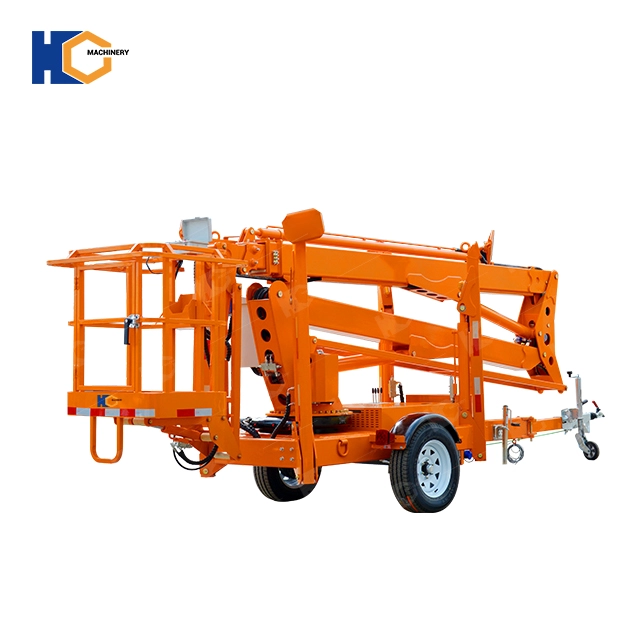
Boom lifts have become one of the most versatile aerial work platforms used across construction, maintenance, industrial operations, warehousing, telecommunications, utilities, and facility management. Whenever workers need safe access to elevated work areas that are difficult to reach with ladders or scaffolding, a boom lift often becomes the preferred solution.
Unlike traditional access equipment, boom lifts provide exceptional vertical and horizontal reach, allowing operators to work safely around obstacles while improving productivity and reducing labor costs. Modern boom lifts are available in multiple configurations, including articulating, telescopic, towable, electric, and self-propelled models, each designed for specific working environments.
This guide explores the major uses of boom lifts, the challenges they solve, how different boom lift types compare, and why they have become essential equipment in modern industries.
What Is a Boom Lift?
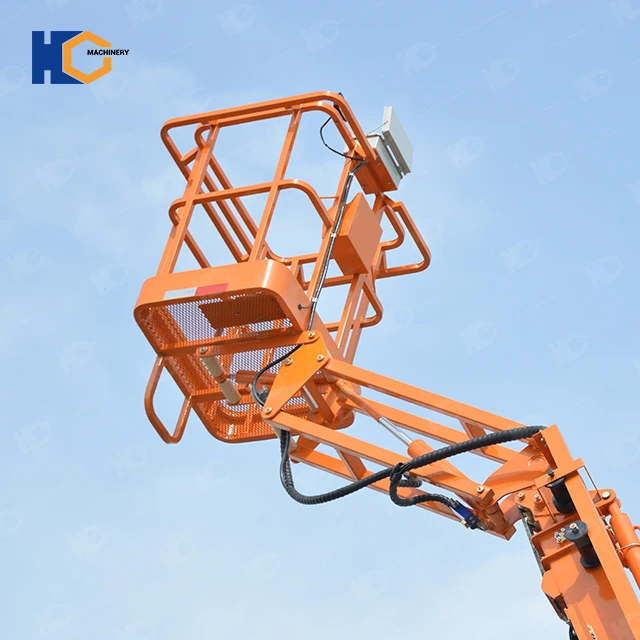
A boom lift is an aerial work platform (AWP) equipped with a hydraulic lifting arm, commonly called a boom, that raises workers, tools, and materials to elevated work locations.
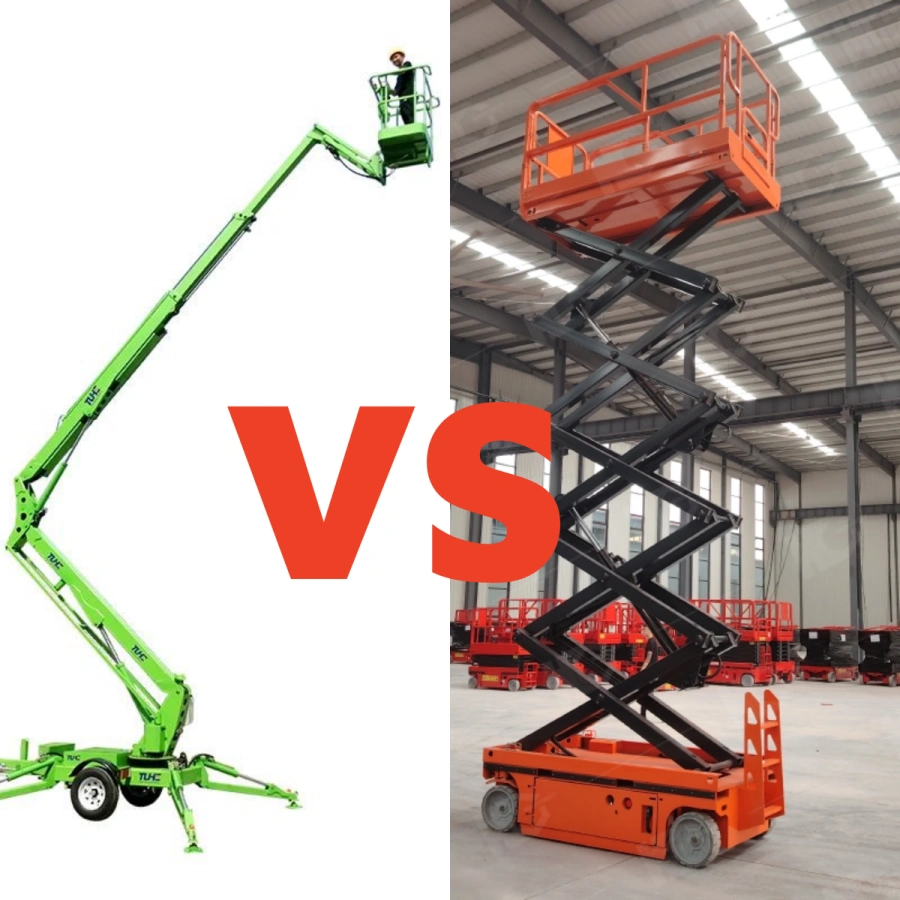
Unlike scissor lifts that move only vertically, boom lifts provide both vertical and horizontal outreach. This flexibility allows operators to access difficult areas while avoiding obstacles such as machinery, walls, roofs, pipelines, and structural components.
Typical boom lift working heights range from:
- 20 ft (6 m)
- 30 ft (9 m)
- 40 ft (12 m)
- 60 ft (18 m)
- 80 ft (24 m)
- 120 ft (36 m)
- 185 ft (56 m)
Depending on the model and application.
Why Industries Choose Boom Lifts
Many industries have moved away from ladders and traditional scaffolding because they present limitations in safety, efficiency, and mobility.
Boom lifts provide:
- Safer elevated access
- Faster job completion
- Reduced labor requirements
- Greater reach capability
- Improved maneuverability
- Lower setup time
- Enhanced productivity
As labor costs continue to rise worldwide, companies are increasingly relying on boom lifts to improve operational efficiency.
Pain Points Solved by Boom Lifts
Difficult Access to Elevated Areas
Many work locations are obstructed by equipment, walls, pipelines, or architectural structures.
Boom lifts allow operators to reach above and around obstacles.
Safety Risks Associated with Ladders
Falls remain one of the leading causes of workplace injuries.
Boom lifts provide guardrails, emergency controls, overload protection, and stable working platforms.
Time-Consuming Scaffold Installation
Scaffolding often requires extensive assembly and dismantling.
Boom lifts can be deployed within minutes.
Limited Reach
Traditional access equipment often cannot reach complex work areas.
Boom lifts provide both vertical and horizontal movement.
Labor Shortages
A single operator can perform tasks that previously required multiple workers.
Main Types of Boom Lifts and Their Uses
Understanding the different boom lift categories is essential when selecting equipment.
Articulating Boom Lift Uses
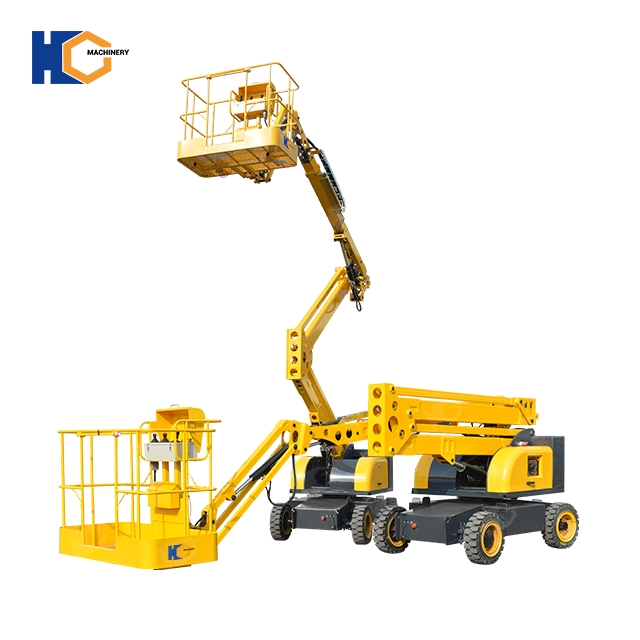
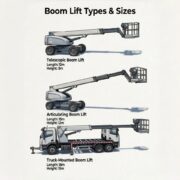
Articulating boom lifts, also called knuckle boom lifts, feature multiple hinged sections.
These joints allow the boom to bend around obstacles.
Common Applications
Building Maintenance
Workers can access:
- Roof edges
- Exterior walls
- Window systems
- Architectural structures
Industrial Facilities
Used for:
- Pipe inspections
- Equipment maintenance
- HVAC servicing
Tree Trimming
Operators can maneuver around branches safely.
Stadium Maintenance
Ideal for accessing hard-to-reach structural areas.
Advantages
- Exceptional flexibility
- Excellent obstacle avoidance
- Suitable for confined spaces
Best Industries
- Property management
- Facility maintenance
- Manufacturing
- Municipal services
Telescopic Boom Lift Uses
Telescopic boom lifts feature a straight extendable boom.
They provide maximum horizontal outreach.
Common Applications
High-Rise Construction
Workers can access upper floors and exterior structures.
Steel Structure Installation
Used for:
- Warehouses
- Factories
- Industrial buildings
Bridge Construction
Long outreach simplifies access over obstacles.
Wind Energy Projects
Maintenance technicians can reach elevated turbine components.
Advantages
- Longest reach
- Fast elevation speed
- Excellent productivity
Best Industries
- Construction
- Infrastructure projects
- Energy sector
- Telecommunications
Towable Boom Lift Uses
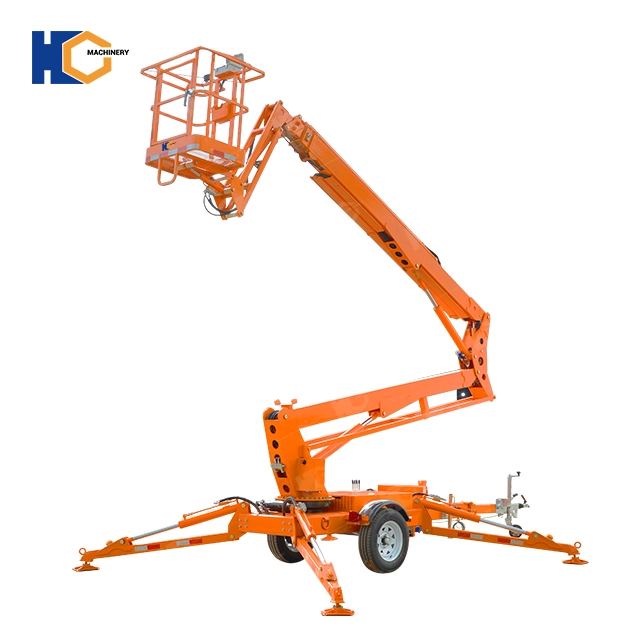
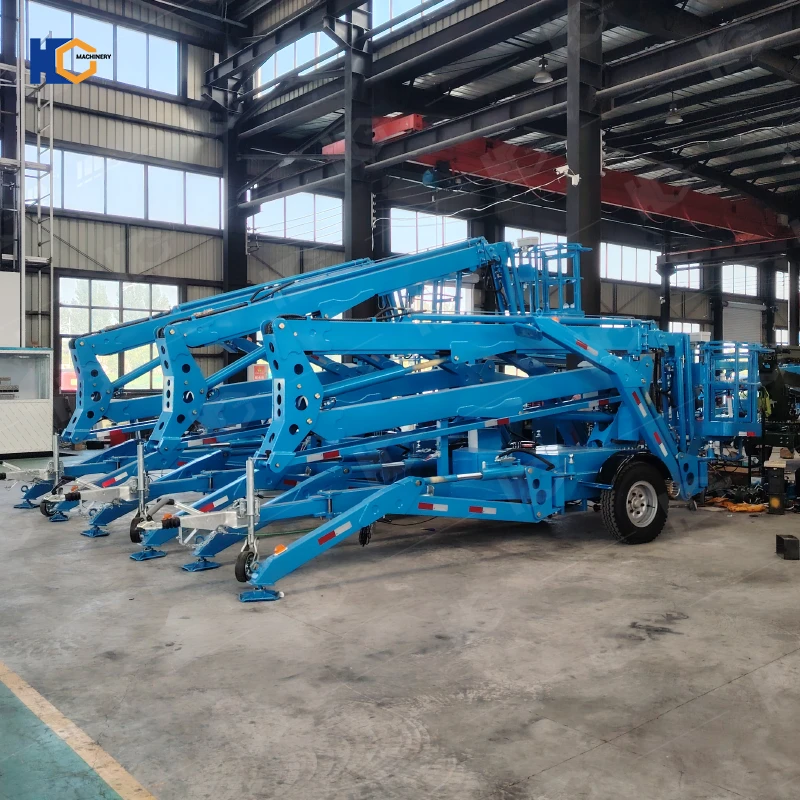
Towable boom lifts are lightweight units transported using pickup trucks or trailers.
Common Applications
Residential Construction
Perfect for:
- Roofing
- Painting
- Gutter installation
Sign Installation
Frequently used for commercial signage projects.
Event Setup
Used for:
- Lighting installation
- Stage construction
- Decoration work
Property Maintenance
Ideal for schools, churches, and community facilities.
Advantages
- Affordable investment
- Easy transportation
- Low maintenance costs
Best Industries
- Small contractors
- Rental companies
- Property maintenance providers
Self-Propelled Boom Lift Uses
Self-propelled boom lifts can travel while elevated.
This significantly improves efficiency.
Common Applications
Large Construction Sites
Operators can reposition quickly without lowering the platform.
Industrial Plants
Maintenance crews move efficiently between work zones.
Warehouses
Used for:
- Inventory systems
- Lighting repairs
- Facility upgrades
Airports
Suitable for terminal maintenance and infrastructure work.
Advantages
- Maximum productivity
- Reduced downtime
- Excellent mobility
Best Industries
- Industrial maintenance
- Logistics
- Warehousing
- Infrastructure management
Electric Boom Lift Uses
Electric boom lifts operate using battery power.
Common Applications
Shopping Malls
Quiet operation minimizes disruption.
Hospitals
Zero emissions improve indoor air quality.
Warehouses
Safe operation inside enclosed environments.
Data Centers
Suitable for sensitive indoor facilities.
Advantages
- Zero emissions
- Low noise
- Lower operating costs
Best Industries
- Indoor maintenance
- Retail facilities
- Healthcare
- Clean manufacturing
.webp)
Diesel Boom Lift Uses
Diesel boom lifts remain the preferred choice for outdoor heavy-duty applications.
Common Applications
Construction Sites
Provide power and endurance for demanding projects.
Mining Operations
Suitable for rough terrain environments.
Oil and Gas Facilities
Support maintenance and inspection activities.
Infrastructure Development
Used in bridges, highways, and utility projects.
Advantages
- High power output
- Rough terrain capability
- Extended operating hours
Construction Industry Applications
Construction is one of the largest users of boom lifts.
Tasks include:
- Steel erection
- Exterior cladding
- Glass installation
- Painting
- Welding
- Roofing
- Electrical work
Compared with scaffolding, boom lifts significantly reduce project timelines.
Telecommunications Industry Applications
Telecommunication technicians use boom lifts for:
- Cell tower maintenance
- Antenna installation
- Fiber optic deployment
- Communication equipment upgrades
Articulating and telescopic boom lifts are particularly popular in this sector.
Utility Industry Applications
Power companies frequently utilize boom lifts for:
- Streetlight maintenance
- Power line inspections
- Electrical repairs
- Utility pole installations
Insulated boom lifts provide additional electrical safety.
Facility Maintenance Applications
Modern commercial facilities rely heavily on boom lifts.
Typical tasks include:
- HVAC maintenance
- Lighting replacement
- Window cleaning
- Roof inspections
- Fire protection system maintenance
Warehouse Applications
Large warehouses often contain ceilings exceeding 30 feet.
Boom lifts help workers:
- Install lighting
- Service sprinkler systems
- Upgrade automation equipment
- Conduct inspections
Electric boom lifts are commonly used indoors.
Agriculture Applications
Agricultural businesses use boom lifts for:
- Orchard maintenance
- Greenhouse repairs
- Storage facility inspections
- Equipment servicing
Articulating booms are particularly useful around trees and crops.
Airport Applications
Airports use boom lifts for:
- Terminal maintenance
- Hangar operations
- Lighting repairs
- Security system installations
Self-propelled boom lifts improve efficiency in large facilities.
Boom Lift vs Scissor Lift
Many buyers compare boom lifts and scissor lifts.
| Feature | Boom Lift | Scissor Lift |
|---|---|---|
| Horizontal Reach | Excellent | None |
| Vertical Reach | Excellent | Excellent |
| Obstacle Access | Excellent | Limited |
| Working Area Flexibility | High | Moderate |
| Platform Capacity | Lower | Higher |
| Cost | Higher | Lower |
When to Choose a Boom Lift
Choose a boom lift when:
- Obstacles exist
- Horizontal outreach is needed
- Work areas are difficult to access
When to Choose a Scissor Lift
Choose a scissor lift when:
- Straight vertical access is sufficient
- Heavy materials must be lifted
- The budget is limited
Boom Lift vs Scaffolding
Traditional scaffolding still has applications but faces several limitations.
| Feature | Boom Lift | Scaffolding |
| Setup Time | Minutes | Hours or Days |
| Mobility | Excellent | Poor |
| Safety | High | Moderate |
| Labor Requirement | Low | High |
| Flexibility | Excellent | Limited |
Boom lifts often provide a lower total project cost despite higher equipment expenses.
Future Trends in Boom Lift Applications
Several industry trends continue driving demand.
Electrification
Battery-powered boom lifts are becoming increasingly popular.
Smart Diagnostics
Remote monitoring improves fleet management.
Telematics
Fleet owners can track:
- Utilization rates
- Maintenance schedules
- Operator performance
Hybrid Systems
Hybrid boom lifts combine diesel power with electric efficiency.
Enhanced Safety Technology
Modern systems include:
- Anti-entrapment devices
- Collision avoidance systems
- Load monitoring technology
How to Select the Right Boom Lift
Before purchasing a boom lift, consider:
Working Height
Determine maximum platform height requirements.
Horizontal Outreach
Evaluate access obstacles.
Indoor or Outdoor Use
Electric models are better indoors, while diesel models dominate outdoor applications.
Ground Conditions
Rough terrain requires specialized models.
Frequency of Use
Frequent use may justify investment in self-propelled equipment.
Budget
Consider total ownership costs, including maintenance and fuel consumption.
Conclusion
Boom lifts have become indispensable tools across construction, telecommunications, utilities, facility maintenance, warehousing, agriculture, aviation, and industrial sectors. Their ability to provide safe vertical and horizontal access dramatically improves efficiency while reducing labor requirements and workplace risks.
Different boom lift types serve different purposes. Articulating boom lifts excel at maneuvering around obstacles, telescopic boom lifts provide maximum outreach, towable boom lifts offer affordability and portability, and self-propelled boom lifts maximize productivity on large job sites.
Compared with ladders, scaffolding, and even scissor lifts, boom lifts often offer superior flexibility, safety, and operational efficiency. As industries continue demanding safer and more productive elevated access solutions, boom lifts will remain one of the most valuable investments for contractors, maintenance teams, and facility operators worldwide.

Jnhclift (Huichuang Lift), based in Jinan, China, is a professional manufacturer of scissor lifts, home elevators, and lift platforms. With our own dedicated factory, we deliver high-quality, reliable lifting solutions tailored to meet diverse industrial and residential needs.

 Room 203, Second Floor, Building 8, Phase Ⅱ, Zhizao Town, Jibei Street, Jiyang District, Jinan City, Shandong Province
 +8615628811021
 admin@jnhclift.com